

Guest Post by Emma Grace Brown
For trade show businesses, startup founders, sales leads, and small marketing teams, the hardest part of an event often isn’t the logistics; it’s earning a moment of attention in a noisy aisle. The core tension is simple: plenty of people pass the booth, but too few stop long enough to remember what’s being sold or why it matters. Sales pitch development, marketing strategies for trade shows, and brand storytelling decide whether a brand becomes a quick glance or a real conversation. Strong trade show audience engagement turns booth traffic into confidence, clarity, and booked next steps.
Build a 3‑Part Pitch That Hooks, Helps, and Closes
A winning booth conversation is rarely won by luck, it’s won by clarity. Use this simple 3‑part pitch to turn walk‑bys into “tell me more” moments, then into real follow‑ups.
- Hook with a pain point you can prove: Start with customer pain point analysis, not your product list. Ask one tight question that reveals urgency: “Are you losing time reconciling orders between systems?” Then mirror what you hear in the attendee’s words and confirm the impact: “So delays are costing you late fees and trust.” This works because people lean in when they feel seen, not sold.
- Help with a 15‑second story, not a feature dump: Deliver emotional storytelling in a mini arc: before → turning point → after. Example: “One team came to us stressed about missed shipments. We mapped the bottleneck in a day, and within two weeks they had a clean handoff process and calmer Mondays.” Keep it authentic, audiences can sense what’s real, and tell authentic stories using real customer or employee experiences to build instant credibility.
- Close with one clear problem/solution sentence: Use a simple frame: "When [X] happens, you get [Y]. We fix it by [Z]." For example: "When your orders live in three disconnected systems, you get manual reconciliation errors and late fees. We fix it by syncing everything into one dashboard that updates in real time." This is one of the most effective sales pitch techniques because it makes your value easy to repeat to a boss later. End with a choice, not a push: "Do you want the 30-second overview, or should we look at your current process first?"
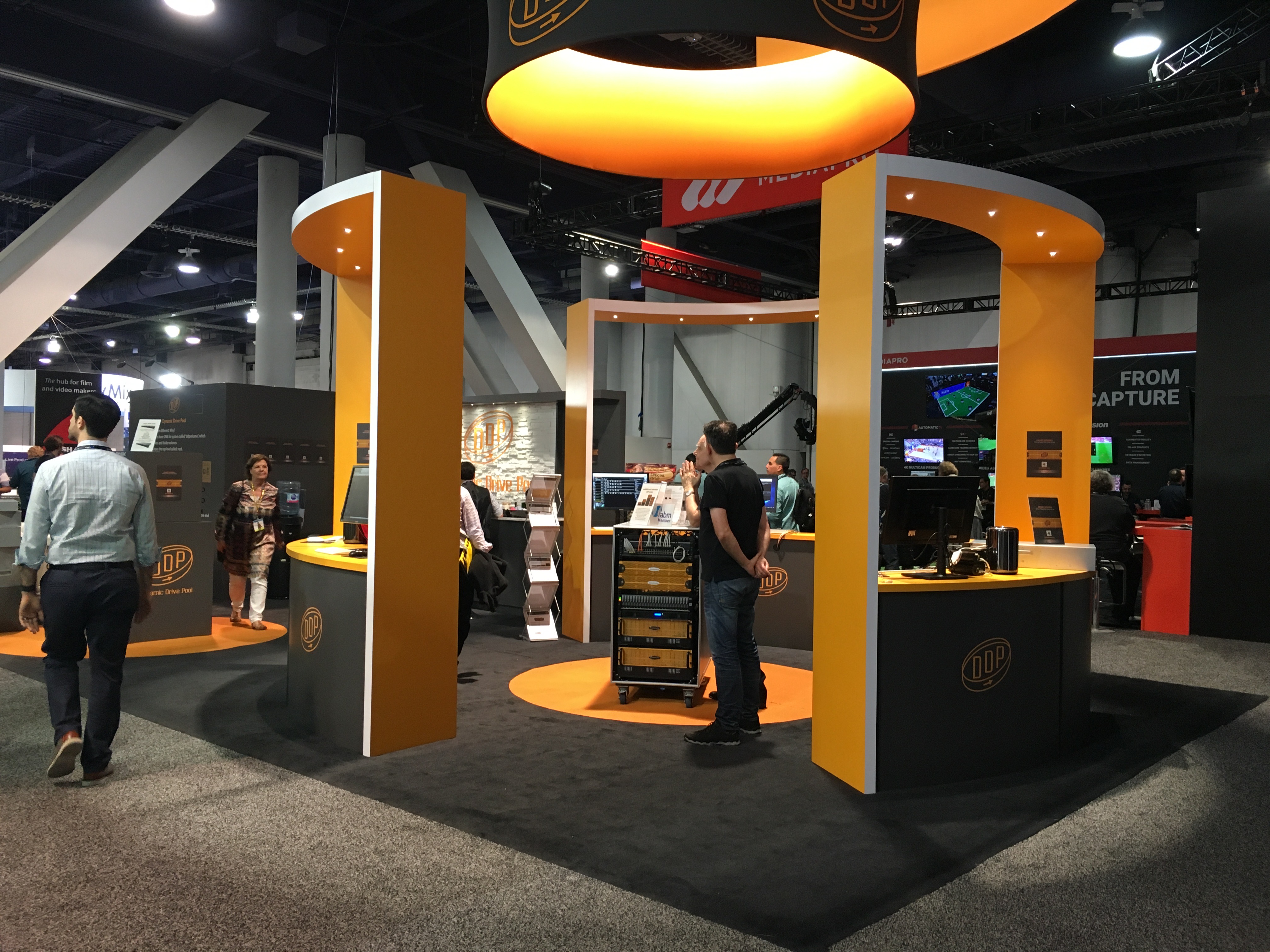
- Build visual content that does the talking for you: Replace posters full of text with one bold visual that shows the transformation: a before/after diagram, a 3‑step workflow, or a single metric that matters to your buyer. Strong visual content in marketing increases booth “stickiness,” and eye-catching booth designs can increase foot traffic by up to 83% when your message is readable from a few steps away. Aim for one headline, one image, one proof point.
- Bring proof you can hand to someone in 10 seconds: Keep a “proof stack” ready: one short testimonial, one mini case result, one customer quote card, and one photo of the outcome in the real world. If you can, include everyday-user content, screenshots, quick quotes, or real usage moments, because 77% of consumers are more likely to purchase a product after seeing content created by everyday users. Proof turns your engaging trade show narratives into believable decisions.
- Rehearse the handoff so every teammate closes the same way: Decide your final two questions in advance: “What’s your timeline?” and “What would make this a win for you?” Then set one follow‑up action: scan badge + book a time, or exchange cards + send a one‑page summary by tomorrow. When your whole team shares this structure, your booth energy becomes a repeatable system, confident, consistent, and easy to coach.
Strengthen Your Team’s Message With Structured Leadership Training
A strong 3‑part pitch lands even harder when your whole team shares the same language for value, differentiation, and persuasion. Earning an MBA can help small business teams tighten sales pitches, sharpen marketing strategies, and elevate brand narratives by learning proven frameworks for customer analysis, positioning, and persuasive communication. That kind of structure turns “we do a lot” into a clear promise your booth staff can repeat confidently, and adapt on the fly as conversations shift. If you want that training without putting the business on pause, programs built around MBA coursework online make it easier to keep running day-to-day operations while you build leadership and communication skills in parallel.
Trade Show Pitch FAQs People Actually Ask
Q: How do I handle “We already have a vendor”?
A: Agree first, then reframe: “That makes sense. What would an ideal backup or complement look like?” Offer one specific differentiator and a low-risk next step like a 10-minute comparison or a pilot after the show.
Q: What should I say when someone asks about price right away?
A: Anchor on outcomes before numbers: clarify what success costs them today in time, errors, or lost revenue. Then give a simple range tied to a package and ask one qualifying question so the conversation stays mutual, not defensive.
Q: How do I attract the right attendees instead of random badge scans?
A: Start with a tight persona and a “must-have problem,” then build outreach and booth language around that. Because advanced audience targeting shapes modern marketing, mirror it onsite with clear qualifiers like role, use case, and timeline.
Q: What’s the simplest storytelling structure that still sells?
A: Use three beats: the before state (pain), the turning point (your insight), and the after state (measurable win). Keep it human and specific, then end with a question that invites them into the story.
Q: When should I walk away from a booth conversation?
A: Exit when there is no fit, no authority, or no urgency after two clarifying questions. Thank them, offer one helpful resource, and redirect your energy to people you can genuinely serve.
Your Trade Show Pitch and Marketing Ready-Check
This checklist turns your best intentions into booth-ready execution. Use it to align your pitch, visuals, and follow-up so every conversation points to the same win, using the idea that 47 key checklist items can shape a successful exhibition as proof that details add up.
✔ Define your must-have problem and ideal attendee in one sentence
✔ Craft a 15-second pitch that names pain, insight, and measurable outcome
✔ Prepare two differentiators and one low-risk next step offer
✔ Build one qualifying question to confirm role, use case, and timeline
✔ Design one clear visual that supports your promise at ten feet
✔ Create a follow-up script and send-within-24-hours template
✔ Track leads by fit level, not badge count, before you log anything
Check these off, then show up like you mean it.
Turn Each Trade Show Into Measurable Momentum and Growth
Trade shows can feel like a high-stakes sprint, one shot to get the pitch right, stand out, and justify the spend. The steadier path is the mindset of continuous sales improvement: treat every show as a test, then use performance measurement and feedback incorporation to guide marketing strategy refinement. When that becomes the norm, trade show business growth stops depending on luck and starts compounding through clearer messaging, tighter follow-up, and more empowered sales teams. One experiment per show turns effort into evidence and evidence into growth.
 Tim Patterson has been helping companies navigate the trade show world since 2002. He owns TradeshowGuy Exhibits and writes here about exhibit design, marketing, industry trends, and lessons learned from more than two decades on the show floor.