If 2019 was normal, 2020 was not. Neither was 2021, although it’s an improvement over last year. What about 2022? It’s not going to be normal although I think we’ll get a little closer. Maybe normal will never really return. Here’s a look at a handful of things to consider at you look at your 2022 trade show marketing schedule.
Trade show floors are busy places. A small exhibitor may be competing for attention next to larger booths, louder demos, hanging signs, product samples, and fast-moving aisle traffic. In that setting, visibility is not only about having a bigger booth. It is about making the message clear enough to understand at a glance.
That is where a lightbox display can be useful. Compared with a standard printed banner, a lightbox uses internal illumination to make graphics brighter, cleaner, and easier to read from a distance. The goal is not to make the booth flashy. The goal is to help the right visitor notice the brand, understand the offer, and decide whether to stop.
For small exhibitors, the first job of a booth is often simple: communicate who you are, what you offer, and why someone should care. A backlit graphic can support that by turning the main wall, counter, or side panel into a stronger visual anchor. Instead of relying on a table cover and a few signs, the booth has a clear focal point.
A trade show lightbox display works best when the graphic is planned carefully. The most effective designs usually have one primary message, strong contrast, and limited copy. A visitor walking past the booth should not have to read a paragraph. A short headline, a recognizable product image, and a clear brand mark will usually do more than a crowded layout.
Many lightbox displays use SEG graphics, which are fabric graphics finished with a silicone edge that fits into the frame. For exhibitors, this can be helpful because the graphic sits cleanly in the display and can often be changed for different shows or campaigns. A company that attends several events may use the same frame while updating the visual message for a product launch, seasonal promotion, or new audience.
Modular lightbox displays can also help with booth planning. A small business may start with a single backlit wall or counter and later expand into a larger booth layout. The advantage is flexibility. Instead of rebuilding the entire booth for every event, the exhibitor can think in terms of sections: a main brand wall, a product area, a meeting point, and a simple lead-capture space.
Setup should also be part of the decision. A display that looks good but takes too long to assemble may not be practical for a small team. Before choosing a system, exhibitors should ask how many people are needed, whether tools are required, how the graphics are installed, how the parts are labeled, and how the display packs for transport.
Lighting quality matters as well. A lightbox display should illuminate the graphic evenly, without obvious dark areas, distracting hotspots, or color shifts that make the artwork appear inconsistent with the brand guidelines. If the booth uses several displays, the color temperature should feel consistent across the space.
Small exhibitors should also avoid treating the lightbox as the entire booth strategy. The display attracts attention, but the booth still needs a clear offer, trained staff, simple lead capture, and a reason for visitors to engage. A strong visual wall can open the conversation, but the booth team has to continue it.
For many small businesses, the best trade show booth is not the most complicated one. It is the booth that is easy to understand, easy to set up, and strong enough visually to compete on a crowded floor. A well-planned lightbox display can help create that professional presence without requiring a fully custom build.
Joyce is the Marketing Manager at Frame Plus, a display solutions brand focused on modular SEG lightboxes, backlit trade show displays, and lightweight booth systems for exhibitors, retailers, and event teams. Frame Plus helps businesses create cleaner, brighter, and easier-to-set-up display environments for trade shows, pop-ups, and branded events. Learn more about the SEG lightbox.
A trade show booth gets evaluated in about three seconds by someone walking the aisle. In that window, your graphics either pull them in or lose them to the next booth. Most exhibitors put real thought into their table setup, giveaways, and talking points, but rush the display decisions that actually drive that first impression.
Here are five decisions worth more attention.
1. Match the Material to the Environment
Not all banner materials work in all conditions. Fabric backdrops are the right call for indoor booths where people will be up close. The dye-sublimation process produces rich, glare-free color that looks professional from two feet away. Vinyl is fine for general indoor signage, but fabric elevates a booth backdrop.
If any part of your display is going outdoors, at a parking lot expo or open-air festival, for example, that changes the equation. Outdoor displays need mesh or reinforced vinyl to handle wind load. A fabric backdrop caught in wind will not survive the day.
Know your venue conditions before you order anything.
2. Size for the Aisle, Not the Booth
Most exhibitors think about banner size relative to their booth space. The better question is: what can someone read from 15 to 20 feet away, in the middle of the aisle, while walking?
Your company name and primary message need to be legible at that distance. That usually means larger type than feels natural when you’re looking at a proof on your monitor. A banner that looks balanced on-screen can be effectively invisible at an aisle distance.
If you’re unsure, print a proof at actual size and view it from across a room before approving the final file.
3. Invest in Fabric for Your Backdrop, Economize Elsewhere
Not every display element needs to be the same material or quality level. Your backdrop, the piece that’s behind you in every photo and visible from the widest angle, is worth the investment in fabric. Your side panels and smaller accent pieces can be made from standard materials like vinyl without noticeably affecting how the booth reads overall.
Allocating budget based on visibility impact is smarter than treating all display pieces equally.
4. Plan for Repeat Use from the Start
If you’re going to more than one show this year, your display decisions should factor in reusability. Fabric handles folding, packing, and washing well across many shows. Vinyl becomes creased and scuffed faster and is harder to touch up in the field.
Fabric costs more per unit but often costs less per show when you factor in the cost of reprinting cheaper materials after every third event. Run the math before defaulting to the lowest price option.
5. Account for Lead Time on Large or Complex Pieces
Very large displays may require panels to be seamed or heat-welded together. That process adds production time beyond standard lead times. First-time exhibitors ordering a 20-foot backdrop a week before the show have been caught off guard by this.
Similarly, if your design requires color matching to brand standards, allow time for a press proof. Printing to spec on large-format is not automatic, and rushed jobs rarely meet expectations.
Build in at least two weeks for any large or color-critical piece, and more if you’re ordering from a new vendor for the first time.
A Simple Pre-Show Display Checklist
Before your next show, run through these quickly:
Have you confirmed whether the venue is indoor or outdoor, climate-controlled or open-air?
Is your key message legible from 20 feet?
Does your backdrop show a seam you didn’t expect?
Are your grommets and hardware in good shape for another install?
Do you need to order anything new, or can last season’s materials go another round?
The booths that consistently stand out are not always the biggest or most expensive. They are the ones where the exhibitor made deliberate choices about each element rather than defaulting to whatever was fastest or cheapest at the time.
About the Author: Doug Reed is the founder of Easy Order Banners, a large-format print company serving US businesses and trade show exhibitors for over 20 years. Easy Order Banners specializes in fabric backdrops, vinyl banners, mesh banners, and trade show displays shipped nationwide.
There’s a certain kind of quiet satisfaction in photographing a busy trade show floor and making it look… still. Controlled. Intentional. That’s been the ongoing collaboration with Condit Exhibits over the past three years at Natural Products Expo West—capturing their work in a way that lets the design speak without distraction.
If you’ve ever walked Expo West, you know “empty” isn’t exactly in the vocabulary. Booths are buzzing, aisles are packed… which makes those clean, distraction-free images a bit of a paradox. Part of the answer is timing—getting on the floor a couple of hours before doors open—but more importantly, it’s about shooting with the end in mind.
This year’s lineup included Nurture Life, Purely Elizabeth, Botticelli, Agile Kitchen, Horizon Organic, and Transparent Labs—each with its own personality, materials, and visual rhythm. Some leaned into bold graphics and color, others into warmth and texture. My approach stayed consistent: shoot with the end in mind. Clean angles, thoughtful composition, and an awareness of how each frame will later be refined through editing and masking.
Purely ElizabethBotticelliHorizon OrganicsPurely ElizabethAgile KitchenBotticelliTransparent LabsNurture Life
That post-production process is where everything comes together. Attendees disappear, backgrounds simplify, and what remains is a clear, focused representation of the exhibit itself—something Condit can use across marketing, awards submissions, and future pitches.
Working with another exhibit partner in the U.S. like Condit continues to be a rewarding extension of what I do. There’s a shared understanding of detail, presentation, and the importance of showing work at its absolute best. And at a show as dynamic as Expo West, that kind of clarity doesn’t happen by accident—it’s built frame by frame.
There’s a particular kind of energy that surrounds a brand when it’s ready to reintroduce itself—not tentatively, but with clarity and confidence. That was very much the case with Wedderspoon this past fall and winter as we partnered on their latest trade show presence.
Interestingly, this wasn’t our first time working together on a “new” booth. About a year prior, we had collaborated on a fresh exhibit that marked an important step forward. But as often happens, that earlier effort was part of a larger evolution. Behind the scenes, Wedderspoon was continuing to refine its identity—dialing in its messaging, sharpening its visual language, and ultimately completing a full rebrand that was ready for a broader debut.
Wedderspoon’s 10×40 at Natural Products Expo West 2026
This latest booth became the platform for that reveal.
From the outset, the objective was clear: create a space that felt as vibrant and intentional as the brand itself. The updated design leaned into Wedderspoon’s natural roots while presenting them through a more modern, confident lens. Clean lines, layered textures, and a cohesive visual story helped unify the space, allowing the product—and the brand behind it—to take center stage without distraction.
Of course, a well-designed booth is only part of the equation. Execution is where ideas are tested, and in this case, everything came together seamlessly. From early planning through installation on the show floor, the process reflected a strong alignment between teams and a shared commitment to getting the details right.
That alignment showed up in a big way at Natural Products Expo West 2026.
Held at the Anaheim Convention Center, Expo West is never short on energy—or competition for attention. Yet throughout the run of the show, the Wedderspoon booth consistently drew strong crowds. Attendees weren’t just passing through—they were stopping, engaging, and spending time in the space. The combination of bold visual elements and thoughtful detailing created an environment that invited curiosity and rewarded it.
It’s always rewarding to see a booth perform well in a high-traffic environment, but what stood out just as much was the response from the Wedderspoon team itself. From top to bottom, there was a clear sense of satisfaction—not just with how the booth looked, but with how it functioned and supported their goals on the floor. That kind of feedback carries weight, especially for a brand stepping confidently into a new chapter.
Projects like this are never the result of a single effort, and this one benefited from an exceptional group of collaborators. Thoughtfull Design, based in New Zealand, led the design and detailing, helping bring the rebrand to life in a physical space. Classic Exhibits handled the build of the primary structure, delivering a strong and reliable foundation. Matchless Builds out of Portland added a layer of personality and craftsmanship with the custom lollipops—both large and small—along with the cherries and honeycomb plinths that gave the booth its distinctive character. And Spinning Designs created the prize wheel, adding an interactive element that drew people in and kept the energy high.
The result was a booth that didn’t just showcase a rebrand—it embodied it. And as the images throughout this post illustrate, it’s often the combination of big ideas and carefully executed details that turns a space into an experience.
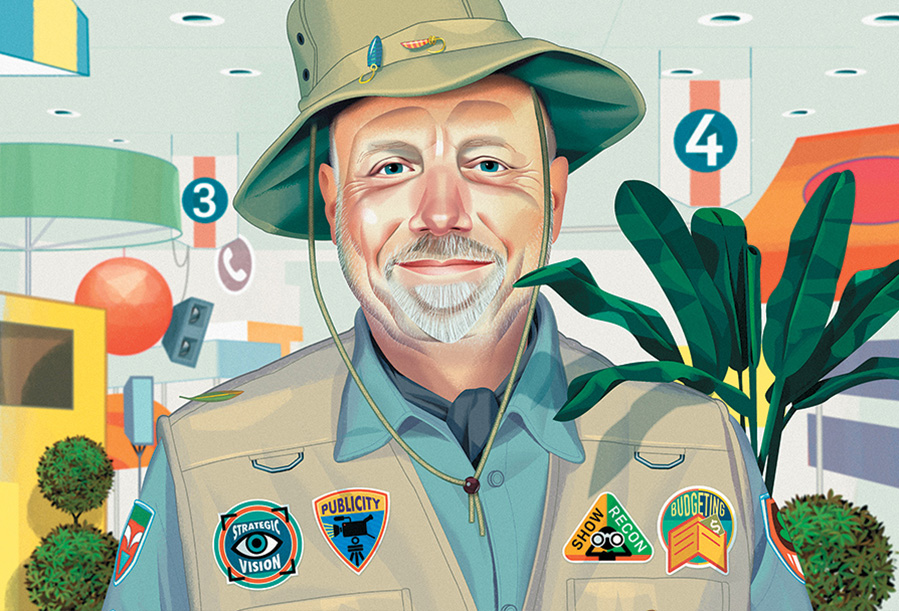
Trade show marketers are often expected to do it all — strategy, booth design, lead capture, follow-up campaigns, and brand storytelling. If you don’t have a large in-house team, you are the marketing department. The good news? Marketing isn’t magic. It’s a system built on channels, messaging, and measurable outcomes.
This guide breaks down how to think like your own marketing team — and act like one.
A Quick Orientation
If you remember nothing else, remember this:
Channels are the places your audience encounters you.
Messaging is how you communicate your value in those places.
Effectiveness is measured by what changes after your marketing runs.
That’s it. Everything else is refinement.
What Are “Marketing Channels”?
In marketing terms, a channel is the medium you use to reach your audience. It’s the pathway between your brand and your customer.
Yes — even a flyer on a corkboard is a marketing channel. If it reaches a potential attendee, sponsor, or exhibitor, it counts.
How to Figure Out Which Channel to Focus On
Start with three questions:
Where does your audience already pay attention? Trade show buyers may live in email inboxes and LinkedIn groups. Local event attendees may notice physical signage.
What action do you want? Booth bookings? Ticket sales? Sponsorship inquiries? Different channels drive different outcomes.
If you’re promoting a niche manufacturing expo, LinkedIn and industry newsletters may outperform Instagram. If you’re running a consumer-facing event, billboards and community boards might generate more buzz than a cold email.
For trade show marketers, common performance indicators include:
Number of pre-registered attendees
Cost per lead
Exhibitor retention rate
Post-event survey responses
Engagement rates on promotional emails
If you ran a LinkedIn campaign and saw no increase in site traffic or sign-ups, that channel or message may need refinement. If billboards near the venue correlate with a spike in walk-ins, that’s a signal.
Marketing is iterative. Measure → adjust → test again.
Continuing Your Education in Business and Marketing
If you want to sharpen your strategic thinking, going back to school can be a powerful step. Earning a degree in marketing, business, communications, or management helps you understand core principles like positioning, budgeting, and performance analysis. Many professionals choose an online degree in business to develop these skills while continuing to run their events or marketing operations. Flexible online programs make it possible to apply what you’re learning in real time — directly to your trade show strategy.
A Helpful Resource for Trade Show Marketers
The Center for Exhibition Industry Research (CEIR) publishes data-driven insights about trade show performance, attendee behavior, and industry benchmarks. Their research can help you set realistic goals and evaluate effectiveness.
Using industry benchmarks adds context to your own results and strengthens your marketing decisions.
Frequently Asked Questions
What’s the difference between a marketing channel and messaging?
A channel is where your message appears. Messaging is what you say and how you say it within that channel.
How many channels should I focus on?
If you’re managing marketing alone, start with 2–3 channels that best reach your core audience. Depth beats breadth.
Do offline channels still matter for trade shows?
Absolutely. Billboards, venue signage, local boards, and even telephone pole posters can drive awareness — especially for regional events.
How quickly should I expect results?
Some channels (paid ads, email) can show results quickly. Others (content marketing, partnerships) build momentum over time.
Being your own marketing department isn’t about doing everything. It’s about doing the right things consistently. Choose channels your audience already trusts. Craft messaging that speaks directly to their needs. Measure what happens next. Refine. Repeat.
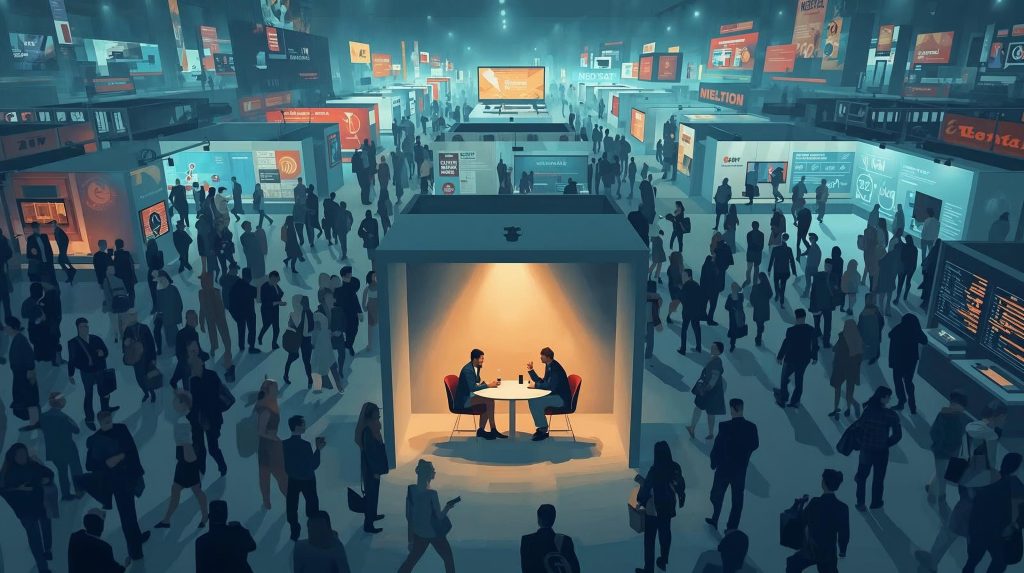
Trade show marketing is loud by nature. Everyone’s trying to stand out — with banners that shout, booths that glow, and enough swag to fill a carry-on. But in all that noise, there’s one thing that actually makes people stop: emotional connection.
And that’s the part most brands overlook.
Trade shows aren’t effective because they deliver the fastest leads or the cheapest impressions. If that’s the metric, you’ll likely walk away disappointed. What actually works is something deeper — the rare moment when someone feels like your brand gets them.
That’s where emotional connection at trade shows becomes your secret advantage.
The Inner Dialogue of an Attendee
Imagine the mental monologue of someone walking the floor:
“What is this? Do I need it? Can I trust them? Why does this smell like churros?”
They’re overwhelmed — and yet, they’re searching. Not for more features or faster delivery. They’re looking for relevance, trust, and a reason to care.
That’s the emotional tension trade shows create:
Speed vs. trust
Flash vs. substance
Price vs. value
And if you understand that tension, you can design your entire experience to answer it.
Create an Emotional Connection, Not Just a Display
Trade shows are full of glitz, but glitz doesn’t make you memorable. What does? A moment of human connection.
That might look like:
A genuine one-on-one conversation
A story that hits home
A booth that feels like a space to pause, not push
And yes, your booth design matters. But your energy, tone, and intention matter more.
Ask yourself: What experience will make them stop — not just look?
Why Emotional Connection Beats Price
Price only matters when there’s no emotion. When your brand lacks story or trust, prospects default to cost. But when you’ve created a moment that makes them feel seen or heard, price becomes secondary.
Trade shows offer one of the last remaining opportunities for real-time, in-person brand engagement. If all you offer is a pitch, you’ll blend into the background. But if you make someone feel something, they’ll remember you — long after the tote bags are tossed.
This is the heart of emotional connection at trade shows: not competing for attention, but earning it by being relevant, real, and resonant.
Your Booth Is Just the Beginning
Trade shows aren’t a finish line — they’re a test. A test of whether your brand can feel human in a space built for spectacle.
And the good news? Most brands still default to noise. That gives you a massive opportunity to win with nuance.
So instead of asking “how do we stand out?”, ask:
How can we connect?
What tension are they feeling?
What moment will they walk away remembering?
Because at the end of the day, no one remembers the flashiest booth. They remember the one that made them feel something.
Trade shows are noisy. Not just audibly, but mentally. Everyone’s trying to get seen, heard, scanned, followed, and remembered — often in under 30 seconds. And in that blur of color-coded lanyards and badge beeps, the exhibitors who stand out aren’t just loud. They’re intentional. Digital tools don’t replace face-to-face energy, they weaponize it. They sharpen it, extend it, track it. But only if you use them with rhythm.
Turn the Dial Up Early
Most trade show setups start too late. You don’t win by showing up polished, you win by being in people’s heads beforethe badge prints. That starts withbuilding anticipation on social channels. Announce your presence like it matters. Use LinkedIn carousels to tease a product launch. Schedule stories showing booth construction progress. Post casual photos of the team packing up gear. The earlier your audience starts caring, the more likely they are to seek you out when the doors open.
Let Your Visuals Carry the Load
You’re competing with a lot: snack trays, swag giveaways, noise, fatigue. Let your visuals speak when words fail. With browser-based design tools, you cancreate a presentation that works like a walk-up explainer that’s tight, brand-aligned, and simple. Build it fast. Update it on the fly. Let your booth staff run it like a story, not a script. Great design doesn’t need polish; it needs timing.
Design to Be Touched, Not Just Seen
Banner stands don’t pull people in, but interactive touchscreens do; they draw more visitors because they invite exploration instead of passive viewing. Let people navigate your services, explore case studies, and preview outcomes at their own pace. Give them the ability to choose what they want to see instead of waiting for someone to explain it. Movement matters; not just visually, but mentally. A booth that responds earns more than glances; it earns time. And time at a booth is leverage.
Capture, Don’t Just Converse
You had a great conversation. Now what? Without a clear next step, the lead fades fast. The best systems make mobile app lead capture simple, helping your team stay in motion without losing context. No more fishbowls. No more scrambled badge notes or follow-ups based on guesswork. Just fast scans, smart tagging, and clean handoffs. That’s how you keep the energy going long after the handshake.
Link the Booth to the Web
The booth should be a portal, not a container. People don’t want paper, they want content they can engage with later, on their terms. QR codes deliver instant content access when placed right; not hidden in fine print, not slapped on every surface. Put them at eye level, link them to your story, like a case study, a short video, a sign-up form with a reward that doesn’t scream gimmick. Let them leave with something weightless and valuable.
Feed Your CRM in Real Time
After the show, timing becomes everything. You have hours, not days, before interest cools.Automatic lead syncing into your CRM cuts the dead time and gives your team a running start. Leads don’t just get saved, they get sorted. Scored. Routed. Integrated. The difference between a win and a ghosted email is sometimes just a 24-hour lag. Don’t be the one sending a first follow-up three weeks later.
Use AI to Make Booth Moments Feel Custom
The booths that pull people in feel weirdly on point. Like they knew what you needed before you did. That’s no accident — AI powers booth experience personalization by quietly adjusting visuals, messages, or product highlights based on who’s standing there. It doesn’t scream “algorithm.” It just feels aligned. Whether it’s a product demo that fits your role or a question that hits the right pressure point, relevance makes people pause. And in a space where attention is currency, that pause is everything.
Trade shows reward clarity. They reward presence. They reward those who prepare, not just those who arrive. Technology isn’t a substitute for charisma, but it’s a brilliant amplifier for precision. The best booths know how to feel human while acting surgical. Use the tools not to impress, but to connect. Not to digitize, but to deepen. When your tech choices feel like part of your handshake, not a sideshow, you’ll know you’ve done it right.
Elevate your trade show strategy with the latest insights and expert tips from the TradeshowGuy Blog and transform your exhibit into a show-stopping success!
Better late than never! Back in March, I had the pleasure of photographing a series of beautifully designed and fabricated exhibits for Condit Exhibits at Natural Products Expo West in Anaheim. This was my second time working with Condit, and once again, I was impressed by their creativity, craftsmanship, and attention to detail.
From bold, high-impact brand statements to warm, inviting product displays, each booth had its own personality—perfectly aligned with the companies they represented. My job was to capture those details and the overall atmosphere so Condit and their clients could showcase their work long after the show ended.
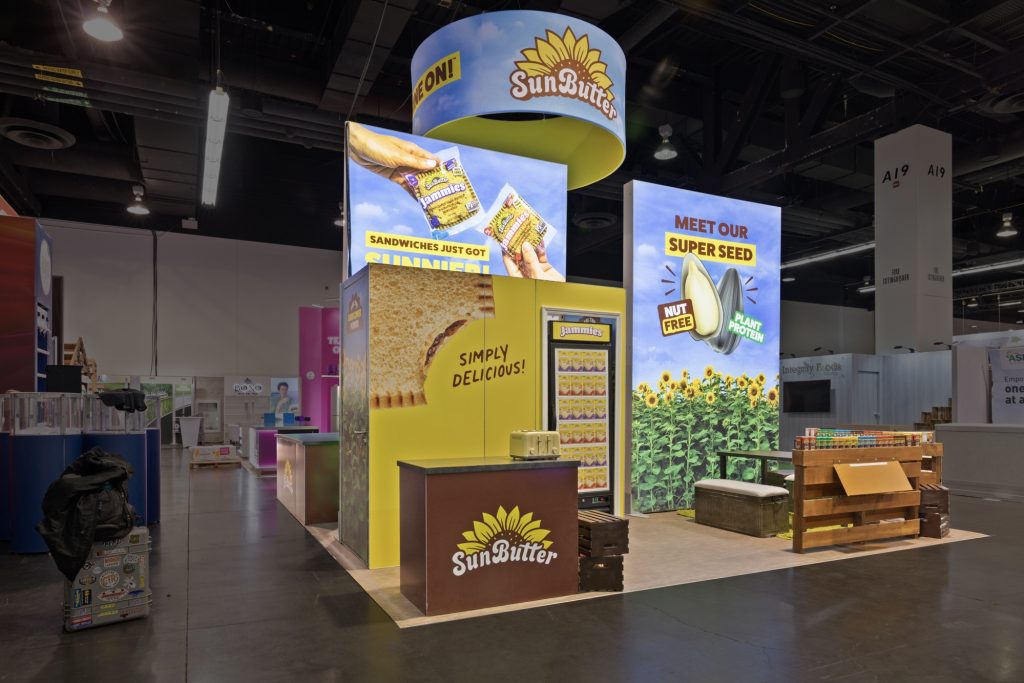
In the galleries below, you’ll find some of my favorite shots from the event, featuring brands such as Applegate, Back to Nature, Biohm, Carbe Diem, Dave’s Killer Bread, and SunButter.
Scroll down and take a look—you might just get some inspiration for your own next exhibit.
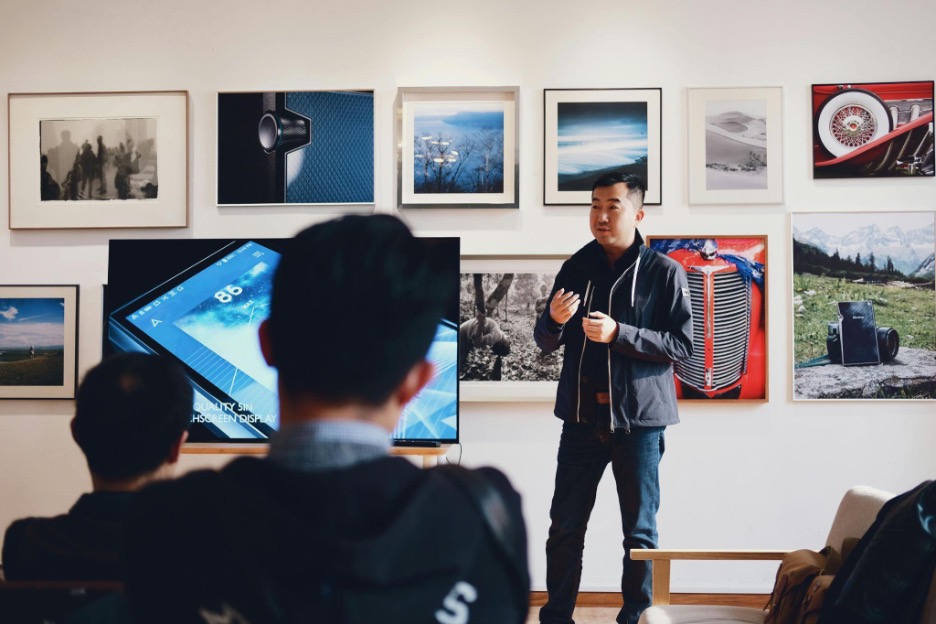
Public speaking doesn’t always mean standing on a TED stage. For small business owners, it often means grabbing a mic at trade shows, local expos, or industry conferences—spaces where your target audience is already paying attention. These moments offer more than exposure; they offer direct access to decision-makers, collaborators, and curious customers. Speaking at these events isn’t just about visibility—it’s a strategic move to grow your brand, share your expertise, and build meaningful connections. When your voice leads the conversation in rooms that matter, your business follows.
Treat Your Voice Like an Instrument
Your voice is a branding tool that too many entrepreneurs neglect. It tells your audience how much you care, how confident you are, and how passionate you feel about your mission. Practice pacing, tone, and breathing as deliberately as you would design your logo or write your tagline. Use tools like voice recorders or even apps designed for actors to build vocal stamina and control. The subtle nuances in how you deliver a message can mean the difference between sounding rehearsed and sounding real. An intentional voice is more than sound—it’s strategy.
Every brand has a backstory, but not every founder knows how to tell it. Craft a narrative that highlights your journey, the problem you set out to solve, and what makes your business tick. When you anchor your message in a story, audiences remember your point and your passion. This isn’t about self-aggrandizing—it’s about giving your audience a reason to care. People don’t connect with data; they connect with struggle, triumph, and purpose. Your story isn’t just personal; it’s persuasive.
Leverage Q&A Sessions as Training Grounds
Live Q&A segments can terrify even seasoned speakers, but they’re a goldmine for developing poise and adaptability. You learn what resonates, what confuses, and what excites your audience. The more you embrace unscripted interactions, the more agile and effective you become under pressure. Over time, you’ll start seeing tough questions not as landmines but as opportunities to shine. These moments force you to sharpen your thinking, clarify your message, and demonstrate authority in real time. In many ways, Q&As are the truest test of your public speaking mettle.
Design Presentations for Real Attention Spans
You are not presenting to robots. Today’s audiences are flooded with content, and attention is the ultimate currency. Keep visuals clean, messages concise, and tone conversational. Avoid jargon unless you’re certain your audience shares your lingo, and always leave room for spontaneity—that’s where real engagement lives. Slides should support your story, not replace it. A presentation should feel like a dialogue, even when you’re the only one speaking.
Practice in the Environments That Scare You
Fear doesn’t vanish with practice; it gets repurposed. If the thought of pitching to investors, leading webinars, or introducing yourself at a networking event gives you jitters, then that’s exactly where you should be practicing. Growth happens on the edge of discomfort. Repeated exposure builds more than skill—it builds resilience. Confidence is earned in spaces where you used to shrink. Those nerve-wracking environments become your training ground.
Use Public Speaking to Cement Expertise
The stage is a spotlight, but it’s also a pedestal. When you speak on topics within your industry, you position yourself as a thought leader without saying a word about it. Conferences, workshops, and even LinkedIn Lives are platforms where your insights can resonate beyond the room. Public speaking, when done with purpose, does more than amplify your message—it validates your authority. People want to do business with someone who can explain not just the “what” but the “why” with confidence and clarity.
Earn a Degree to Strengthen Your Voice
Earning a business degree isn’t just about acquiring technical know-how—it’s a smart move for any entrepreneur looking to communicate more effectively. If you’re curious about academic options that align with your entrepreneurial goals, explore the bachelor in business administration program requirements to see what fits your next chapter. A business degree can enhance your public speaking skills by providing training on how to effectively communicate complex ideas clearly and persuasively to diverse audiences. Online programs offer flexibility so you can balance work and learning without compromising either.
Public speaking isn’t an add-on; it’s a multiplier. For small business owners, it offers a unique blend of marketing, leadership, and sales rolled into one dynamic skill. Whether you’re trying to land new clients, inspire your team, or tell your brand story to a wider audience, the ability to command attention with your words will always pay dividends.
Discover the latest insights and strategies in trade show marketing by visiting the TradeshowGuy Blog and elevate your exhibit game to new heights!