Best tradeshow marketing tips and case studies. Call 800-654-6946.

Uncategorized

10 Things I’ve Learned from 10 Years of Blogging

When I started this blog in November 2008, it was a different world. I was employed as VP of Sales and Marketing by Interpretive Exhibits, where I started in April 2002. In 2008 Barack Obama was elected president, gas prices spiked at one point, averaging over $4.10 per gallon. First class postage stamps were 42 cents. CERN’s Large Hadron Collider was officially inaugurated in October of that year. And there was a global recession triggered by (among other things) a real estate bubble, Lehman Brothers bankruptcy, and a stock market crash. And remember credit default swaps? Ooooh, booy.

By 2008 I had spent six+ years in the tradeshow world and was still making my way around it. When an old radio friend kidded me by calling me “Tradeshowguy” I didn’t think much of it. But then blogging was becoming a thing, and as someone who liked to write, I wanted an outlet that had to do with my daily routine. And since it was easy to register a website domain, I did so with TradeshowGuyBlog.com. Just because. Even though I was employed by Interpretive Exhibits, I made sure that when I started this blog, it was not too closely aligned with them. I felt since it was my content, it should be separate. At the time, there were a lot of mentions and links on the blog of IE, but when the owner retired in 2011 and closed the company, I kept the blog going, started TradeshowGuy Exhibits and kept moving forward.

Being an old radio guy who had a home studio, I started calling consultants and industry experts and interviewing them and posting the interviews on the blog. Actually, I had been doing that prior to starting the blog and posting the interviews on the Interpretive Exhibits website, which I was also in charge of. It was my way of learning more about the industry and working to differentiate myself from other people in the industry.

Ten years down the line, what have I learned and gained from blogging? Here’s a quick list:

  1. Blogging is a commitment. Ya gotta show up, all the time. No blogging for a week or two or three and then waiting another month or four. You have to be there, all the time. Each blog is different, and it doesn’t matter a whole lot the frequency of posting, but it has to have a regularity about it. Whether it’s once a week, three times a week, twice a month. Readers should expect you to have something new on a regular basis.
  2. You don’t just have to write. You can also post video, audio and photographs. Even the occasional slide deck! Lots of options, so you’re not stuck with just writing.
  3. It doesn’t have to be long. Seth Godin blogs every day. Every. Single. Day. Most are short. But he’s always there, he’s always showing up.
  4. You learn a ton. By writing about anything, you end up learning more about what you write about. Sometimes it means you’re researching or talking to people. But often the simply act of putting words together helps you understand what it is you’re trying to communicate.
  5. Blogging isn’t a quick way to make more money. But it does bring in clients, if only haphazardly and almost accidentally. I’ve had companies find me because of my blog and they’ve become customers. One year, 2016, two-thirds of my company’s business came about because I was found online. Next year, that was down to less than ten percent. There’s no direct line between one and other but there is a line! But people do find me through this blog, and now and then someone buys something.
  6. By posting video, you learn a lot about video production. By posting audio, you can learn more about audio production. Even though I did audio production for years as a radio guy, it’s always fun to see what else you can do with digital audio production.
  7. Blogs are the perfect platform for podcasting and vlogging (video-blogging). I started TradeshowGuy Monday Morning Coffee so I could have a regular outlet to get in front of a microphone and camera and share more of what I’m doing. Having a weekly deadline where I KNOW I have to produce is a good motivator.
  8. You have to be transparent. Yes, you can hide some things, but a blog generally lets people see the real you. Especially if you add in a regular podcast where you talk about yourself and your business. And in this day and age, that is an advantage because it helps make connections that you might not otherwise make so easily.
  9. Blogging allows me to meet a lot of people. This is mainly the result of asking people to sit for a short interview for my podcast, but however we connect, they know who I m, and I learn who they are.
  10. By blogging, I feel I’m always moving forward. The blog is a great space to share what the company is doing, to highlight new products, shows I attend or exhibit at, people I meet and much more.

Now that I’ve (surprisingly) gotten ten years of blogging under my belt, I think I have a good idea of what this is all about. Almost. Stick with me and let’s see where it goes!

8 Questions to Ask Before Committing to a Tradeshow Event

This is a guest post by Stacy Gavin.

If you’re prepping for your trade show debut, you probably already know a little something about how industry events can transform your business for the better. There’s a reason why the vast majority (87 percent) of C-suite executives believe in this tactic as a high-value marketing strategy and are investing more and more in this niche. It all has to do with the fact that attending the right trade shows can seriously bolster your biz and, in some scenarios, it can do it without a huge spend. But the keyword here is right.

  1. How Many Attendees Can I Expect?—You’ll spend lots of time and money orchestrating your debut—from coordinating a pro-level trade show setup to booking flights and accommodations for your team—and it will all be for naught if no one shows up at the event. Make sure that the show’s organizing body can present you with measurable, historical data illustrating how many people have showed up in previous years. Note that trade shows come in all shapes in sizes, from massive 100,000-plus attendee events to smaller conventions that cater to just a few thousand people.
  2. What Percentage of Attendees Has Buying Power?—Numbers are important, but don’t make your decision about whether to exhibit solely based on how many people will attend. The fact is that some attendees are more valuable than others, and you’d be better off exhibiting to a thousand decision-makers in your niche than a million entry-level employees in the industry at large. While some 84 percent of trade show attendees have the power to make or recommend final purchasing decisions, you should always ask the show at hand if they have event-specific data. This is important if your main objective is to close deals.
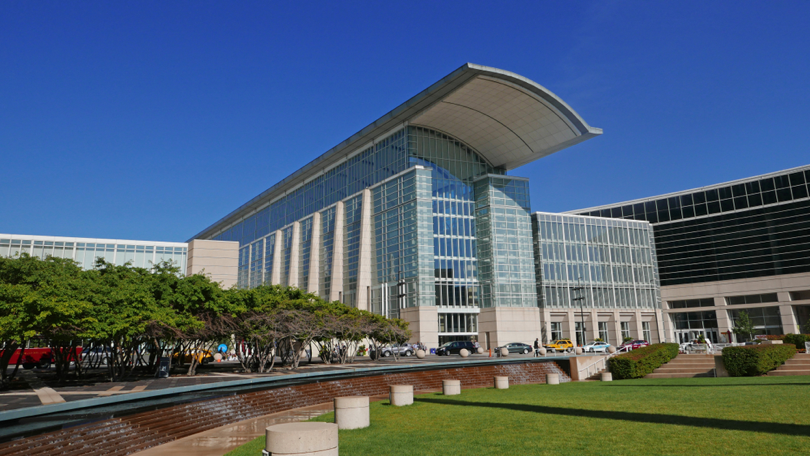
  3. What Is the ‘NSF’ of the Event?—In the trade show world, “NSF” refers to “net square feet.” This number equals the total square footage of all the rooms, areas and floor space in the given event venue. For reference, the country’s largest convention center, McCormick Place in Chicago, offers 2.6 million square feet of prime exhibit space. This, along with the number of attendees and the number of exhibitors, is often used as an indicator of the size of the event. The NSF will help you get a better visual of the breadth of the venue to help you determine whether or not this type of event truly aligns with your brand image and overall business goals.
  4. How Many Exhibitors Will Attend?—This is a good metric to know if you’re concerned with the presence of competitors. The last thing you want to do is be one of dozens of exhibitors in the exact same space vying for the attention of a small number of attendees. Note: You shouldn’t automatically be turned off by events with a high number of competitors, especially if you have the ability to stand out by creating an eye-catching trade show display or by leveraging the uniqueness of your product or service.
  5. How Many Years Have You Been in Existence?—We’re not saying you should automatically write-off first-time events. In fact, new conventions often offer discounts to exhibitors and may present you with the opportunity to grab better display real estate for a lower price. With that said, we don’t recommend that your very first exhibition be at a fresh, new event. You went to get your feet wet in the trade show world by experiencing one that’s well-attended and well-run. You can then use these events as benchmarks with which to measure the newer ones you attend later down the road.
  6. Is the Event Open to the Public?—Surprisingly, the way an event is labeled actually does matter. Trade shows are typically organized to cater to those within the trade and may be closed off to the public, whereas other exhibitor-focused events—often labeled as “shows,” “festivals” or “cons”—can usually be attended by those in the community or members of the general public. If your goal is to exhibit primarily to other businesses, it’s probably best to stick to events labeled as trade shows.
  7. Will There Be Additional Events?—Trade shows and conventions don’t simply exist to help you interface with potential clients and customers. They can also help you with other business objectives, like forging valuable partnerships, finding business suppliers, getting new ideas and even finding potential employees (some execs use these events as a method of “poaching” top talent). Much of this goes on at extraneous events, such as roundtables, networking events, speaking engagements and off-sites. Make sure to get a list of all the offshoot events before committing to a show.
  8. Will I Be Able to Get Premium Real Estate?—Finally, try to gauge what kind of booth real estate you can get with your budget at this particular show. This is one of the best reasons why talking with a representative from the hosting body is a good idea when you’re planning. You can ask questions like “How much booth space can I get for my budget?” and you might find that the reps will help stretch your space and find you the best location for your buck. Often, the most successful exhibitors are those who have good spots on the floor.

Talk to Others Who Have Attended

While it is important that you get the facts and figures from the trade show organizer, it can also help if you present some questions to others who have attended the same event in the past. Pose the question among your networking circle, on industry forums or on social media to get real, unbiased opinions on the show. Once you find the perfect event for your specific niche, budget and business objectives, you can be confident that exhibiting will bring a measurable return on investment.


Stacy Gavin is in charge of eCommerce Digital Marketing for HalfPriceBanners.

Prepping Your Tradeshow Program for the New Year

A Checklist

  • Write down all the shows you’re attending and the specific size of booths you’ll be setting up. Include dates, shipping addresses, products to be promoted, introduced or launched.
  • Plan social media broadcasts and interactions for the shows. Make a list of needed collateral, photos, videos and more that you’ll need to have.
  • List all of the various vendors you’ll use during the year, such as tradeshow exhibit houses, I&D (Installation and Dismantle) groups, shippers, graphic artists/designers, printers, promotional products providers and more.
  • Create a list of the people from your company will be attend each show. Check out show websites to find out dates that hotels open for reservations. Most show websites will have a downloadable PDF with critical dates, addresses and other information. Create a folder on your computer to store this information for easy reference.
  • Put all of the pertinent dates on your calendar with reminders if needed.
  • Speak to all of your vendors to get information on what is required for updates, including graphic file specs, turnaround time for any updates to the booth or repairs that need to be made.
  • Prepare sales and marketing materials.
  • Is your event staff going to wear uniforms or branded t-shirts? Get them ordered ahead of time.
  • Confirm event registration for all attendees.
  • Confirm booth registration for all shows.
  • Confirm schedule for payments and amounts.
  • Finalize budget for the year ahead.
  • Contact targeted attendees and book meetings a few weeks out, maybe a couple of months out if it’s a big show.

Being a tradeshow marketing manager is a non-stop, year-round job. Never-ending! By keeping things as organized as possible you’ll have a better handle on all of the loose ends that come up. Hopefully this list will help you out!

Have a great 2019!

6 Months of TradeshowGuy Monday Morning Coffee Guests

This month marks two years of the vlog/podcast TradeshowGuy Monday Morning Coffee. Most of the time I have a guest. And most of the time those guests are from the event industry. I don’t feel that guests must be from the tradeshow and event industry, but most of them are. I do want to have chats with people that are doing interesting things in business and would make for an interesting conversation. Browse through here for brief but insightful conversations with experts in tradeshow marketing, public speaking, communication, technology, entrepreneurship, photograph and much more!

Here’s a wrap of the guests that have appeared on the show in the past 6 months or so (all links open a new tab):

Kelly Mooney: a professional photographer with tips on creating a great headshot.

Internet marketer and public speaker Kathleen Gage discusses business, public speaking and marketing.

Mary Lou Burton is an event organizer and promoter. Her latest event is the annual Cannabis Collaborative Conference.

National Speaker Association Hall-of-Famer Terry Brock.

Entrepreneur and profitability consultant Thor Conklin.

Business credit expert Gerri Detweiler.

Communication skills expert Bill Lampton, Ph. D.

Marketing Expert Robert Middleton.

How does “revitilization of the human spirit” relate to tradeshows and events? Andrew Bennett of the Bennett Performance Group digs into this with me.

Classic Rental Solutions General Manager Jim Shelman looks at rental exhibits in 2018.

Author and entrepreneur Chris Reimer discusses his new Boosa Tech powerbank.

Publicity Hound Joan Stewart discusses some great ideas to create publicity around a tradeshow.

Sales Trainer Jeff Bajorek discusses sales prospecting.

Magician and professional tradeshow presenter Robert Strong.

International tradeshow expert Larry Kulchawik.

Tradeshow marketing  consultant Mike Thimmesch.

Professional photographer Irina Leoni discusses her approach to creating photos that tell a story about a business or a person.

Nathan Grepke, President of Blue Pony, talks about video and audio technology used on the tradeshow floor.


Subscribe to the podcast here! And subscribe to our YouTube channel here.

TradeshowGuy Monday Morning Coffee October 30, 2017 [video/podcast]

Entrepreneur and Author Peter Shankman has a new book out – his first ‘non-business’ book – and I got a chance to talk to him about it on this week’s TradeshowGuy Monday Morning Coffee. The book is called “Faster Than Normal,” and the topic was a good one for discussion:


Find the book “Faster Than Normal: Turbocharge Your Focus, Productivity, and Success with the Secrets of the ADHD Brain” here on Amazon.

Peter’s Faster Than Normal podcast is here.

ONE GOOD THING: Tickets to an upcoming Foo Fighters concert!

TradeshowGuy Monday Morning Coffee: September 25, 2017 [video/podcast]

One of our go-to vendors in the tradeshow world is Classic Exhibits. They’re an ambitious and creative bunch, replete with designers and fabricators that have been able to do anything we and our clients have asked. This week I sat down with VP of Business Development Mel White to discuss a couple of things: the exhibit rental market and the additions they’ve made to their online Exhibit Design Search. Take a look / listen:


Mel’s ONE GOOD THING was attending the Salem-Keizer Volcanoes at 9 am and witnessing the eclipse!

My ONE GOOD THING: Steely Dan. Walter Becker of the band passed away this month, so it’s been good to go back and listen to some of the great songs that Becker and his writing partner Donald Fagen have given us over the years. In fact, it wasn’t long ago I ran across a great video on how Steely Dan composes a song: Take a look:

And subscribe to the audio version of the podcast here.


The Tradeshow Road Warrior Web Roundup

When it comes to assembling a list of what it takes to be a tradeshow road warrior, there’s nothing like tripping around the web to see what other people say, right? I travel a handful of times a year for work, and maybe a time or two for pleasure, but the real road warriors know more than I. Let’s take a look:

Morag Barrett, founder and CEO of SkyeTeam chimes in on Entrepreneur with These Five Tips Will Turn You Into a True Road Warrior. For example, use TSA Precheck, take shoe bags and make sure you have backup power for your devices.

Tradeshow Road Warrior

At Inc.com, Suzanne Lucas takes the flip perspective: 10 Tips to Survive Life with a Road Warrior. If you’re a spouse or partner who’s home with the kids, life can be difficult. She offers tips such as making use of technology to stay in touch, don’t save things until he gets home, make family a priority and more.

Jessica Pettitt offers Packing and Travel Tips to Become a True Road Warrior in a post on Speaker Magazine. She speaks staying in touch with family and friends, getting good exercise, and of course, packing!

On Salesforce.com, Laura Stack gives us The Way of the Productive Road Warrior: Advice for Newbie Business Travelers. She covers how to plan for travel, plan for lots of downtime, be loyal to your airline for more points, and more.

From the Wrike blog for brilliant teams, Emily Bonnie offers Road Warrior Productivity: Must-Have Tips and Tools. Tips include carrying extra business cards, tackling the busy-work (emails, expense reports, organizing your computer, etc.). Tools include having a good battery backup for devices, staying hydrated during long flights, and taking podcasts along.

Heading to Europe for business and pleasure? Here are some tips for saving $$ from Rebecca Lehman on Brad’s Deals: 20 Things I’ve Learned That Save Money While Traveling in Europe. Tips include do a lot of walking, take public transit, don’t tip at restaurants and eat at food cars, among others.

Whether you travel half the time, or just a few times a year, it does take some time and thought, and yes, some experience, to make the travel go smoothly.


Grab our Free Report: 7 Questions You’ll Never Ask Your Exhibit House

Cold Calling Blues

cold calling, sales

When it comes to sales, you are in charge. Nothing happens in a business until a sale happens. Without the sale, nobody in the company is asked to build or provide anything to a client. Nobody is able to send out an invoice or bill. No money comes in, no bills get paid, no employees get paid. So until a sale happens, whether it’s on the street, in the store, online or at a tradeshow, nothing happens.

This was one of the first lessons I got when I moved away from talking into a microphone for a living to selling tradeshow exhibits. It puts a lot of pressure on ya! But it also opens doors to growth that you might not often recognize, or otherwise have in your life.

As a company owner at TradeshowGuy Exhibits, I’m responsible for many things – one of them is to bring in business: to make a sale. And frankly, it’s a competitive marketplace. There are a lot of good tradeshow companies, designers and fabricators out there. So, like any other company, we’ve tried any number of things: advertising in local and national publications, Google Adwords, sending out regular newsletters, soliciting referrals from current clients, blogging and other types of inbound marketing, social media outreach, walking the floor at tradeshows, gathering information on exhibitors to follow up later…and cold calling.

But, you say…Isn’t cold calling a good way to bug people? To interrupt them? To intrude upon their busy day? After all, in this online world, if people want to find what you’re selling, shouldn’t they be able to do it online? Certainly, but since being online in a crowded world isn’t perfect, businesses need to be able to reach potential buyers directly.

And that means cold calling.

Frankly, I’ve never been a big fan of cold calling for a number of reasons, but as my Sandler Sales trainer keeps telling me, “You don’t have to like it you just have to do it.” And with better tools and more effective questions, it becomes easier. And, as with any other selling method, it can bring in business.

In the past 30 days of cold calling I’ve uncovered several leads for potential projects. I’ve even found half a dozen people that told me “you should have called a couple of weeks ago!” as they just made a deal for a project.

Which tells me a number of things:

  • Businesses are buying
  • Every business is in a different situation and you might be exactly what they’re looking for
  • If you use cold calling as part of your selling strategy, as in any part of your strategy, you’ll continue to uncover leads

So to bring this around full circle and relate it to tradeshow marketing, it’s worth doing. Your audience – your potential clients – are all in different situations. Some may have just purchased exactly what you’re offering. Others may not need your services for another year or more. But some will be in the perfect sweet spot where their needs match up with your product, service and capabilities.


Get the free report “7 Questions You’ll Never Ask Your Exhibit House”

© Copyright 2016 | Oregon Blue Rock, LLC
Tradeshow Guy Blog by Tim Patterson

Call 800-654-6946 for Prompt Service
Copyrighted.com Registered & Protected <br />
QA4E-AZFW-VWIR-5NYJ