Best tradeshow marketing tips and case studies. Call 800-654-6946.

Uncategorized

TradeshowGuy Monday Morning Coffee, September 23, 2019: Laura Allen

Laura Allen is known as The Pitch Girl, and she teaches clients how to distill the essence of their business into a few concise sentences and confidently present that to potential clients. Laura was a fun interview on this week’s TradeshowGuy Monday Morning Coffee:

Check out Laura at The Pitch Girl.

This week’s ONE GOOD THING: the new Lisbeth Salander novel, The Girl Who Lived Twice.

Moving Out of Your Tradeshow Exhibiting Comfort Zone

It’s comforting to stay in your comfort zone. We all know that. No matter what the circumstances. That’s why it’s your comfort zone! If you are more comfortable being a wallflower at social gatherings, it’s difficult to walk up to someone and introduce yourself. If your exercise routine is a daily mile walk, it’s a big step to train for a marathon.

If you’re comfortable in your exhibiting approach to set up a couple of banner stands, and put a branded table throw over the show-provided table, it’s asking a lot to move to a custom exhibit. But many – most – of the clients I work with are doing just that.

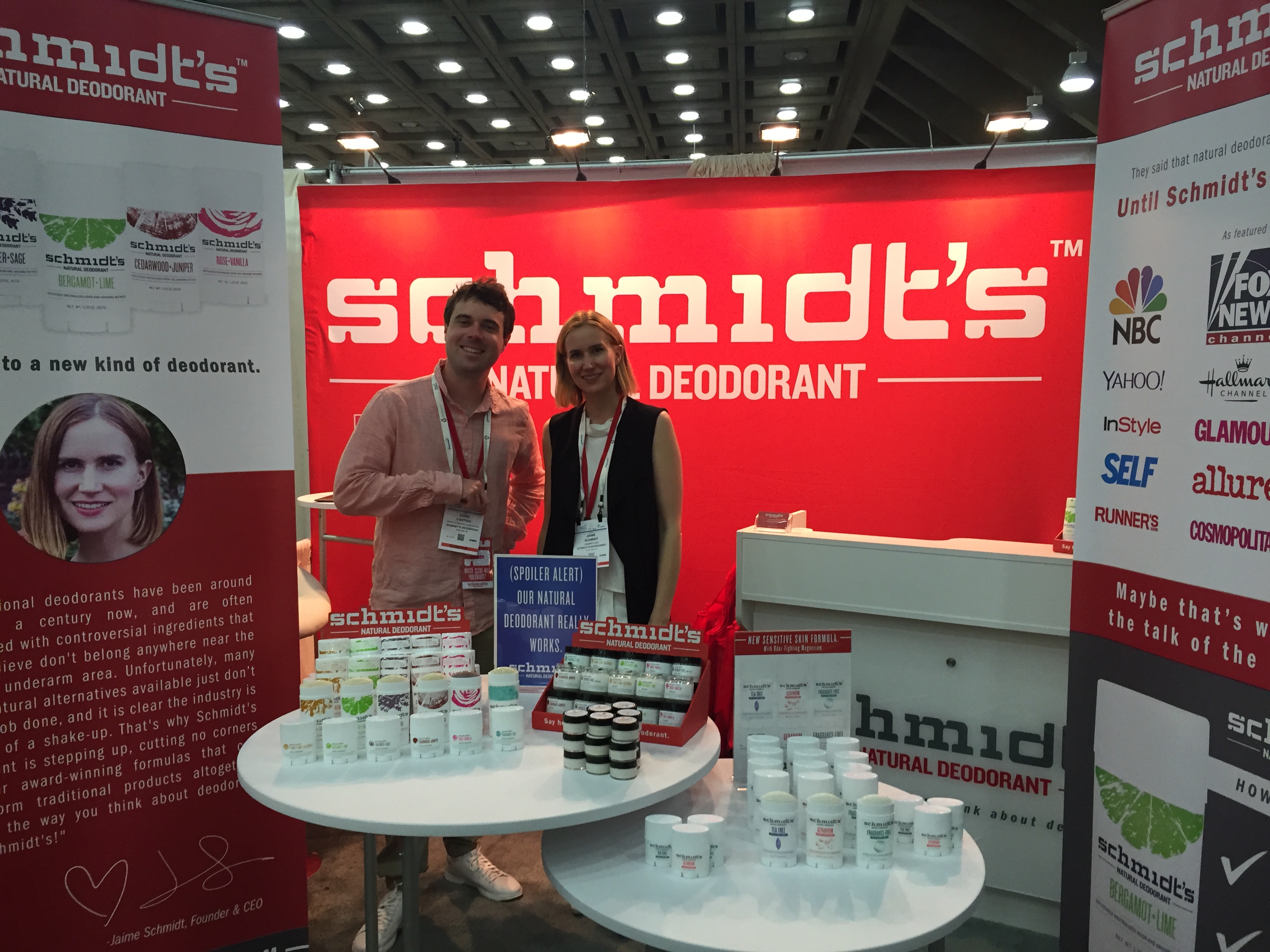
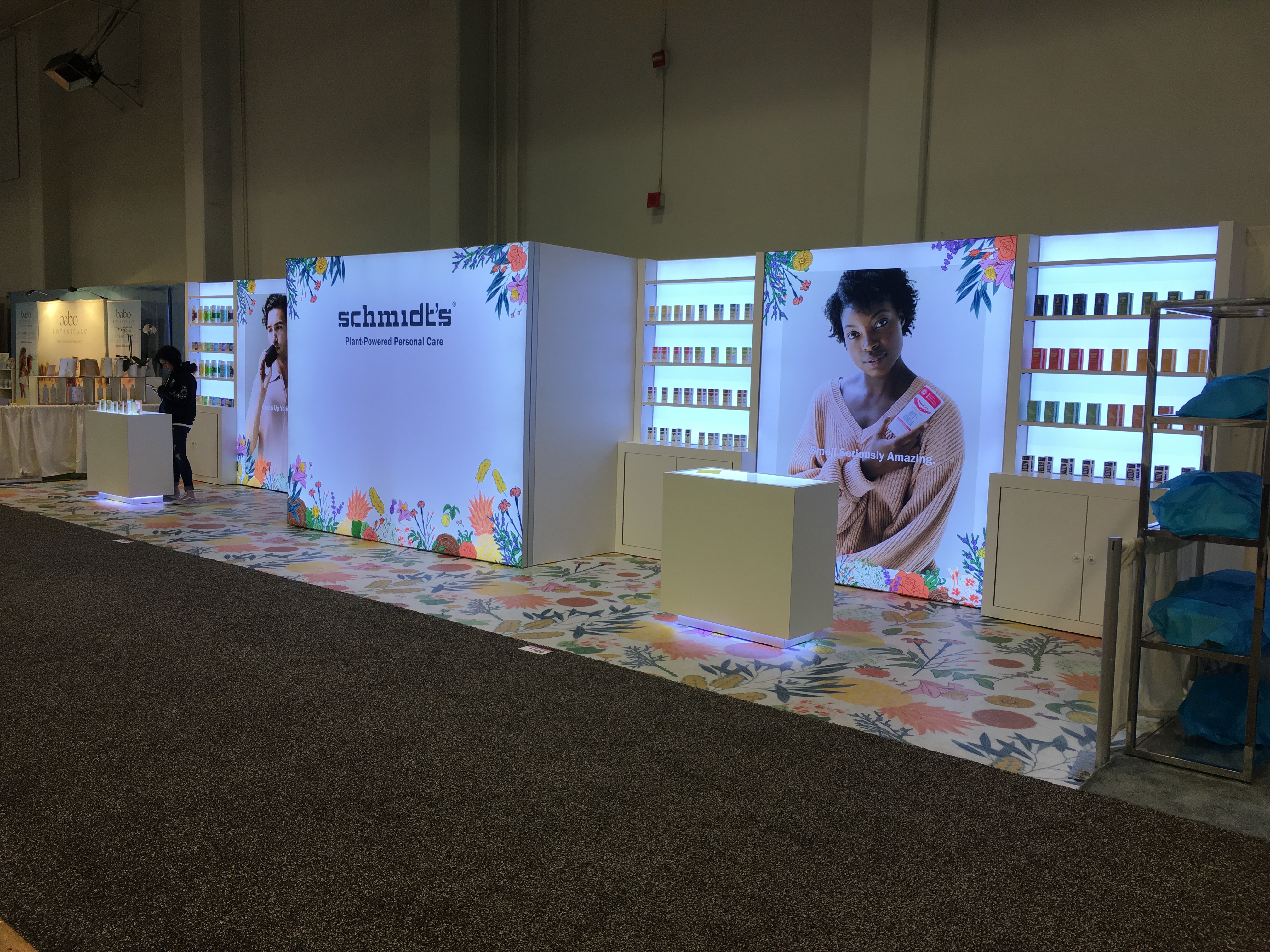
For example, a few years ago when I met the great people at Schmidt’s Naturals, they sent me a photo of their current setup, which was a basic back wall and some banner stands. Nothing wrong with it. But they were a growing company and wanted a better look.

Schmidt’s Naturals before doing a custom booth

But doing more meant moving out of their comfort zone. And there are three specific ways in which they were moving out of their comfort zone.

One – the budget goes up. A great-looking custom exhibit will cost more. It’s an investment. That investment comes from a belief that it’s a worthwhile investment, that it will pay off with greater exposure. It’ll pay off with a better-defined brand. It’ll pay off with the ability to take that brand to a wider market and open up markets that were previously difficult to reach.

Two – a custom exhibit won’t ship as airplane luggage or via a UPS package. Nope, odds are that it will fit into a custom-jigged carpeted crate, which ships via a trucking company. And that will take logistic coordination that the company may not have much experience.

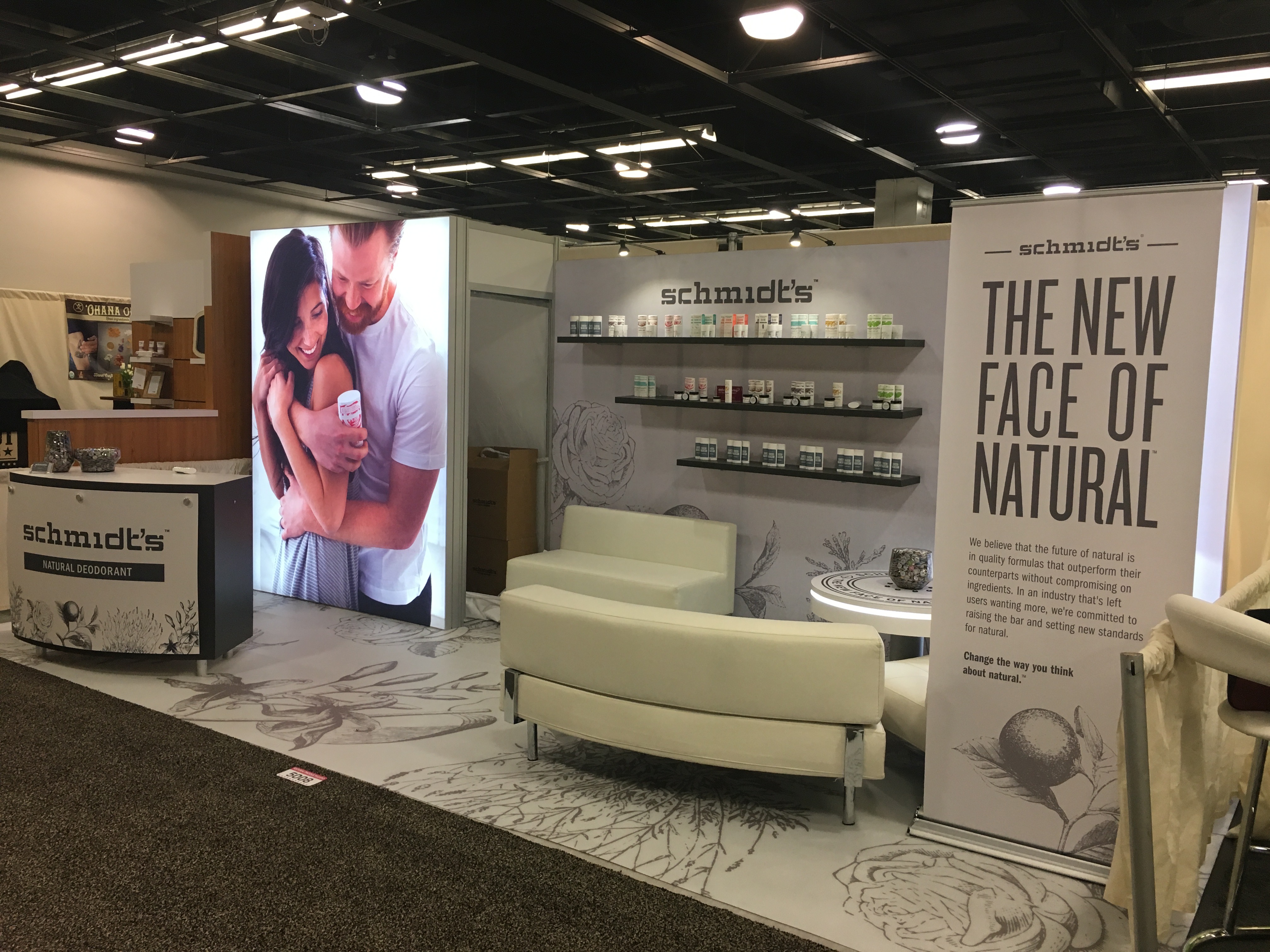
Schmidt’s moving up to a 10×20 in 2017

Three – having that custom exhibit usually means hiring a labor management company to setup and dismantle the exhibit. Frankly, the first year with Schmidt’s I joined in and four or five of us set up the 10×20 exhibit on our own. It took between three and four hours. We all learned how to do it, which would have made the next time around a little easier. But they decided to have the pros do it the next time around. So that meant hiring an I&D (installation and dismantle) crew to do the honors. Since we were working with Eagle Management at the time (and still are), we added the Schmidt’s Naturals exhibit to the list.

After a couple of shows, the “new” comfort zone is different from the “old” comfort zone. Many companies decide to take the logistic coordination in-house, others, like Schmidt’s and many of our other clients, have us handle the coordination. No wrong answers – each company does what’s best for their situation and desires.

Schmidt’s Naturals as a 10×40 in 2019 at Expo West

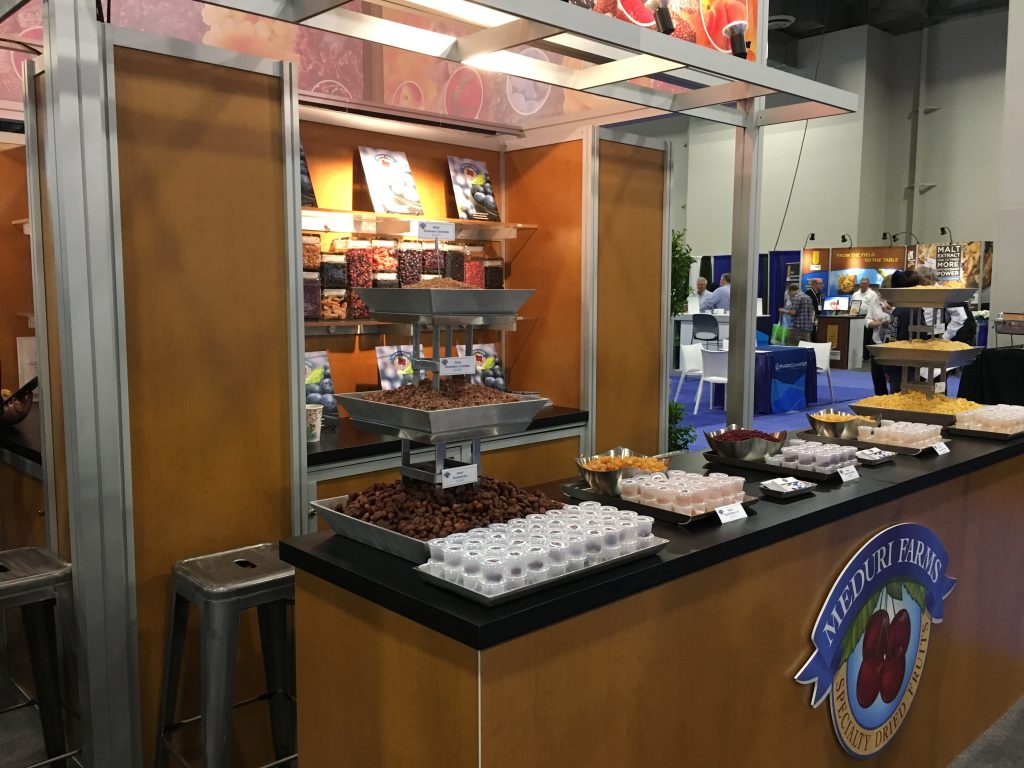
Moving out of a comfort zone is something I’ve seen in almost all of the clients I’ve worked with in the past several years, from Kettle Foods, Nancy’s Yogurt and Bob’s Red Mill 15+ years ago, to Wildbrine, Organixx, Hop Tea, Meduri Farms, Wedderspoon and others in the more recent past. They were all moving up from a smaller, easier to handle exhibit to one that needed more logistic management and was a bigger investment in their marketing. But the end result for all of them was increased presence and positive feedback, and for many of them a significant increase in leads generated.

Every exhibiting company will someday need to come to terms with the prospect of moving through their comfort zone, and having someone to help that process is invaluable.


tradeshow exhibit design search

Checking Your Tradeshow Marketing Results

You can have the best booth, a well-trained staff, good products and more, but what about your tradeshow marketing results? How did you really do at the show?

Here are a handful of results and outcomes you can gauge.

Certainly, the most important two metrics to know and understand are leads generated and business generated from those leads. How many sales did you make?

And not only at the show, but in the months to follow. Many shows allow you to sell direct at the show, or strike deals for later delivery, but almost all shows will generate leads for follow up, which is where the money lies. To accurately track the Return on Investment, you’ll probably want to calculate a new ROI every so often, perhaps every quarter, to see how many leads converted to clients along the way. While you may still be tracking new customers from a tradeshow for as much as a year (or longer), I would think that knowing the ROI a year out is sufficient. And assuming you are going back to the same shows, you can start tracking ROI from that show separate from the previous show.

Beyond leads and sales, there are a number of “softer” items to track which can affect your tradeshow marketing results:

Feedback on various things. How did people react to your new exhibit, for example? Did it wow people, or was the reaction a little more ‘ho-hum’? Or is your older exhibit still impressing people?

Feedback on your products. Depending on what you’re pitching or launching, gauging people’s reactions to those items can be very valuable. If it’s a complicated piece of software, for example, is it easily understood? Does it spur a number of unexpected questions? If you’re test-tasting new flavors of your food, what does the look on people’s faces look like when they’re first biting in? If you’re pitching a new service, is it easily understood?

Feedback on your marketing message and graphics. Do visitors immediately understand what you’re trying to do? Do they ‘get it’?

Booth staff: does your booth staff know how to engage for positive results? Do they know how to approach people, or are they sitting in the back of the booth on their phone or eating? These actions can affect your results in a positive or negative way.

Finally, look around at other exhibitors: how do you compare to them? Are your products similar or do they stand apart? Does your exhibit compare favorably to direct competitors (size, layout, attraction, function) or does it look a little pale in comparison?

There are so many things you can measure to check your tradeshow marketing results. The great thing about tracking so many things, even informally, is that you can more easily compare those results year to year, show to show and determine if tradeshow marketing is working really well, or if you need to focus on some specific things to improve.


Applying the Modern Business Plan to Tradeshow Marketing

The ‘modern business plan’ was hatched on a blog post by Seth Godin. I was a recent enrollee in Godin’s The Marketing Seminar, where at one point we were referred to the post which breaks down the five elements of what he feels are the important parts of a modern business plan: truth, assertions, alternatives, people and money.

It’s also possible to apply that thinking to how you approach tradeshow marketing.

The truth of tradeshow marketing would be the facts and figures of the specific show(s) that you plan to participate in. How many people attend? What percentage of decision-makers and influencers are among the attendees? Who are the competitors/exhibitors?

Assertions might include your thoughts on what you believe you know that is not necessarily supported by data. What new products are you launching that might be similar to new products from competitors? What types of marketing tactics and strategies are those competitors using? This is where you state what you believe to be true, although you might not be able to prove it.

Alternatives: ­This is where you play the “what if” game. What if things go wrong? What is your plan B? What if you get lucky by meeting the exact prospect that you didn’t anticipate? What if your top salesperson is poached by a competitor? Hey, anything can happen. At least opening your mind to some of those possibilities gives you a chance to chew them over.

People: who are your best people and how can you best use them? Where are your weak spots and how can you improve with them? Do you need to acquire people to get your tradeshow department to run like a clock and not like a Rube Goldberg machine?

Finally, money: Budgeting, logistical costs, personnel costs. Return on investment, cost of samples. You know the drill. But are your numbers accurate? And did you run the calculations a year later after the show so that you actually know what your return on investment really is?

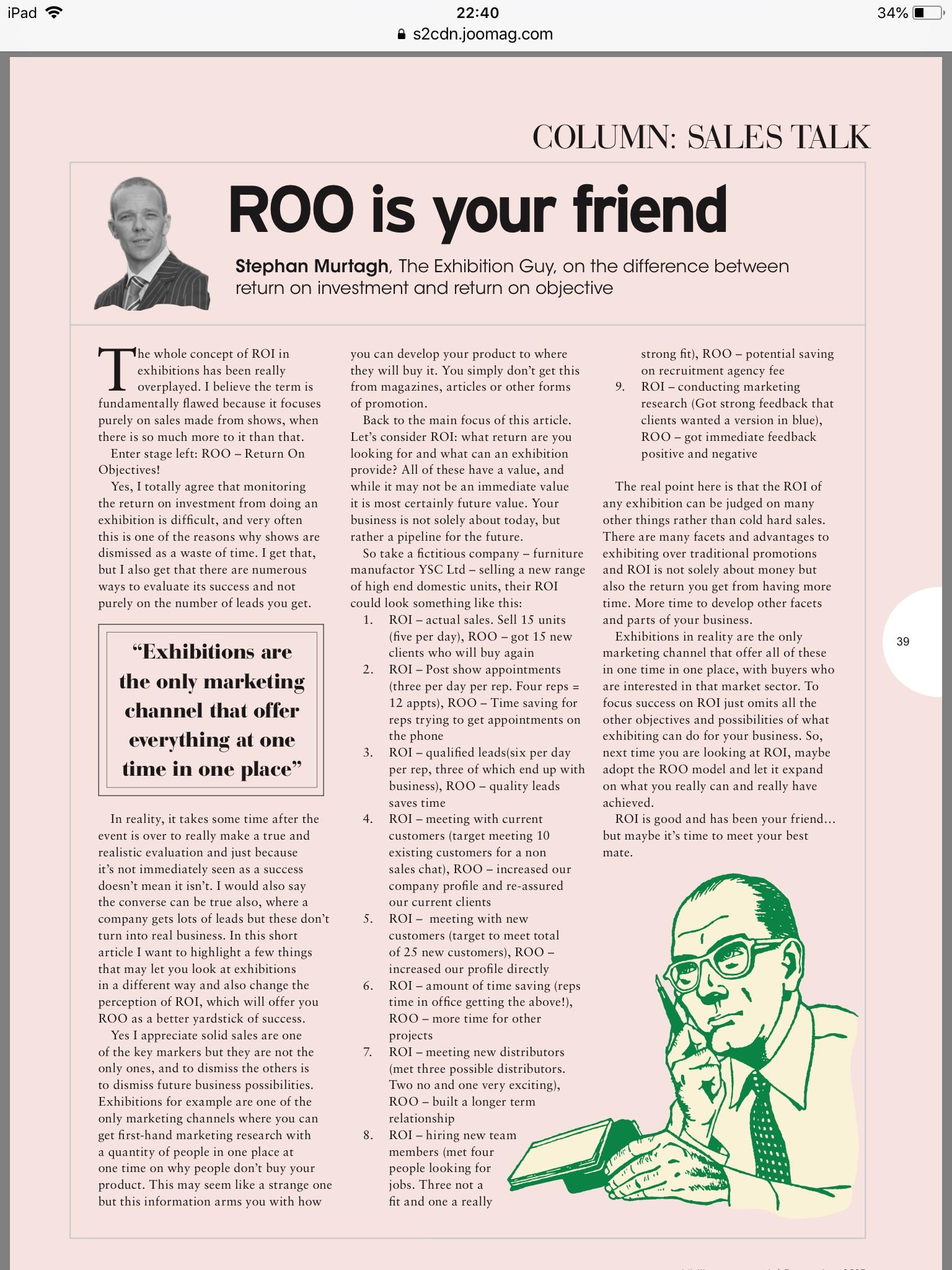
What is your Return on Objective? Thanks to the Exhibition Guy Stephan Murtagh!

There are any number of ways of looking at your business or marketing plan, but taking this approach helps to clarify several issues at once. Give it a try!

TradeshowGuy Monday Morning Coffee, July 1, 2019: Friendship

There are as many different kinds of friendships as there are friends. Some are business-related, some are school or college-related, others are just friendships you struck up from people you met randomly. This episode of TradeshowGuy Monday Morning Coffee peeks at friendships.

Here’s a link to 50 Inspiring Quotes About Friendship from Inc.com.

And this week’s ONE GOOD THING is the Mueller Report.

Top Ten All-Time Most Viewed TradeshowGuy Blog Posts

I got an email the other day from someone whose newsletter I had just subscribed to, and in the introduction email there was a link to the top 5 most read blog posts on her blog. That’s when an idea light lit up over my head and gave me an idea for a blog post (as a blogger, you’re always looking for ideas, right?).

Next thing you know I was pawing through my Google Analytics account to find out what were the most-viewed posts on this blog. These are the ones that floated to the top, for whatever reason. It’s all organic. I don’t advertise, but I do share links now and then on Twitter, Facebook and LinkedIn. On occasion there might be a link here from Pinterest. Or another blog.

This blog is aging. It’s over ten years old, having been launched in November, 2008. There are almost 1000 posts.

One more note: the analytics breakdown shows the front page as “most-viewed” and a couple of pages (not posts) showed up in the top ten as well, including the Contact Me page and the We Accept Blog Submissions page. But beyond that, here are the top ten blog posts since the beginning of the blog (in traditional countdown order):

Number Ten: The Ultimate Cheat Sheet for Exhibit RFPs. I created a one-page sheet on what should go into an Exhibit RFP (Request for Proposal), and posted it on Cheatography.com, a site for thousands of cheat sheets. Kind of fun. They regularly sent me emails telling me how many times it was downloaded (500! 1000! 1500!). Not sure how accurate that is, but obviously it’s been seen by a lot of people. From September 2017.

Number Nine: Breaking the Ice: How to Attract Tradeshow Visitors. I referenced a number of techniques taught by tradeshow colleague Andy Saks for this article, which appeared in December 2015.

Number Eight: 23 Pre-Show Marketing Tactics, Promotions and Ideas. A laundry list that was posted in October 2009 when the blog was not even a year old.

Number Seven: How to Build a Tradeshow-Specific Landing Page. Inspired by Portland’s Digimarc, it’s a look at the steps you can use to put together an online site specifically to interact with potential tradeshow booth visitors. From December 2017.

Number Six: Write More Orders at Tradeshows by Replacing Paper With Digital Technology. One of two guest posts on the Top Ten list, this is from Sarah Leung of Handshake. April 2015.

Number Five: Tradeshow Debriefing Questions. Another oldie but goodie, this post from September 2009 guides you through the after-show info-gathering process.

Number Four: Virtual Reality for Tradeshows. You’ve seen them at shows: people wearing VR goggles. Is it worth it? A brief exploration, from June 2016.

Number Three: Exhibit vs. Booth vs. Stand. They’re called different things in different parts of the world, so I took a whack at trying to explain it. Just last summer in July 2018.

Number Two: 10 Skills Every Tradeshow Staffer Should Have. Margaret Coleback of Vantage Advertising LLC dashed of a great list for staffers, which appeared in January 2015.

Aaaaand, at Number ONE: SWOT Analysis for Tradeshows. It still surprises me that this post gets a whopping 3.95% of all of the traffic on the site. At the time I wrote it I had been spending a fair amount of time with a friend who was going through school to get his degree in marketing, and one thing that we discussed in depth was the SWOT Analysis. S=Strengths; W=Weaknesses; O=Opportunities; T=Threats. It’s a great exercise to work through in regards to your tradeshow marketing appearances. Check it out. It’s from February 2015.

Got any favorites?


TradeshowGuy Monday Morning Coffee, April 22, 2019: The Marketing Seminar

I’ve alluded to Seth Godin’s The Marketing Seminar a few times in recent blog posts and podcasts/vlogs. In this episode I discuss the online seminar in more detail – without giving away much at all. It’s a great course, and I highly recommend it. Check the below for some bonus Seth Godin material.

Seth Godin bonus Material:

Rare Q&A Video, a New Workshop and a path forward for entrepreneurs (blog post and a nearly two-hour video).

Brian Koppleman’s The Moment podcast: January 2019 interview with Seth Godin.

This week’s ONE GOOD THING: The NBA Playoffs.

TradeshowGuy Monday Morning Coffee, April 8, 2019: Tom Beard

What does it take to be sustainable in regards to your tradeshow marketing program? Regarding your tradeshow exhibit booth? In today’s episode of the TradeshowGuy Monday Morning Coffee, I chat with Tom Beard, National Sales Manager of Eco-Systems Sustainable Displays:

Check out the original interview with BJ Enright of Tradeshow Logic on NAB Show Cares here.

This week’s ONE GOOD THING: the new Kamasi Washington album “Heaven and Earth.” Here’s his website.

© Copyright 2016 | Oregon Blue Rock, LLC
Tradeshow Guy Blog by Tim Patterson

Call 800-654-6946 for Prompt Service
Copyrighted.com Registered & Protected <br />
QA4E-AZFW-VWIR-5NYJ