Best tradeshow marketing tips and case studies. Call 800-654-6946.

Blog

7 Things Your Social Media Consultant Won’t Tell you

Considering hiring a social media consultant to get your tweeting, Facebook posting and YouTubing ramped up, but don’t know where to start? Just because someone calls themselves an expert doesn’t mean they really are the best choice for you. So let’s look at

Laughing sailor

a few things that your potential social media consultant likely won’t tell you:

  1. Don’t always start with Facebook. Just because everyone and their mom is on Facebook doesn’t mean your company should be there. It doesn’t mean it SHOULDN’T be there, either. After all, many of your competitors and much of your potential market are hanging out there. But depending on your strategy and goals, perhaps Facebook isn’t the place to start. Perhaps LinkedIn is. Or Twitter. Or a good set of information videos packed with keywords on YouTube is more appropriate for your business. Truth be told, a good social media consultant will help you examine your market, identify potential target areas, solidify social media goals and then move into the implementation phase – whatever that may be.
  2. Look to connect, not to promote. Even big companies spend a lot of time answering questions on their blogs, replying to tweets and responding to comments and questions on Facebook. Promotions are okay – and in fact if done right can be a big boost for your bottom line. But you should plan on spending a majority of your time simply engaging with those that follow you.
  3. Setting up accounts on Facebook, Twitter, YouTube, LinkedIn and Pinterest are not ‘embracing social media.’ Building a big list on Twitter is not social media engagement. Sending hundreds of people to ‘like’ you on Facebook is not social media engagement. Oh, sure, it’s good to have people that are connected with you – but unless you are giving them some sort of value on a regular basis you’re wasting your time and theirs. It’s all about the content you share and the conversations you start (and continue).
  4. High-level social media engagement doesn’t require high-level expertise. No, it doesn’t. It really requires common sense and continual work. Everyone is capable of working and understanding social media. And if someone tells you they’re too old for social media, you’re free to steal my line (which I’m sure I borrowed): “No, you’re not too old. You’re too lazy.”
  5. There is no such thing as a “social media expert.” Anyone can hang a shingle and call themselves “experts.” However, a true student of social media recognizes that expertise is gained through hard work, constant education, and yes, learning how to do things right by first doing them wrong. Which means that no matter how much they know, there’s always something new to learn….which means that being an “expert” is really impossible.
  6. While a social media consultant can help you get started, ultimately it’s up to you and your company. Which means that not only will you and your marketing team have to learn and understand all of the nuances of social media engagement, your whole company will ultimately become involved. Not everyone in a company should be representing your company online, but every department should have a representative that engages with your social media outlets. Someone up the ladder must also take the lead and the responsibility for leading the effort.
  7. Social media is really just another aspect of doing the same things you’ve always been doing: generating revenue through great marketing and excellent customer service. You know, the way you’ve been trying to do since the company began. Social media is just a different avenue for executing those plans, generating leads, giving great customer service and touching those people where they live.
Creative Commons License

 photo credit: Purblind

13 Ways to Use QR Codes for Events and Tradeshows

  1. Download a White paper or other digital bonus
  2. Signage for presentations to access related additional information
  3. Live chat: QR Code places a call to someone in your company that can answer a question (how does this work?)
  4. Promote your email newsletter with a quick signup on a smart phone.
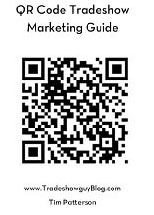
  5. Grab the QR Code Tradeshow Marketing Guide Kindle book here!

    Facebook page “like” us!

  6. Use QR Code in your follow up with prospects and leads
  7. Invite people to watch a short video demo or testimonial on YouTube on their smartphone.
  8. Set up a Scavenger Hunt starting with a QR Code. Make sure you have a good prize at the end to get people engaged.
  9. Give a discount or giveaway by scanning a QR Code.
  10. While QR Codes on t-shirts are not always easy to scan, if everyone in your booth wore a t-shirt with a QR Code, it would certainly attract attention! And think of how much fun it would be to have guests scan the codes. Make sure to have a flat version of the code in the booth in case someone’s phone doesn’t scan well.
  11. Link to your Twitter account and ask them to follow you.
  12. Set up a phone number in your QR Code. By scanning, a person’s smart phone will automatically make a call.
  13. You can also set up a QR Code to send a text (SMS) message. This might be a request to get on a text message marketing list to receive discount alerts via SMS, for instance.


What to keep in mind:

Give value and tell people what they’ll get when they scan the code. People won’t scan if they don’t sense something valuable at the other end. Scanning a QR code is not always quick and easy.

Speaking of quick and easy, be sure to make the QR Code large enough and with enough contrast (black on white is best), so that it’s easy to scan.

Optimize your landing page for the smartphone. Duh.

Test it before you launch it.

Why Your Company Should Consider Blogging

If you’ve been doing tradeshow marketing for years, and you’re edging into social media, good for you. Companies that work intelligently to drive traffic to their tradeshow booths are showing some great results.

But do you have a blog? If so, are you using it to its full effectiveness? If not, why not? Perhaps you should consider blogging. The presence of an active, engaging blog can make the difference between closing a deal or not, all other things being equal.

Here are some reasons to consider blogging:

  • It’s a marketing tool that’s much easier to maintain than a newsletter. You can add and change it at any time.
  • You want to influence people in your market.
  • You want to be seen as a thought leader or industry leader.
  • You have an expertise and you want to share.
  • You like engaging in debate with strangers, who can often become friends and perhaps even clients.
  • It helps you get found online. Blogs are search-engine friendly.
  • Blogs can bring your team together. As an example, the 300-employee company Hubspot in Boston invites any employee to contribute to the blog, which allows them to have several posts a day offering a number of viewpoints and various useful information.
  • Blogging forces you to stay sharp. By continually coming up with material you’re always learning and sharing what you learn. As a result, you become smarter and more well-known for knowing more than most people in your industry.
  • As a result of blogging people will ask you questions, which leads to you learning even more.
  • Creating great content leads to sales. Seriously. When you create great content, you create trust, which brings in people that are interested in your content. Those people often become business leads, and leads often become sales.
  • Creating content leads to comments and discussions. Those comments allow you to learn from readers to find out exactly what they’re interested in. It also gives you insight in to the pain points they’re experiencing. And in a sales call, knowing those pain points and how to solve them leads to sales.

So what about tradeshows, events and conferences? How can blogging help in your event marketing? Let’s take a look.

  • By having a blog platform, you are able to share more information about what happened at the event in real time.
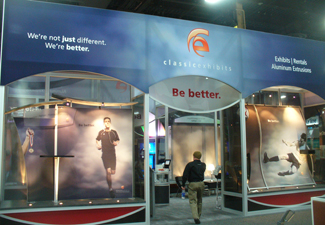
  • As the date of the show gets closer, your blog is a platform for sharing what you’ll be doing at the show. Classic Exhibits’ lead-in to their appearance at Exhibitor this year was a perfect example. Their regular blog readers saw the various videos they posted that teased their Exhibitor appearance.
  • A blog is a perfect platform for posting multi-media from the event: audio, video and photos. This is a great place to interview happy clients and post those video clips on your blog, which become power testimonials for your product or service.
  • Once the show is over, your blog is a place to do continual follow-ups. Material that you compiled at the show can be spun out on your blog over the next few months.

Yet, in spite of all of these great reasons to blog, make no mistake: blogging isn’t easy, and there’s not necessarily a direct payoff from all of the effort that goes into a blog. However, an active blog can be a powerful tool and is often the difference between making a sale or not when going head to head with a competitor who is not blogging.

(photo by Annie Moles, courtesy commons.wikimedia.org)

What Have You Done For Me Lately?

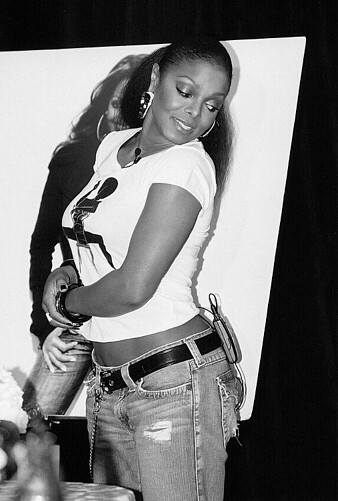
There’s an old Janet Jackson hit song that asks the question: what have you done for me lately?

Not only does the question apply in love relationships (as in the song), but it applies to you in your relationship to your customers and clients.

It applies in your social media efforts, your tradeshow marketing schedule and your other marketing endeavors.

Did you post a terrific article on your company blog last week that helped solve a big problem that your industry faces? Awesome. What’s next?

Did you make a stunning appearance at the last big tradeshow and leave your clients and potential customers wide-eyed and amazed? Great. What are you doing at the next show?

Did you host a Twitter chat recently that got a lot of industry folks involved while you posed and answered questions? Cool. When’s the next one scheduled?

Did you put together a nice little video and post it on your YouTube channel last week that illuminated an issue in your industry – and your insight may help people move forward with more confidence? Excellent! What about this week?

Get the message? Everything you do recedes into the past, and it recedes rather quickly.

One of the folks I follow on Facebook is an old rock-and-roller from the Sixties. For months he’d update us about his activities: new tour, travel adventures, fan meetings, etc., and posted numerous photos of all of those activities.

When he went silent I didn’t actually notice it for several weeks. Then when it dawned on me I wasn’t catching his postings, I wondered if it was because he was dead. Okay, I didn’t really think that seriously, but it crossed my mind! Then I mused it might be because of the weird algorithms that Facebook uses to determine what information shows up in your news stream. Then it occurred to me that he might have simply stopped posting things.

Out of sight, out of mind.

Any salesperson will tell you that the hardest thing, especially if you’re selling a long-cycle product, is to stay ‘top-of-mind’ with your market.

I’ve missed making exhibit sales to companies in the past that I simply hadn’t called in six months. They knew who I was, they were aware of my company’s capabilities and skills – and my interest in working with them – and yet, when it came time to choose an exhibit company, they chose another company that was more ‘on their mind’ than I.

Trying to keep the hopper full in marketing, whether online, social media, tradeshow, traditional or some combination, is to attempt to feed a beast that will never be satisfied. If you’re a blogger, your readers want to know what’s next. If you’re on Twitter, yesterday’s tweets are yesterday’s news. Last month’s tradeshow is history.
It’s all history. It all recedes quickly.

So: are you staying on people’s minds?

Are you feeding the beast?

What have you done for me lately?

(photo by Dan Ingram, used by permission)

Case Study: Classic Exhibits and Social Media at EXHIBITOR 2012

Late in 2011, Mel White, the VP of Marketing and Business Development at Classic Exhibits Inc., contacted me to ask if I’d be interested in guiding their social media efforts at EXHIBITOR 2012 in early March.

“Sounds intriguing!”

So we set out a plan. Our main goal was to create as much buzz as possible (on a limited budget) leading up to the event. The plan was to shoot 2-3 entertaining teaser videos before the show. The videos would slowly reveal the concept and design of Classic’s new 20 x 30 display, a booth that would showcase their most popular 10’ inline exhibits.

Starting three weeks before the show, we started posting short teaser videos. The videos slowly revealed the “Be Better” concept using a lighthearted investigative reporter approach.  Getting the inside scoop from Classic was the main theme.  They appeared on the Tradeshowmarketing YouTube channel, here on Tradeshowguy Blog, and on Classic Exhibits’ blog, Trade Show Tales. In addition, we posted these on Classic’s LinkedIn group and Facebook page. Almost immediately, traffic to Classic’s blog tripled.

At the show, we posted more videos, shot a lot of photos, and met a host of people who saw the video. All of this was tweeted about and shared on Facebook as well.

So what did all of this social media activity get us? Let’s take a look and count the numbers where we’re able.

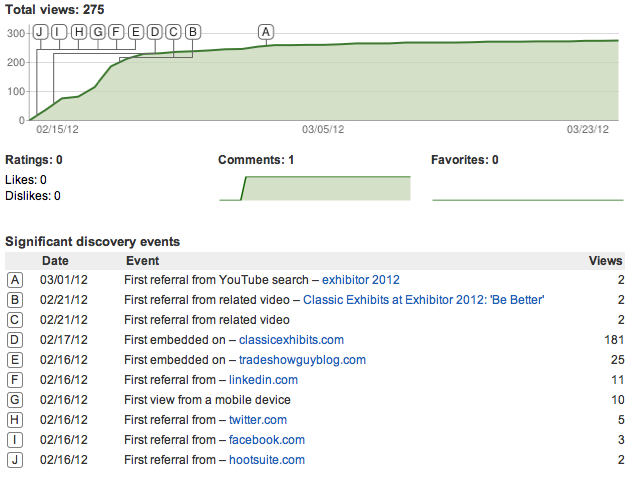
The four Classic Exhibits-related videos gathered a total of 760 views on YouTube (the five non-Classic Exhibits-related videos, by contrast, got a total of 177 views).

During the show, I counted about 20 people who made a comment after recognizing me (and my classic old Stetson Bogie-style hat) from the videos. According to Mel White, of the over 230 leads at the show, about 40 percent mentioned either the videos or the blog posts. In fact, Mel stated, “We’ve been exhibiting at EXHIBITOR for nearly 20 years. This year we doubled the number of end-user leads compared to past years. Some of that was the exhibit design, but the videos attracted customer to our space who would not have visited us otherwise.  More than anything, the videos boosted our ‘cred’ with our distributors. We were viewed as the social media innovator at the show.”

A few of the results:

  • Various links and comments I made on Twitter about EXHIBITOR (both Classic Exhibit-related and non-related tweets) got mentioned and/or re-tweeted to over 36,000 people.
  • TradeshowguyBlog posts related to Classic Exhibits/Exhibitor have received 265 total views.
  • YouTube search ranking for ‘EXHIBITOR 2012’ showed ALL videos on the front page of the search results, taking the Top 3 spots and 5 of the Top 10.
  • Google search results for ‘Exhibitor 2012’ were less impressive, although a podcast recap of the adventures in Las Vegas at EXHIBITOR and in Anaheim at Expo West showed up in the Top 5.
  • On Bing, a search for ‘EXHIBITOR 2012 video’ showed a Classic Exhibits blog entry as the top result.

Bottom line: From my perspective, it was a fun and worthwhile project, both for branding Classic Exhibits and as @tradeshowguy at the show. With all of the views and positive feedback, it added up to a win/win for both!

9 things I Learned from #Exhibitor and #ExpoWest

Reflecting on the week I spent in Las Vegas and Anaheim in early March…

  1. People are learning how to use QR Codes. Finally.
  2. Video gets people’s attention. The various videos I posted on the YouTube Tradeshowmarketing channel got me recognized time and time again.

    Wait a minute...are you sure we're in Las Vegas??
  3. NetworKing is king. By hanging out with people I knew, I kept meeting more people that I may work with in the future.
  4. I’m not, nor have I ever been, crazy about Vegas. Smoking in casinos (ugh), expensive everything (yeesh).
  5. People remember you if you show up year after year…and that’s a currency that’s hard to beat. It was my tenth year at Expo West.
  6. Referrals come from building a history. During Expo West I got a handful of leads, thanks to referrals. And showing up year after year.
  7. There’s a ton of material to be had for a blog at every show. Just look. Lift the rock and pick a topic.
  8. First time at Exhibitor, can’t wait for the next time. Feels good to rub elbows with long-time industry peeps.
  9. By early February, I assumed I would not make it to Expo West, but ended up going thanks to some generous clients.  Treat your clients well and they’ll treat you well.
  10. Bonus: Twitter is a great tool to meet people. I spent two days at Expo West connecting with tweeps I met online. “Hi, I’m @tradeshowguy – saw your tweet!” is a great opening line. Once people know who you are – even if it’s only a recognizable Twitter handle – they’re happy to talk to you.

© Copyright 2016 | Oregon Blue Rock, LLC
Tradeshow Guy Blog by Tim Patterson

Call 800-654-6946 for Prompt Service
Copyrighted.com Registered & Protected <br />
QA4E-AZFW-VWIR-5NYJ