Category: Tradeshow marketing

  • How Trade Show Lightbox Displays Can Help Small Exhibitors Improve Booth Visibility

    Guest article by Joyce at Frame Plus.

    Trade show floors are busy places. A small exhibitor may be competing for attention next to larger booths, louder demos, hanging signs, product samples, and fast-moving aisle traffic. In that setting, visibility is not only about having a bigger booth. It is about making the message clear enough to understand at a glance.

    That is where a lightbox display can be useful. Compared with a standard printed banner, a lightbox uses internal illumination to make graphics brighter, cleaner, and easier to read from a distance. The goal is not to make the booth flashy. The goal is to help the right visitor notice the brand, understand the offer, and decide whether to stop.

    For small exhibitors, the first job of a booth is often simple: communicate who you are, what you offer, and why someone should care. A backlit graphic can support that by turning the main wall, counter, or side panel into a stronger visual anchor. Instead of relying on a table cover and a few signs, the booth has a clear focal point.

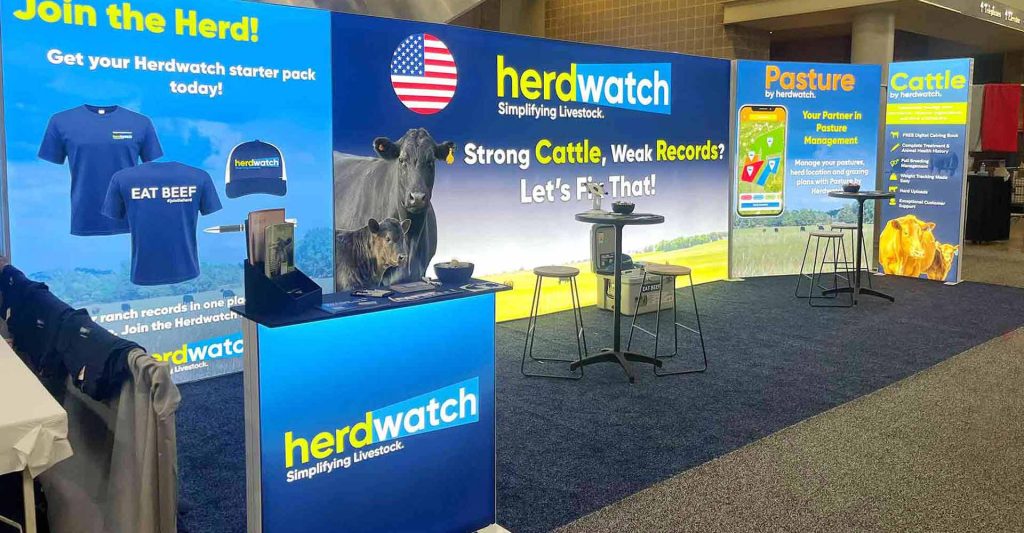
    Backlit lightbox trade show booth with illuminated SEG fabric graphics, branded counter, and modular display panels for Herdwatch.

    A trade show lightbox display works best when the graphic is planned carefully. The most effective designs usually have one primary message, strong contrast, and limited copy. A visitor walking past the booth should not have to read a paragraph. A short headline, a recognizable product image, and a clear brand mark will usually do more than a crowded layout.

    Many lightbox displays use SEG graphics, which are fabric graphics finished with a silicone edge that fits into the frame. For exhibitors, this can be helpful because the graphic sits cleanly in the display and can often be changed for different shows or campaigns. A company that attends several events may use the same frame while updating the visual message for a product launch, seasonal promotion, or new audience.

    Modular lightbox displays can also help with booth planning. A small business may start with a single backlit wall or counter and later expand into a larger booth layout. The advantage is flexibility. Instead of rebuilding the entire booth for every event, the exhibitor can think in terms of sections: a main brand wall, a product area, a meeting point, and a simple lead-capture space.

    Setup should also be part of the decision. A display that looks good but takes too long to assemble may not be practical for a small team. Before choosing a system, exhibitors should ask how many people are needed, whether tools are required, how the graphics are installed, how the parts are labeled, and how the display packs for transport.

    Lighting quality matters as well. A lightbox display should illuminate the graphic evenly, without obvious dark areas, distracting hotspots, or color shifts that make the artwork appear inconsistent with the brand guidelines. If the booth uses several displays, the color temperature should feel consistent across the space.

    Two exhibitors seated at a meeting table in front of illuminated lightbox display walls showcasing large backlit graphics in a trade show booth.

    Small exhibitors should also avoid treating the lightbox as the entire booth strategy. The display attracts attention, but the booth still needs a clear offer, trained staff, simple lead capture, and a reason for visitors to engage. A strong visual wall can open the conversation, but the booth team has to continue it.

    For many small businesses, the best trade show booth is not the most complicated one. It is the booth that is easy to understand, easy to set up, and strong enough visually to compete on a crowded floor. A well-planned lightbox display can help create that professional presence without requiring a fully custom build.


    Joyce is the Marketing Manager at Frame Plus, a display solutions brand focused on modular SEG lightboxes, backlit trade show displays, and lightweight booth systems for exhibitors, retailers, and event teams. Frame Plus helps businesses create cleaner, brighter, and easier-to-set-up display environments for trade shows, pop-ups, and branded events. Learn more about the SEG lightbox.

  • How to Be Your Own Marketing Department In the Trade Show Business

    by Emma Grace Brown

    Trade show marketers are often expected to do it all — strategy, booth design, lead capture, follow-up campaigns, and brand storytelling. If you don’t have a large in-house team, you are the marketing department. The good news? Marketing isn’t magic. It’s a system built on channels, messaging, and measurable outcomes.

    This guide breaks down how to think like your own marketing team — and act like one.

    A Quick Orientation

    If you remember nothing else, remember this:

    • Channels are the places your audience encounters you.
    • Messaging is how you communicate your value in those places.
    • Effectiveness is measured by what changes after your marketing runs.

    That’s it. Everything else is refinement.

    What Are “Marketing Channels”?

    In marketing terms, a channel is the medium you use to reach your audience. It’s the pathway between your brand and your customer.

    For trade show marketers, channels can be both online and offline:

    • Email campaigns
    • LinkedIn posts and direct outreach
    • Industry newsletters
    • Paid search ads
    • Event sponsorships
    • Cold calls
    • Community bulletin boards in coffee shops
    • Posters on telephone poles
    • Billboards near convention centers

    Yes — even a flyer on a corkboard is a marketing channel. If it reaches a potential attendee, sponsor, or exhibitor, it counts.

    How to Figure Out Which Channel to Focus On

    Start with three questions:

    1. Where does your audience already pay attention?
      Trade show buyers may live in email inboxes and LinkedIn groups. Local event attendees may notice physical signage.
    2. What’s your budget and capacity?
      If you’re a solo marketer, running five social platforms and a podcast may be unrealistic.
    3. What action do you want? Booth bookings? Ticket sales? Sponsorship inquiries? Different channels drive different outcomes.

    If you’re promoting a niche manufacturing expo, LinkedIn and industry newsletters may outperform Instagram. If you’re running a consumer-facing event, billboards and community boards might generate more buzz than a cold email.

    Messaging: What It Is and How to Get It Right

    Messaging is the way you communicate your value — what you say, how you say it, and why it matters to your specific audience.

    Good messaging answers:

    • Who is this for?
    • What problem does it solve?
    • Why should they care now?

    For trade show marketers, messaging must align with both customer niche and channel.

    Example: Same Event, Different Messaging

    ChannelAudience FocusMessaging Angle
    LinkedIn PostIndustry professionals“Connect with 500+ vetted buyers in 2 days.”
    Email to Past ExhibitorsReturning vendors“Secure your booth before early pricing ends.”
    Billboard Near VenueLocal businesses“Grow your network at the region’s largest expo.”
    Community Coffee ShopSmall local entrepreneurs“Showcase your brand to thousands this spring.”

    The core event is the same. The messaging shifts to match the context and the reader.

    How to Develop Strong Messaging

    1. Define your customer niche clearly (e.g., B2B tech suppliers, local artisans, franchise owners).
    2. Identify their primary pain point.
    3. Match tone and urgency to the channel.

    A cold email can be direct and ROI-focused. A bulletin board flyer needs to be simple and bold. A LinkedIn post can use industry language.

    Messaging that ignores channel context feels off — and ineffective.

    A Practical How-To: Building Your Mini Marketing Plan

    If you’re operating solo, use this simple checklist:

    Your DIY Marketing Department Checklist

    • ☐ Define one primary goal (e.g., 200 qualified booth leads).
    • ☐ Identify 2–3 high-probability marketing channels.
    • ☐ Write one core value proposition.
    • ☐ Adapt that message to each channel.
    • ☐ Set a simple metric for each effort (clicks, replies, sign-ups).
    • ☐ Review results after 30 days.

    This structure prevents scattered effort. Marketing works best when it’s focused.

    How Can You Tell If Your Marketing Worked?

    Marketing effectiveness comes down to outcomes.

    At its most basic level, ask:

    • Did more people visit your booth?
    • Did registrations increase?
    • Did inquiries go up?
    • Did revenue grow?

    For trade show marketers, common performance indicators include:

    • Number of pre-registered attendees
    • Cost per lead
    • Exhibitor retention rate
    • Post-event survey responses
    • Engagement rates on promotional emails

    If you ran a LinkedIn campaign and saw no increase in site traffic or sign-ups, that channel or message may need refinement. If billboards near the venue correlate with a spike in walk-ins, that’s a signal.

    Marketing is iterative. Measure → adjust → test again.

    Continuing Your Education in Business and Marketing

    If you want to sharpen your strategic thinking, going back to school can be a powerful step. Earning a degree in marketing, business, communications, or management helps you understand core principles like positioning, budgeting, and performance analysis. Many professionals choose an online degree in business to develop these skills while continuing to run their events or marketing operations. Flexible online programs make it possible to apply what you’re learning in real time — directly to your trade show strategy.

    A Helpful Resource for Trade Show Marketers

    The Center for Exhibition Industry Research (CEIR) publishes data-driven insights about trade show performance, attendee behavior, and industry benchmarks. Their research can help you set realistic goals and evaluate effectiveness.

    Using industry benchmarks adds context to your own results and strengthens your marketing decisions.

    Frequently Asked Questions

    What’s the difference between a marketing channel and messaging?

    A channel is where your message appears. Messaging is what you say and how you say it within that channel.

    How many channels should I focus on?

    If you’re managing marketing alone, start with 2–3 channels that best reach your core audience. Depth beats breadth.

    Do offline channels still matter for trade shows?

    Absolutely. Billboards, venue signage, local boards, and even telephone pole posters can drive awareness — especially for regional events.

    How quickly should I expect results?

    Some channels (paid ads, email) can show results quickly. Others (content marketing, partnerships) build momentum over time.

    Being your own marketing department isn’t about doing everything. It’s about doing the right things consistently. Choose channels your audience already trusts. Craft messaging that speaks directly to their needs. Measure what happens next. Refine. Repeat.

  • Leveraging AI for Pre-Show Marketing in Tradeshows

    If nothing else, I’m a forward-looking guy. Yes, yes, I know; I visit the past a lot in my mind and in my music selection. After all, I’m fast approaching 70. Still, I embrace the digital age in most, if not all, of its many forms. I recently thought it would be worthwhile to check in with ChatGPT for some help on using ChatGPT in the tradeshow world. A few months ago, I set up my own GPT based on my own writing. Yes, that’s a thing. I suppose the goal is to have GPT write in my own style so that I don’t have to edit its output that much. Maybe. We’ll see. I think the jury is out. Meanwhile, here’s a recent article that GPT and I came up with on using AI in the tradeshow world. Can you tell the difference between its writing and mine? And yes, I have edited it from the original output.

    The digital age has ushered in a new era of marketing strategies, with Artificial Intelligence (AI) sitting at the forefront of this revolution. As someone who’s waded through the evolving landscape of tradeshow marketing, I’ve seen firsthand how AI, particularly tools like ChatGPT, can transform pre-show marketing efforts.

    Understanding the AI Revolution in Tradeshow Marketing

    Let’s dip our toes into the vast ocean of AI capabilities. Picture this: AI algorithms sifting through heaps of data to identify potential tradeshow attendees. This isn’t just a list of names; it’s a finely-tuned selection of individuals, curated based on their interests, past tradeshow behaviors, and likelihood to engage with your brand. This level of targeted marketing was a pipe dream a decade ago, but AI makes it a present-day reality.

    Personalized Email Campaigns: A ChatGPT Specialty

    Now, enter ChatGPT, an AI-driven chatbot that can whip up personalized email campaigns faster than you can say “tradeshow.” Imagine crafting emails that speak directly to each recipient, addressing their specific needs and interests. ChatGPT can analyze past interactions and tailor messages that resonate on a personal level. This isn’t just shooting arrows in the dark; it’s a laser-focused approach to capturing attention.

    Social Media Strategies: AI’s Realm of Influence

    Social media is a battleground for attention, and AI is your secret weapon. By analyzing trends and user engagement, AI can suggest the best times to post, the type of content that will generate buzz, and even the tone that resonates with your audience. It’s like having a digital marketing guru at your fingertips, constantly tweaking your strategy for optimum engagement.

    Predictive Analytics: Crafting a Target Audience

    Predictive analytics is where AI flexes its muscles. By analyzing data patterns, AI can predict which tradeshow attendees are most likely to be interested in your products or services. This helps in crafting a marketing strategy that’s not just a scattergun approach but a sniper’s aim – direct, precise, and effective.

    Conclusion: The AI Edge in Pre-Show Engagement

    In conclusion, the integration of AI in pre-show marketing is not just an option; it’s a necessity for those looking to stay ahead in the ever-competitive tradeshow arena. From personalized emails to predictive analytics, AI offers tools that are transforming the way we approach tradeshow marketing. As we continue to navigate this digital era, one thing is clear – AI is not just the future; it’s the present, and it’s reshaping the tradeshow landscape in ways we are just beginning to understand.

    But Let’s Go a Little Further…

    For fun, I asked ChatGPT to expand on the first idea presented: “Leveraging AI for Pre-Show Marketing in Tradeshows.” Here’s what it came up with:

    Let’s delve deeper into how AI sifts through heaps of data to identify potential tradeshow attendees and provide two concrete examples of this in action:

    Expanded Section: Utilizing AI to Identify Potential Tradeshow Attendees

    Imagine a world where you’re not just guessing who might be interested in your tradeshow booth but actually knowing it. AI makes this a reality. By analyzing extensive datasets, AI can pinpoint potential attendees with a penchant for your products or services. But how does it work in real life? Let’s consider two scenarios:

    1. Example 1: Targeting Based on Past Behavior and Preferences

       Scenario: A company specializing in eco-friendly building materials is preparing for an upcoming green technology tradeshow.

       AI Application: They utilize AI to scan through past tradeshow databases, social media activity, and online forums discussing sustainable building practices. The AI identifies patterns and preferences among individuals who have shown a consistent interest in green building materials, actively engaged in relevant online discussions, or attended similar tradeshows in the past.

       Outcome: The company receives a curated list of potential attendees who have a demonstrated interest in eco-friendly construction. This enables them to tailor their pre-show marketing efforts, like personalized emails or targeted social media ads, directly to these individuals, significantly increasing the chances of engagement at the tradeshow.

    2. Example 2: Predictive Analytics for New Market Penetration

       Scenario: A new tech startup is launching a groundbreaking virtual reality tool aimed at educational institutions and is exhibiting at an educational technology tradeshow.

       AI Application: The startup employs AI to analyze educational trends, subscription data from educational technology publications, and participation in online educational tech forums. The AI assesses which educational institutions are adopting new technologies at a faster rate and predicts their potential interest in virtual reality tools.

       Outcome: The startup receives a list of educational institutions, categorized by their likelihood of adopting new technology. This helps in focusing their marketing efforts and customizing their tradeshow presentation to appeal to these specific institutions, ensuring a more effective and targeted attendee engagement.

    In both examples, AI transcends traditional marketing boundaries, allowing for a more focused, data-driven approach that targets those most likely to engage with your booth, ultimately maximizing your tradeshow ROI.

    This expansion offers a deeper understanding of the practical applications of AI in identifying and targeting potential tradeshow attendees, making it clear that AI is not just a futuristic concept but a present-day tool driving efficient and effective pre-show marketing strategies.

  • A Tribute to a True Pioneer: Bob Moore and a Partnership that Spanned Nearly Two Decades

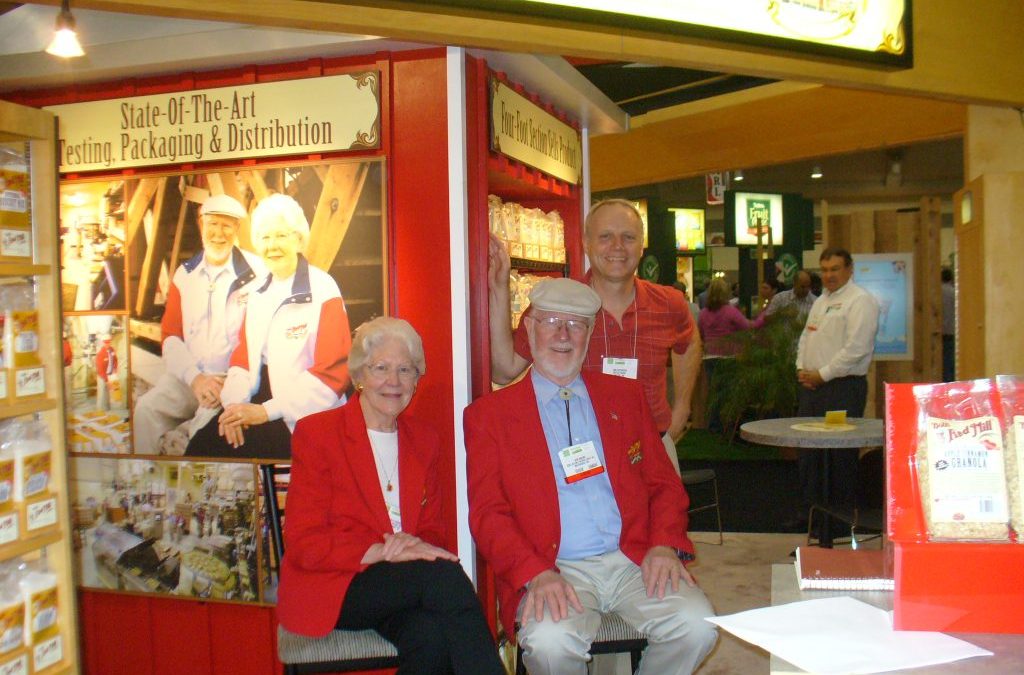
    With a heavy heart and deep respect, I reflect on my 18-year journey with Bob’s Red Mill, a trailblazing healthy food producer based in Portland. The recent passing of its venerable founder, Bob Moore, at the age of 94 marks the end of an era. This piece is a tribute to Bob and to a relationship that defined much of my professional life, starting in 2005 and continuing through thick and thin until today.

    My story with Bob’s Red Mill began at the Natural Products Expo West in 2005. At that time, I was with Interpretive Exhibits in Salem, Oregon, and I recall approaching Robert Agnew, the VP of Business Development for Bob’s Red Mill, to tell him about our trade show exhibit design and fabrication services. Little did I know that this encounter would mark the beginning of a remarkable collaboration.

    Several months later, Robert’s words, “Give me your pitch,” signaled the start of an exciting chapter. We presented several mock exhibit designs, and soon after, we were entrusted with producing a 20×20 island exhibit for Bob’s Red Mill. This project was the first of many, setting the stage for a long-standing partnership.

    In 2010, when Interpretive Exhibits closed its doors, I embarked on a new venture, founding TradeshowGuy Exhibits. The first significant client to believe in my fledgling company was none other than Bob’s Red Mill. In 2012, they commissioned us to design and fabricate a 30×30 trade show booth. Working alongside designer Greg Garrett and exhibit fabricator Classic Exhibits, we built a booth that made its grand debut at the 2013 Natural Products Expo West Show.

    I fondly recall the client walk-through at Classic Exhibits, where Bob Moore himself, along with his marketing team, reviewed our creation. Bob, with his characteristic smile, pulled me aside and said, “This is very impressive.” That moment, for me, was more than just a compliment; it was a validation of our hard work and creativity.

    As the years passed, our partnership continued to flourish. Bob’s Red Mill hired us to design and build a smaller 20×20 island booth for some of their smaller show appearances, alongside numerous smaller trade show items like graphic back walls and banner stands.

    The 30×30 booth, a testament to our collaborative efforts, was hailed as one of the industry’s ‘most iconic’ brand designs. It served faithfully for a decade before being retired in 2022, a symbol of durability and quality, much like the products and ethos of Bob’s Red Mill.

    Bob Moore was more than just a client; he was a pioneer, a visionary, and in many ways, a mentor. His dedication to health, quality, and community was evident in every interaction and every product his company produced. As I reminisce about the past 18 years, I am filled with gratitude for the opportunity to have worked alongside such an inspiring figure and his incredible team. Bob’s legacy is not just in the stone-ground, whole grains he championed, but in the relationships he nurtured and the communities he built.

    Here’s to Bob Moore, a true pioneer, whose impact will continue to be felt for generations to come.

  • Capturing Moments and Magnifying Impact: The Indispensable Role of a Professional Photographer at Your Next Trade Show

    Have you ever sauntered past an exhibit at a trade show and felt an instant connection, as if the booth was speaking directly to you? Often, this magnetic pull is the result of meticulously captured photographs, a silent communicator of a brand’s essence. In the bustling world of trade shows, where every exhibitor vies for a moment of your undivided attention, hiring a professional photographer becomes not just an option but a strategic necessity.

    Let’s paint a picture here, shall we? Imagine your exhibit, a culmination of countless hours of planning and execution, standing proudly amidst a sea of competitors. Now, what if we could freeze those moments of interaction, the vibrant energy, the intricate details of your products, and the dynamic expressions of your team? This is where a professional photographer steps in, transforming fleeting moments into a powerful narrative.

    A professional photographer possesses the eye for detail that elevates your exhibit from merely being seen to being remembered. They capture the essence of your brand, the uniqueness of your products, and the liveliness of your team – all through their lens. It’s about crafting a story that resonates with your audience long after the trade show curtains close.

    Moreover, the benefits of these photographs extend beyond the event itself. These images become invaluable assets for your marketing arsenal, useful for social media, brochures, websites, and future promotional material. They serve as a visual testament to your brand’s presence and professionalism in the industry.

    But let’s not forget the human element. Photographs of your team, engaged and enthusiastic, not only boost morale but also showcase the people behind the brand. It personalizes your business, making it more relatable and approachable to your audience. After all, in the end, it’s the human connections that often seal the deal.

    In conclusion, hiring a professional photographer for your next trade show isn’t just about getting high-quality images; it’s an investment in your brand’s story and visibility. It’s about creating a lasting impression that transcends the boundaries of time and space. So, as you gear up for your next trade show, remember that a picture is worth more than a thousand words – it could be the catalyst that elevates your brand to new heights.


    Check out our professional trade show photographs!

  • 50 Essential Tradeshow Tips in 50 Minutes or Less (video replay)

    Not a bad way to kick off June! I sat down with Mel White of Classic Exhibits, along with a few dozen viewers, for a presentation on tradeshow tips for newbies and wannabes. He invited me as part of their ongoing “Fast and Furious” webinar series, and I was grateful to be asked and glad to join. We nicknamed the presentation ‘From Tradeshow Stupid to Tradeshow Smart in 50 Minutes,’ but whatever you want to call it, I jammed a lot of stuff into the presentation. Take a look – hope you get something out of it, and thanks to Classic Exhibits for inviting me!

  • TradeshowGuy Monday Morning Coffee, March 21, 2022: Dave Brown

    Coming off a busy and successful week in Anaheim for the Natural Products Expo West, it’s the perfect time to get back into the podcast/vlog game.

    Former TradeshowGuy Monday Morning Coffee guest Dave Brown is now with Tive, a company that tracks shipments in real-time. That technology is now being applied to tradeshow shipments, which as you can probably imagine can offer great utility to tradeshow exhibitors and logistics managers.

    Take a look:

    Check out Tive.com.

    This week’s ONE GOOD THING: Station Eleven, both the book and the TV series. Good stuff.

  • 2022 Event Planning: How to Make Your Trade Show Booth Feel Safe

    A guest post from Ray Ko of POP Displays.

    During the height of the pandemic, in-person trade shows came to a near halt due to health and safety concerns. Two years later, the restrictions are finally lifting—and organizations are ready to get back to face-to-face engagement with potential clients.

    But while everyone is gearing up to get back to our new normal, safety remains a top priority for trade show organizers and attendees. In fact, according to data from EventMB, 55 percent of event planners cited safety concerns as the biggest obstacle to hosting live events. It’s important to remember, however, that safety is about more than protecting attendees from COVID-19. Visitors to your booth should feel comfortable being in the space you set up to showcase your business—and you should be able to focus on the task at hand without worry. With that in mind, here are some tips on making your trade show booth safe in a variety of ways.


    Staff it well. It’s crucial that there is enough staff in your booth to not only engage
    with visitors, but also to be aware that everyone is following important directions
    and protocols.

    Communicate safety protocols. Make sure there is easy-to-read signage throughout the area. Choose display options that are effortless to set up and break down, such as plastic sign holders, window sign holders with suction cups, and metal display stands.

    Keep valuables locked. Choosing display options with locks can keep expensive products and items secure so you can focus on wooing potential customers.

    Utilize barriers. You can ensure that visitors respect one another’s personal space through the use of retail barriers. Separating your booth into different sections will also make it a more engaging and inviting space.

    Encourage good hygiene. Even without a pandemic, it’s always a good idea to promote hand washing, especially if visitors will be touching display items. Place bottles of hand sanitizers around the booth, along with a few friendly signs encouraging everyone to “please, wash their hands.”

    Designate a clear entrance and exit. Prevent overcrowding—and anyone bumping into one another or knocking merchandise or collateral materials over—by having a clear area for people to enter and another for exit.

    Set up separate areas. If possible, you can set separate areas for one-on-one meetings to steer potential clients away from the hustle and bustle of the main part of your booth. Visitors will feel more comfortable sitting down to talk if they don’t feel crowded.

    Disinfect frequently. Whatever marketing tools you use to attract customers to your booth—display pedestals, tables, pamphlet holders, signage, etc.—should be wiped down frequently throughout the event. It will help reduce the risk of spreading infection, and potential clients will appreciate the extra effort.

    Choose sturdy display options. The last thing you want is for one of your displays to fall down. You can find budget-friendly options that are still durable.

    Serve prepackaged treats. In the past, trade show exhibitors might entice attendees to stop by their booth with edibles—muffins, pastries or even bowls of candy. Instead, offer prepackaged treats that are displayed to make them easy to grab. Navigating the trade show scene, whether as an exhibitor or attendee, safety (however you define it) will be top of mind moving forward. Consider these tips or tools-of-the-trade for a successful trade show experience.


    About The Author

    Ray Ko

    Director of E-Commerce

    ShopPOPdisplays

    Ray Ko is the Director of E-Commerce & Digital Marketing at shopPOPdisplays. Located in New Jersey, the company is a leading manufacturer of retail point-of-purchase merchandising systems. Ko has more than twenty years of experience in branding, content, and strategic marketing.

    Ray.Ko@shopPOPdisplays.com

  • TradeshowGuy Monday Morning Coffee, November 8, 2021: Ken Newman

    Ken Newman of Magnet Productions is a long-time colleague and industry friend. He’s appeared on the show several times, but since it was his first time at ExhibitorLive I was curious to get his take on it. As usual, he was glad to chime in and didn’t pull any punches.

    This week’s ONE GOOD THING. Paul McCartney’s new book, The Lyrics.

  • TradeshowGuy Monday Morning Coffee, November 1, 2021: Ed Vining

    Lead capture is, arguably, the most important part of tradeshow marketing and function. Don’t capture a lead that you should, or fail to follow up, and you’ve let one slip away.

    On this week’s TradeshowGuy Monday Morning Coffee, I sit and chat with Ed Vining of Event-Capture.com about the state of lead capture. Lots of things to consider when you get to that part of your tradeshow journey.

    This week’s ONE GOOD THING: Wyze Buds, a solid alternative to more expensive Bluetooth earbuds.