Planning on putting more focus on using Instagram at your next tradeshow or event? Congratulations. After all, it’s one of the most popular social media platforms out there with more than 400 million daily active users. But before you get started, do a little planning and it’ll be much easier to capture and post photos.
Use the Event Hashtag. This way people at the show will find your posts much more easily.
Go behind the scenes with photos. Show the exhibit set up, the show prep meeting, or the travel to the show. Build some excitement as you approach the show, and of course during and after.
Don’t focus exclusively on your products or services. The most boring Instagram accounts are those that do nothing but promote, promote, promote their own stuff. Sure a product placement is cool, but make sure you have faces, preferably happy and smiling. Show off your exhibit and the people that visit.
Use the Geotagging options. And don’t just stop there. Spend some time going through other photos from the same event and location: either comment or like those so you’re building engagement and followers.
Promote the event before, during and after. Show what you’re going to do, show your team doing it, and then once it’s over, show more photos of what you’ve done.
Promote a contest. Instagram contests do work – but be sure to post your rules for how it works, and how you choose a winner. And be sure to give away a relevant prize.
Share to other platforms. Yeah, it’s easy, but be clear about how you’re doing it. If you just click the buttons, you’ll likely get a link to your Instagram post instead of the actual image. So either share the images separately, sign up for an IFTTT account, link your two accounts, and add this recipe that will “tweet your Instagrams as native photos on Twitter.”
Share the event hashtag photos on a monitor in your booth. Yeah, you’ll probably need some smart nerdy tech guy to set this up, but it’s definitely doable.
Have a great time at the show – and share on Instagram!
I’ve never attended the SIA Snow Show but I think I should someday, for two reasons. Number One: I’m a ski bum. Number Two: uh, see reason number one. Oh, and that’s right – I’m TradeshowGuy – I do tradeshows.
SIA – Snowsports Industries America – holds the annual SIA Snow Show in January in Denver, Colorado, home of some of the greatest skiing in America. Of course. With close to 20,000 attendees, it’s the industry’s largest global annual B2B gathering. It’s a smaller and more narrowly focused show than Outdoor Retailer, but in speaking to SIA Snow Show exhibitors, I gathered that many of them also exhibit or attend Outdoor Retailer.
Having not attended the snow show, I thought it might be illuminating to ring up some of the exhibitors at the show and debrief them on how the show went for them. Here’s what I came up with over the past several weeks.
Overall, how did the show rate? Most gave it very high marks.
“If it wasn’t a ten, it was a high nine,” said Ashley McGarvey of Meier Skis, who praised the show as bringing in lots of industry people. In spite of the challenges of being a smaller company, she felt the show was a very worthwhile marketing effort. According to SIA Snow Show information, over 96% of the supplier market share for ski, snowboard, AT, backcountry, cross country, snowshoe and winter apparel is there.
A big challenge that most small exhibitors faced, which is common throughout the industry and not just for the SIA Snow Show, is the high cost of transporting big booths and setting up the exhibits. This also resonated with the small core of Meier Skis team.
But all of the exhibitors I spoke with said they made great connections with retailers and distributors that made the show a ‘must.’
Whit Boucher of Strafe Outerwear agreed with Ashley, saying “It was a nine and a half, definitely,” saying that their 20×40 booth had a lot of traffic for the first three days, and saw a typical drop-off on day four. He speculated that it might be nice to drop the last day so they can show up then and break down the booth.
All exhibitors I spoke with felt the show opened doors to markets that they might not have normally had access to.
What challenges did they face? Besides the cost of exhibiting, smaller companies felt understaffed at times. Others felt that their exhibit wasn’t large enough to hold the people and products all at once.
One exhibitor, who preferred to remain nameless, felt the show was slipping in the past few years and felt that attendance had dropped “20 – 25%” in the past several years, and that the organizers had let in companies that had little to nothing to do with the core audience of snow sports: make-up companies, food companies and more. As a result, he said their company would be down-sizing next year. But still, he ranked the show as an “8 on a scale of 1-10 for what we need it to do.” He did express fear that the show would be sold or would merge into another show.
Erik Leines, CEO of Celtek has a personal mantra regarding tradeshows is “I’ve never met a tradeshow I didn’t like.” Why? “I’ve literally never done a tradeshow where I walked out and thought it wasn’t worth the money. For anyone doing a show, that’s the way to treat it. We have our own secret sauce on how to do it,” he added, as they always look at ways to attract attention and promote their products. Erik rated the show as “very high” as a marketing tool for their company.
Anything you’d change in your approach to exhibiting, or anything that is a challenge? Answers to this question ranged from “we need a bigger booth next year” to “we need more people in our booth” to “frustration and the cost of dealing with show services – how can it cost $1200 for three guys and a forklift to hang a sign in just four minutes?”
Bottom Line: a mixed bag. Even though most exhibitors I spoke with gave the show high marks, there was some comments that indicated that the show could be better and in fact might be slipping in some cases. Being such a narrowly focused show doesn’t necessarily give it strength, although it tends to draw the core audience that is needed for success. From all appearances, it is still a successful show, and yes, I’d like to get there and try out some new skis!
Thanks to Celtek, Meier Skis, Strafe Outerwear, POW Gloves, SKEA, 4F, Icelantic Skis, Red Feather and a few others that chimed in with comments on and off the record.
Finally, it’s official. We’ve turned this into a podcast. Yeah, I know it’s already a vlog (I’ll never get used to that word!), but now you can subscribe to the audio of the podcast.
This week: What happens when you have to roll with the punches. What’s your PLAN B?
Also, a quick look at Tim Ferriss’s podcast interview with Cheryl Strayed at SXSW last month.
How do you create tradeshow buzz? You know the one: the exhibit that keeps getting talked about. Don’t you want to be that exhibit? Don’t you want to be working at that one location where everyone seems to be heading?
Buzz is not something you can automatically turn on like a light switch. And even the best-laid plans to create buzz don’t always work, especially if some other company has gotten a plan afoot to outbuzz you!
A few things to consider that may get you to the place where you are creating buzz:
Giveaways: do you have that one thing that people want to have? Do you have that one game that everyone wants to play?
Interactivity: what is it people are doing in your booth that draws a crowd. Is it a virtual reality station? Is it a hands-on demo that leaves people talking?
In-booth demos: with the right pitch man or woman pitching the right product or service at the right show, a crowd can magically appear. Is it because the demonstrator is doing baffling magic along with a pitch? Is it because of their charisma and stage presence?
Celebrities: face it – most celebrities at shows are not the top name draws, such as Brad Pitt, Will Smith or Jennifer Lawrence. But there are a lot of second-tier celebrities (and third and fourth) that may mean something to your target market.
Beyond the in-booth activities, or the exhibit itself (which, is a stunner, can create buzz), look beyond:
Public Relations: Prior to the show, connect with influencers who might be interested in your products or services. Media, bloggers, industry wags and more can help build advance buzz.
Advance planning: get the word out before the show using pre-show advertising, social media engagement, direct mail, email, broadcast and internet opportunities as you see fit.
Press conference: if your product launch is truly newsworthy (and you should confirm that with industry media folks), throw a press conference. If you’re not used to putting on a good press conference, hire a pro.
Be crazy: this takes chutzpah and frankly, most companies probably don’t have it. But if your CEO is a leading edge person with an outlandish outlook, maybe saying something crazy about your product or service will bring people to your exhibit.
Unusual promotions: Spy at Moz was a promotion that invited attendees to track down ‘spies’ at the conference who were waring special red stickers, take a picture and then tweet it out. If you can co-promote with a couple of other exhibitors, the word will spread quickly.
It may be somewhat trite as an expression, but thinking out of the box can go a long way to generating tradeshow buzz. What are you willing to try next time?
When you are going out on a date, my guess is you dress up. If you’re a guy, you’ll put on some nice clothes, fuss with your hair a bit, brush your teeth and maybe put on a dab of cologne. If you’re a girl, you’ll do much the same, only probably spend longer (is that a sexist remark or just an observation of reality?). In either case, the intent is to put your best “YOU” forward. You want to give a good impression.
It’s the same at a tradeshow. You want to put your best look forward. And in probably almost more than any other marketing medium, tradeshows are critical to putting out a good impression.
The perception visitors have of you is what they’ll take away. And while there are many elements, from the exhibit to the booth staff and how they interact, to the products or services you offer, the bottom line is: what the visitors thinks they see is the impression they’ll take home.
And while this often means bigger is better and more impressive, that’s not always the case. And in fact, smaller exhibitors can often make a big impression by doing thing differently with booth activities, a ‘must-see’ product, a special guest in the booth, an unusual exhibit or giveaway or more.
If your visitors leave with the perception that your company is sharp, the product is great/cutting edge/marketing leading or whatever, and your exhibit is top-notch regardless of the size, you’ve accomplished your mission.
If those visitors see an old and tired exhibit, lazy or uninterested booth staffers, products and services that don’t inspire, that’s what they’ll remember.
Regardless of what your company or employees or products are really like, the perception is the reality. So put out the best impression you can. And if for some reason the perception is more impressive than the reality, you know you’ve got some work to do behind the scenes. But on stage – out where everyone can see you and make up their own minds based on what they see – that’s where you’ll leave a lasting impression.
Walking the floor of the Natural Products Expo West show in Anaheim, one is overwhelmed by the sheer number of tradeshow exhibitors and visitors. According to New Hope, the organization that puts on the show, there were over 80,000 visitors this year, and over 3,100 exhibitors.
That’s a lot of bone broth, honey, yogurt, Paleo diets and chocolate. Oh, the chocolate!
But there are literally tons of tradeshow exhibits, many of which stand out in unique ways. Let’s capture a few of these and call them out for service and recognition above and beyond.
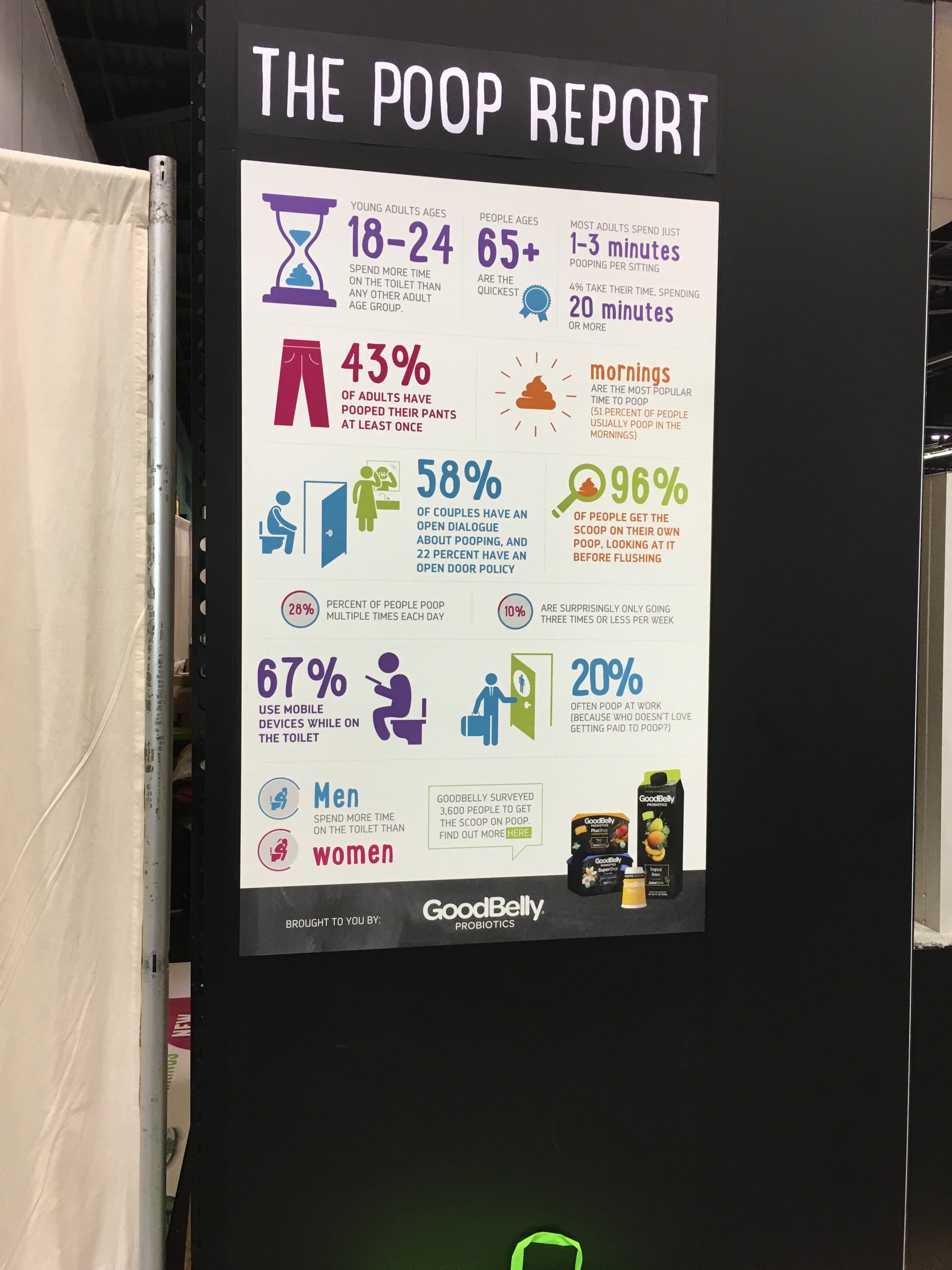
Best Use of Bodily Function Statistics: GoodBelly
I watched as visitor after visitor stopped at the side of the GoodBelly exhibit and snapped a photo of The Poop Report, an infographic compiled from a survey of over 3000 people who visited the GoodBelly website.
The Poop Report: Good Belly
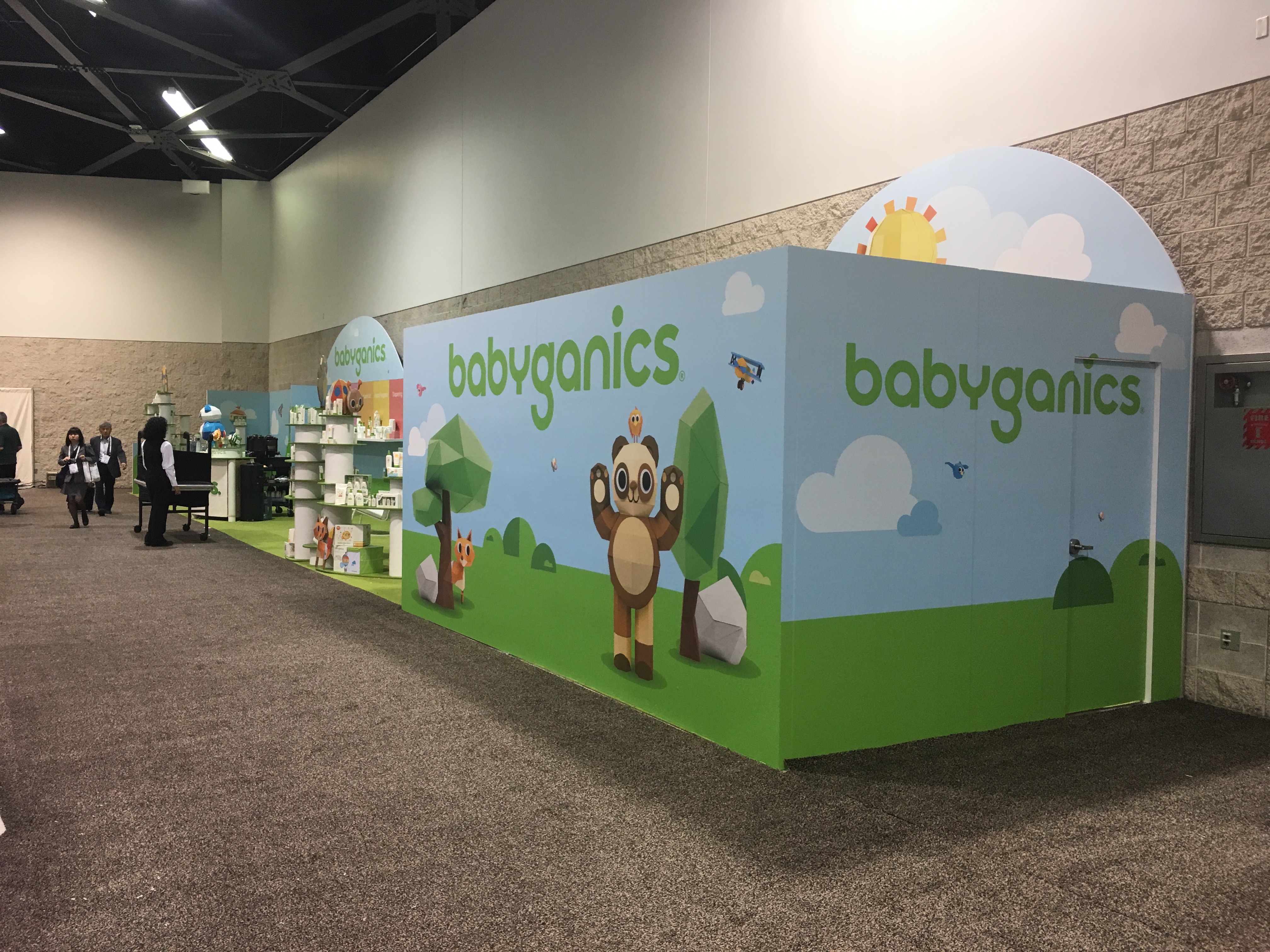
Best Long Form Screenplay, er, uh, Exhibit: BabyGanics
BabyGanics have traditionally occupied an odd-shaped island space for years in the convention center, so I was a bit surprised to see that space occupied by another exhibit. It took a moment of spinning on my heels, but I did eventually find the 60′ (70′? 80′?) long exhibit. Just an inline exhibit, but they jammed a lot of longevity and functionality into the space.
BabyGanics Goes Looong!
Best Makeover: Nancy’s Yogurt
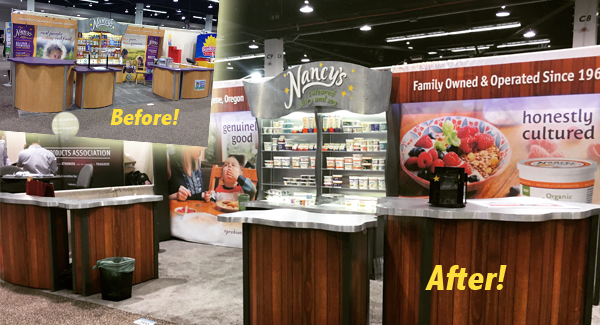
This booth is near and dear to my heart: it’s the second exhibit project I ever sold when I got into the business 15 years ago. So this is nearly 15 years old. For years, the booth has had the same look and feel. But a laminate makeover gave it an entirely new look and feel. In fact, I admit at first glance I thought it was an entirely new exhibit! But not the case – just a quick re-skin for a whole new look:
Nancy’s Yogurt Before and After
Best Lettuce on a Wall: Indoor Farms of America
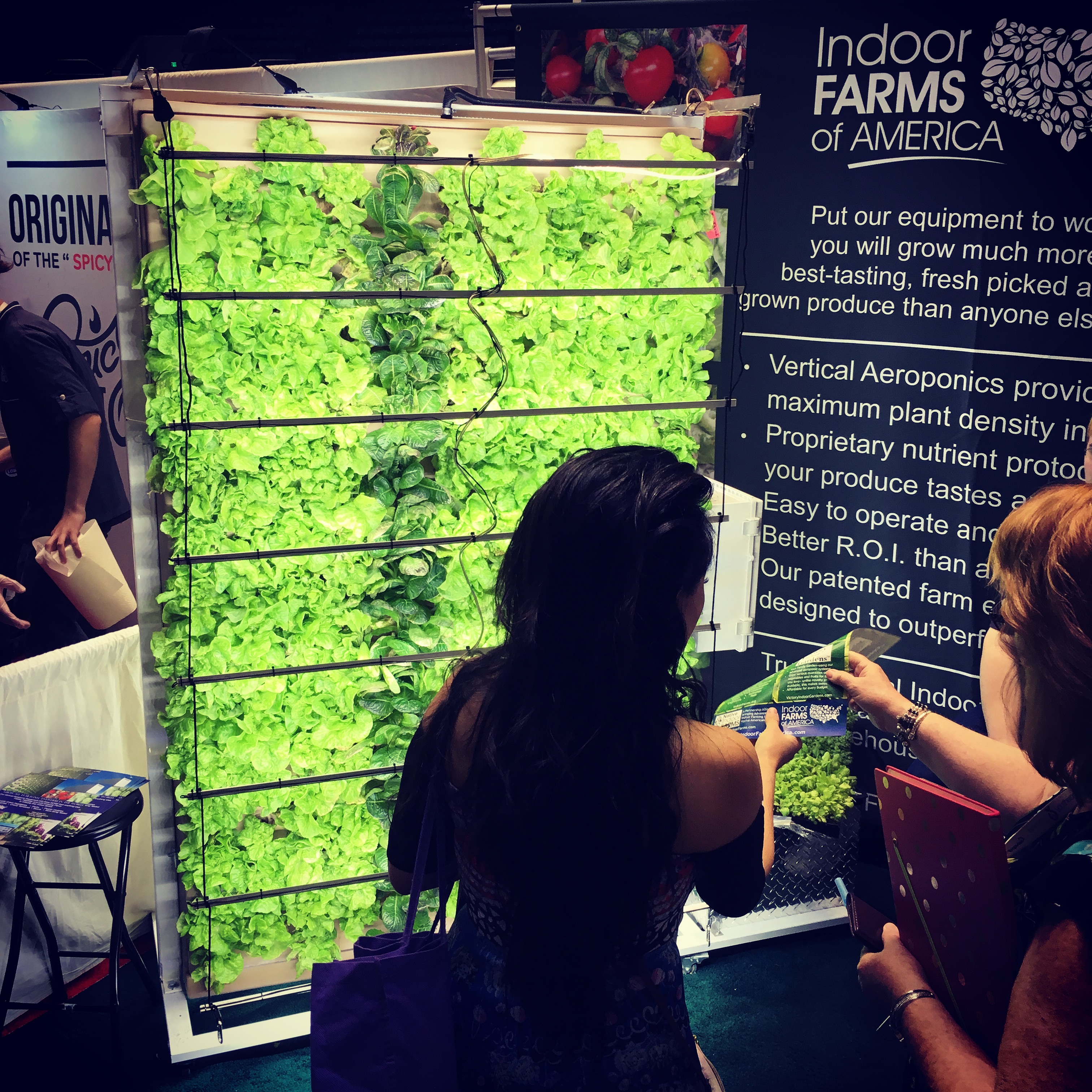
Inside Farms of America had a simple concept: show people what they do, and as a result it’s an eye-catching and ‘stop-in-your-tracks’ effect:
Best Lettuce Wall
Best Minimalist Exhibit: Kashi
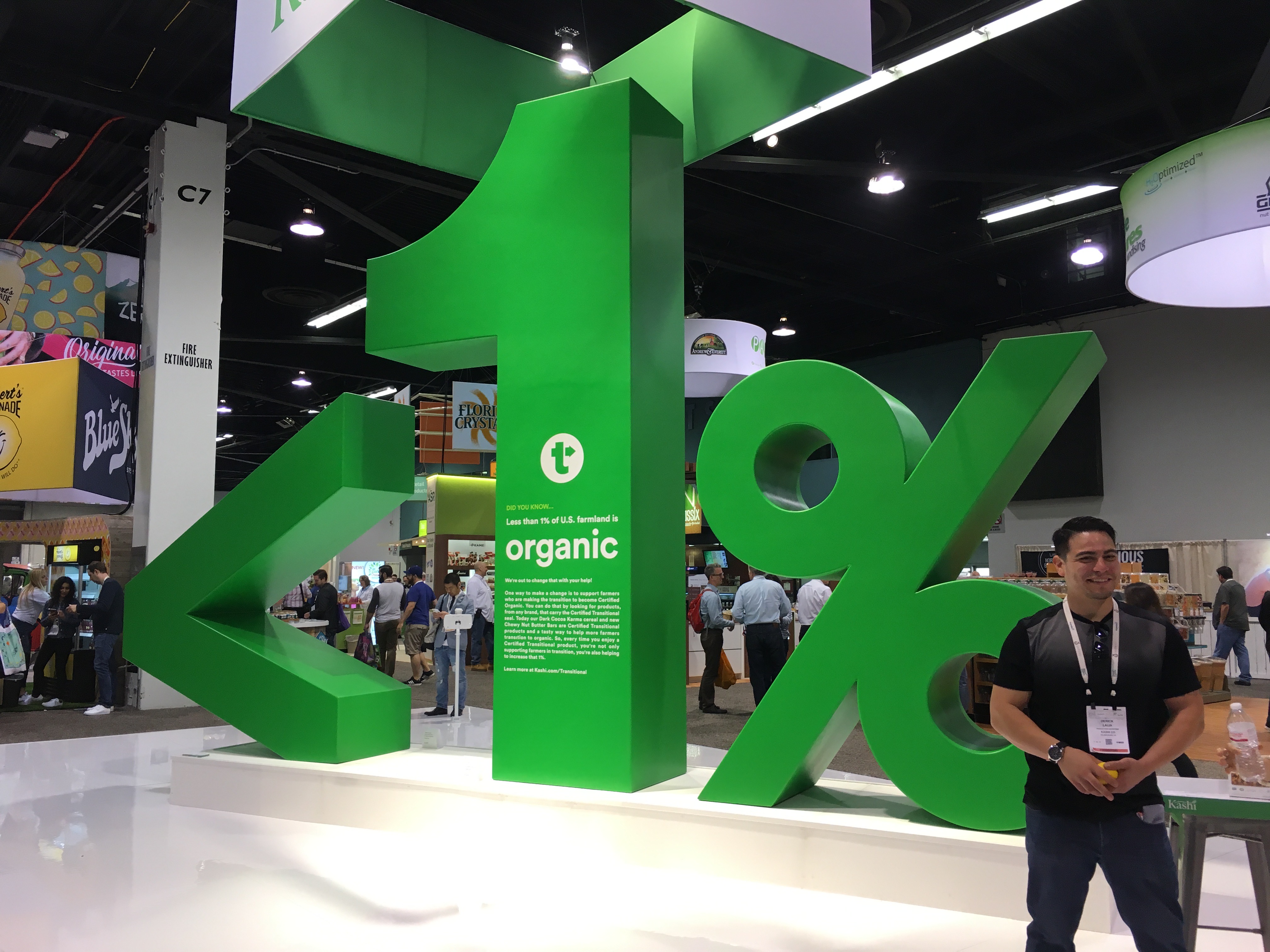
Kashi’s <1% display got people talking and snapping photos. It’s nothing but a large space with a hanging sign, the <1% display and, when you read the fine print, you discover their message about organic farmlands. Effectively done:
Best Minimalist Exhibit: Kashi
Best Use of Cactus Wisdom for Interactivity: Steaz Tea
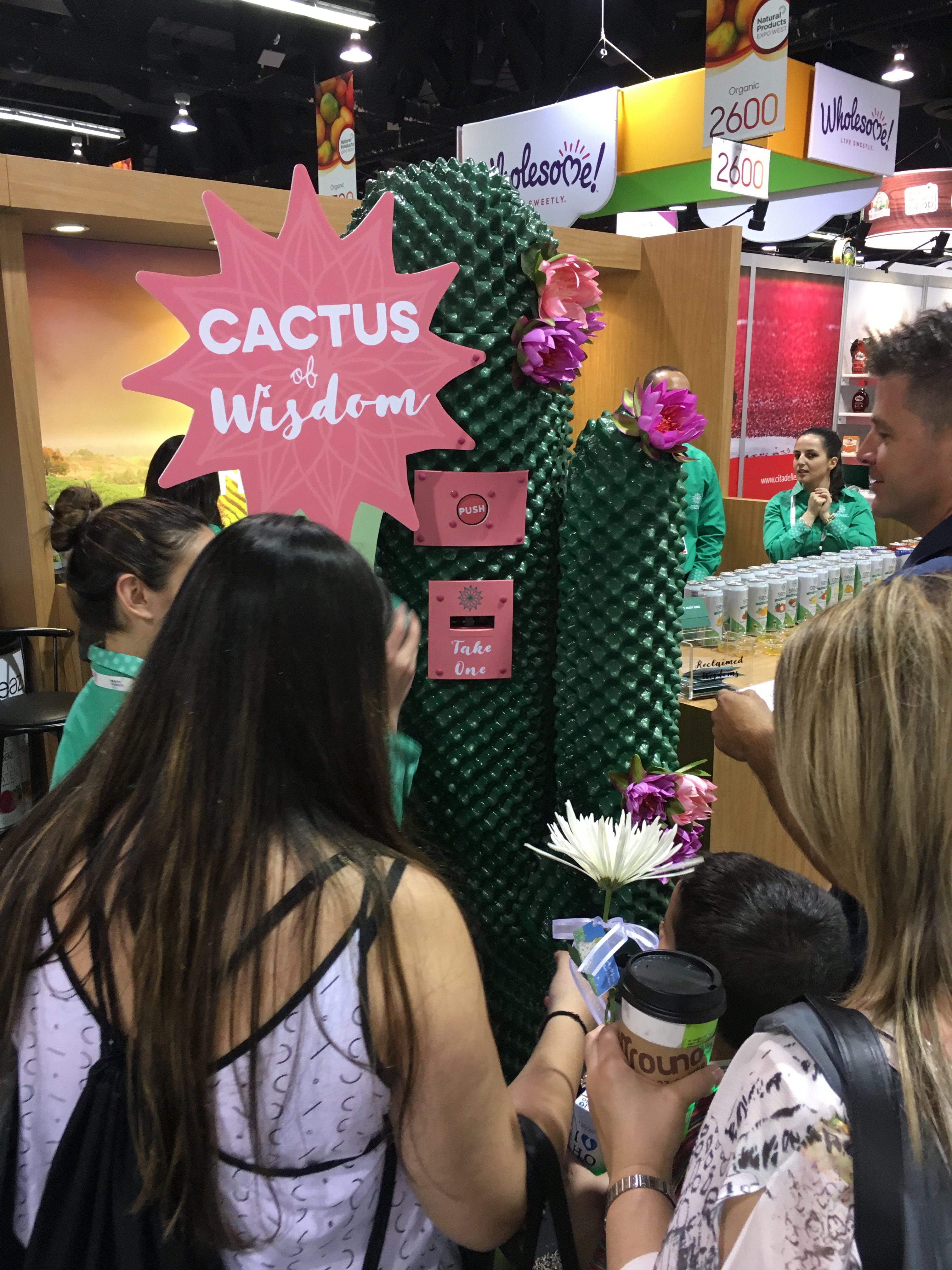
There’s nothing like handing out cards with pre-printed fortunes to get people to line up. I know I did. Clever, interactive, and engaging in a fun way – a perfect fit for Expo West:
Steaz Teas Interactive Fortune-Telling Cactus
Seriously, I could go on forever with fun and silly awards for exhibits at Expo West: it’s a place with a lot of creativity. Yes, you’ll find uncreative low-budget exhibits that should (and probably did) embarrass the exhibitors, but what’s the fun in pointing those out? They know who they are, and they know when it’s time to upgrade. So let’s go with just one more that caught my eye:
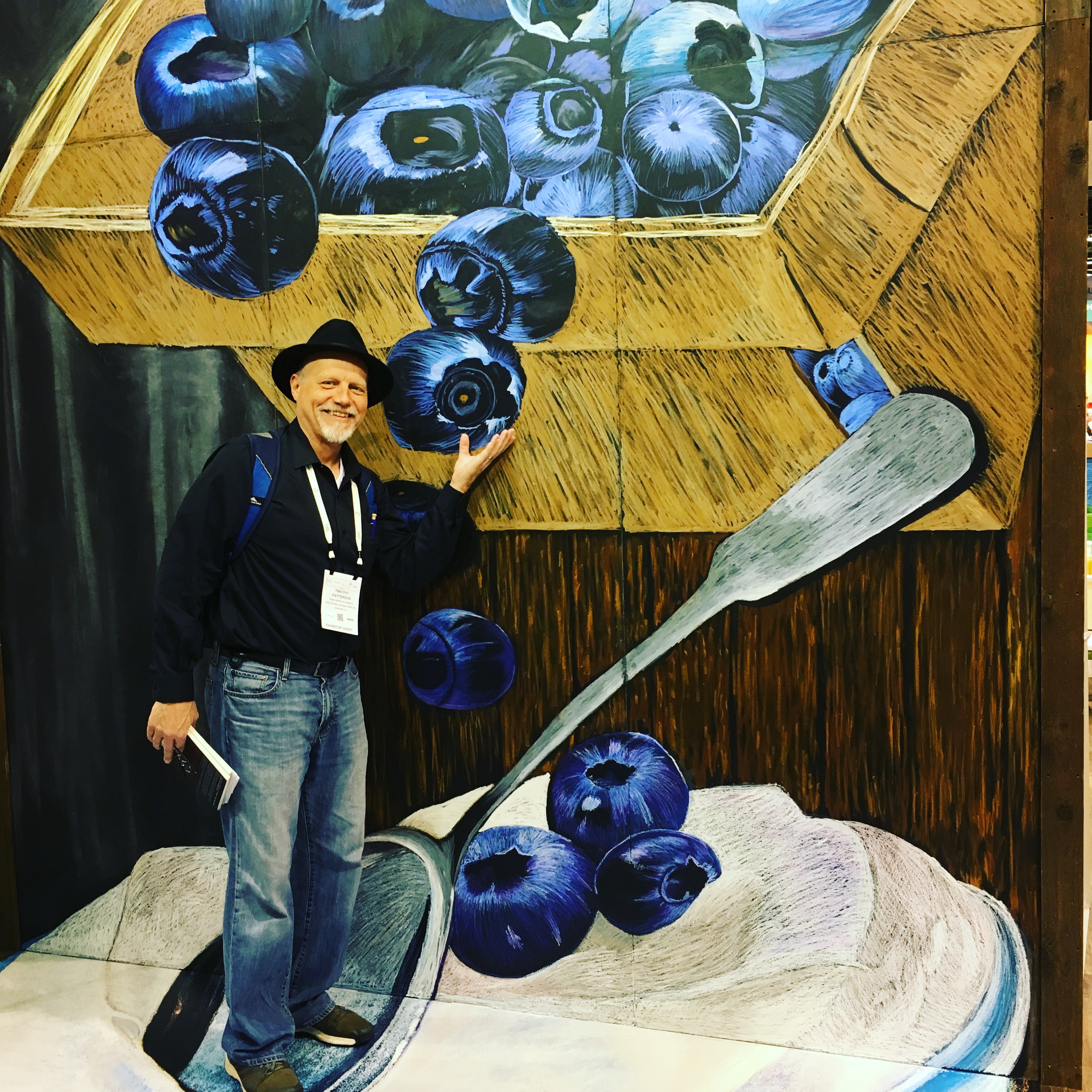
Best Photo-Op Exhibit: StonyField Yogurt
A large painting on a wall and floor made it look like you’re standing in a bowl of yogurt, if photographed at the right angle. So I joined in. Lots of people waiting for their turn here throughout the show:
On this week’s coffee, I spend some time going over the question of asking better questions. If we learn to ask better questions, we’ll get better information. So what does it take to ask better questions? Take a look:
Seriously, isn’t that an absurd question to ask about tradeshow marketing: are you Hendrix or Hemingway?
Or maybe not. Let’s have a little fun for a moment.
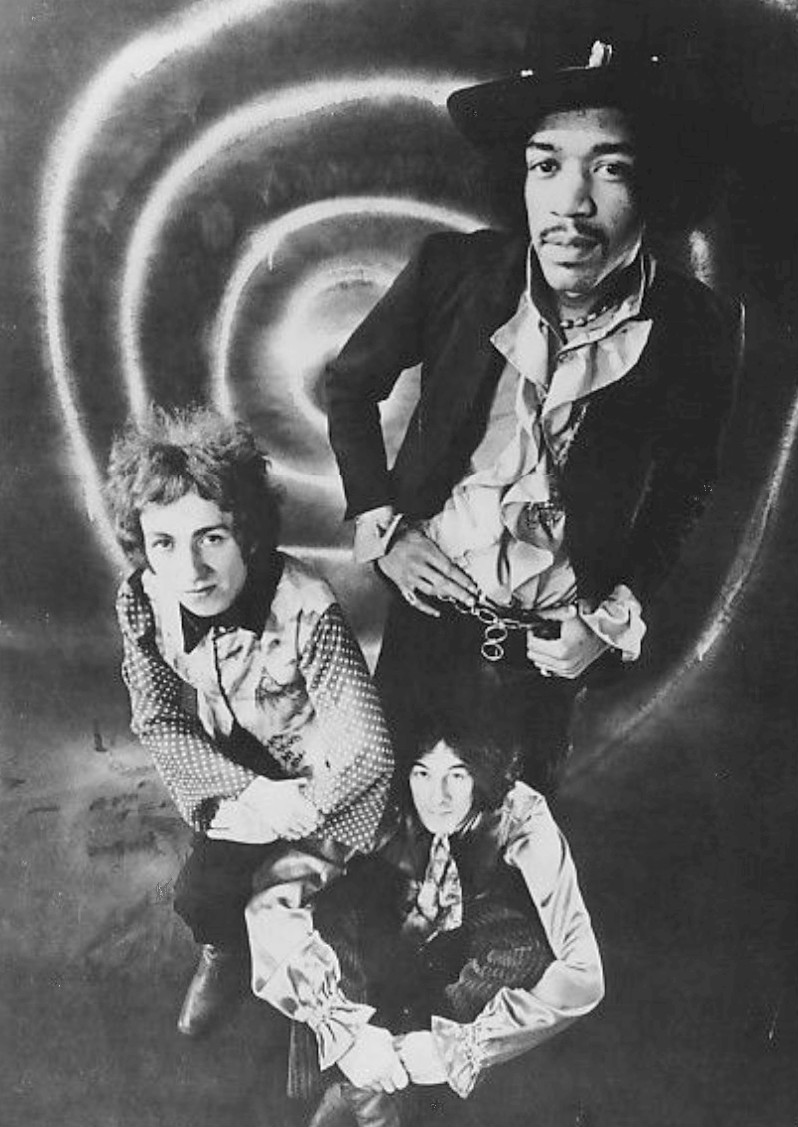
Picture Jimi Hendrix standing at the edge of your tradeshow booth, or on a small stage in your booth, looking to draw people in for a show.
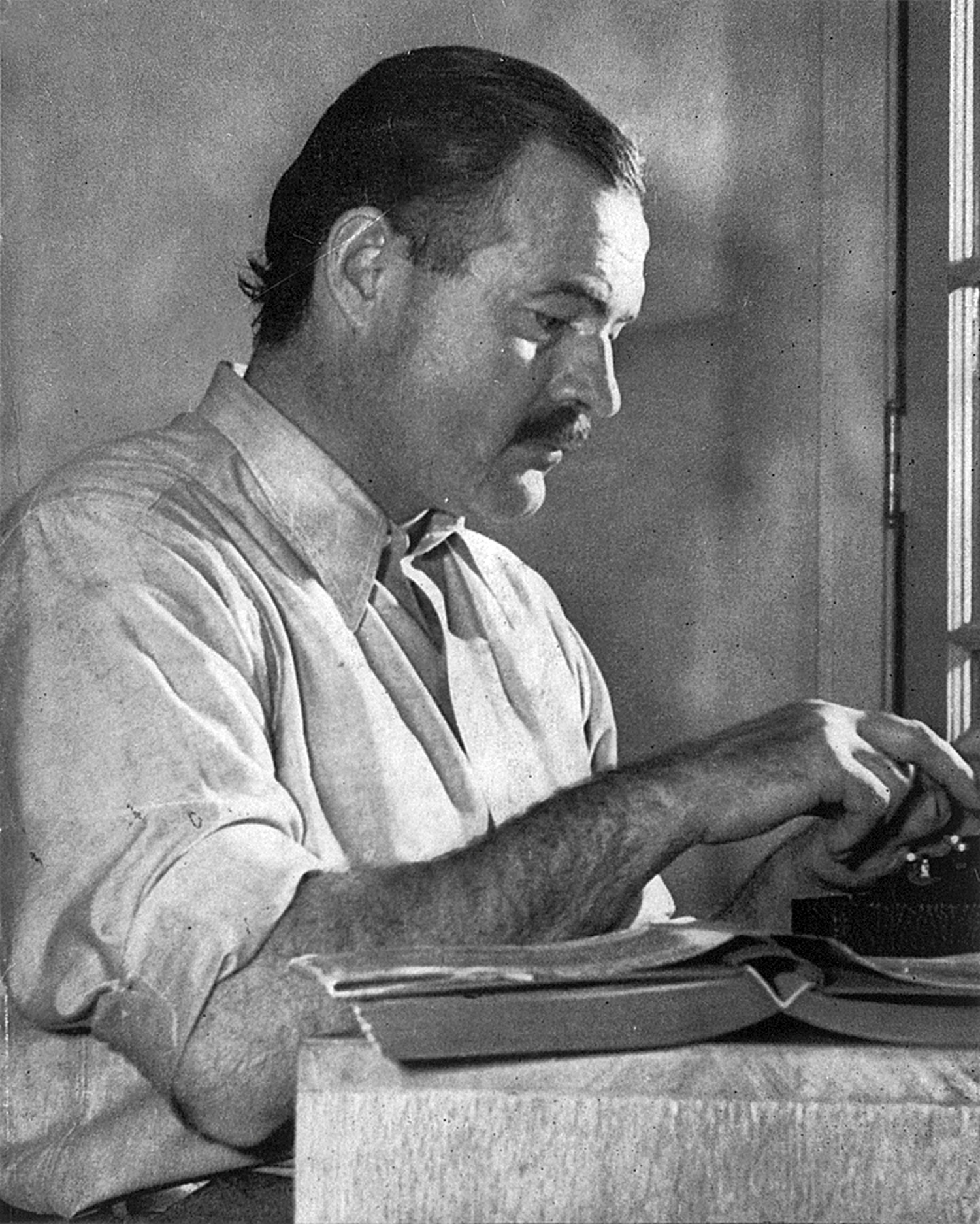
Now imagine Ernest Hemingway, sitting at his typewriter, carving out phrase after phrase to tell a story in a simple, eloquent and easily understandable way.
Which would make for a better result? Hendrix or Hemingway?
Hendrix was a showman. A one-of-a-kind guitar player whose talent still ripples through time.
Hemingway was a storyteller. His tales resonate through time as well.
Frankly, you might need both. You need a good tale, and you need a showy way to get people’s attention so they can take it all in and respond in a positive fashion.
Which are you – Hendrix or Hemingway? Or some combination of the two?
Now, let’s watch some Jimi…
And just for fun, a clip of why Ernest Hemingway was such a badass…
Had a great chat with Ashley Blalock of the Ashley Avery Agency in NYC, an agency that provides models and spokespersons for tradeshow exhibitors. It was a fun and informative chat – check it out: