Category: Marketing

  • Top 10 Tradeshow Marketing Tips to Begin 2016

    Hey, it’s a Top Ten List! Let’s look at ten things to do as you prepare for another year of tradeshow marketing:

    1. Assess what happened this year. What did you spend? What were your results? Are there any areas where you can cut back? Are there areas that you need to invest more?
    2. Create a will-attend show list. Perhaps you know this by heart. Maybe there are a few shows that have slipped down in your estimation, or some that that become more important.
    3. Create a list of other shows that are on the bubble.
    4. Know your show goals. Your overall goal is to grow the business, but each show likely presents an opportunity to do different things, such as build brand awareness, reach new markets, recruit partners, generate sales leads, solidify ties with current clients, maximize press and media outreach, unveil a new product or service or do research. Shows are often a combination of all of those (and more), but it is worthwhile to create a plan for each show that focuses on 2 or 3 specific areas.
    5. Come up with new ways to attract booth traffic. What you did last year may or may not work this year. Don’t sit on your laurels; try to come up with at least one new concept per show on how you can drive traffic to your booth.
    6. Ensure your lead generation system is working. Your show ROI depends almost exclusively on how you manage your sales leads. Work with your marketing and sales teams to make sure that each step is clear and workable.
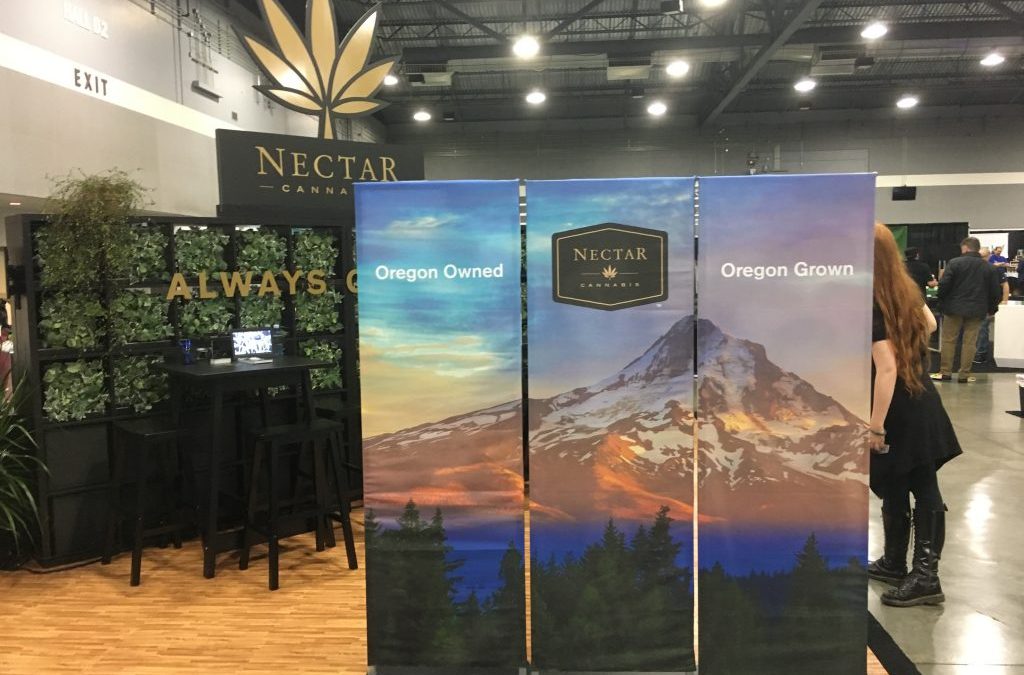
    7. Assess your booth. This might mean taking it out of the cases or crates and setting it up. This should be done with any booth regardless of size, just to make sure it withstands the rigors of regular set-up and dismantle. So often a booth is quickly packed at the end of a show and sent back to the storage facility, and no one bothers to check the condition of the booth until right before the next show. Or during set-up, which is ever worse! If repairs are needed, get them done in a timely manner.IMG_9646
    8. Plan to book travel well in advance. Especially hotel rooms at popular and growing shows. If show hotels are booked, you can usually find a good deal on AirBnB.
    9. Plan the logistics of your upcoming shows. Order services, promotions, uniforms and other items a few months ahead of time or as needed.
    10. Plan your pre-show marketing outreach, from email to postcards, social media and other methods.

    The more prepared you are, the better the opportunity to increase your leads, sales and brand awareness.


    Want a digital copy of my new book? Click here.

  • How to Use an iPad Kiosk at a Tradeshow

    How many ways can you use an iPad kiosk at a tradeshow? Let’s count at least 8 ways here:

    WARNING! ALERT! BLATANT PLUG AHEAD!

    Now that you’ve Want to check out some of our iPad kiosks?

    Check our kiosk selection on the Exhibit Design Search site here.

  • People’s Choice Awards: Vote Today and Again Tomorrow!

    20150918-0804One of our recent booth projects over the summer was a custom portable modular booth for the Toronto-based company SoYoung. The project turned out so great and people loved the look, that the design and fabrication team at Classic Exhibits thought it should be entered in the Exhibitor Portable/Modular, which recognizes design excellence. So it was. And it made the finals round where you, the public, get to vote!

    Classic Exhibits also had two other projects make it to the finals round: Philadelphia Commercial and Nationwide.

    The rules for the voting are simple: you can vote only once a day, but you can vote every day.

    To vote, simply go here. To learn more about the awards, check this page.

    Thanks to SoYoung for letting us design and fabricate their exhibit, and for letting us enter it in the design excellence contest.

    And to see a full gallery of photos of the SoYoung booth, check it out here.

  • Can’t-Miss Tradeshow Newsletters

    Doesn’t every Tom, Joe and Susie have a newsletter these days? After all, they can be very useful in getting your message in front of eyeballs on a consistent basis.

    Newsletter-logoThe fact is, my inbox is filled daily with dozens of newsletters of all sorts: news, marketing, comic strips, social media engagement, big biz, small biz, and so on.

    I tend to open about one in ten if I’m in a generous mood. More like one in twenty or one in fifty. In other words, it’s hard to get my attention (or anybody’s) these days with just a newsletter. There’s got to be something in there that makes it worthwhile to click and open. And read.

    But there are several newsletters that I read frequently. Some I open every single time right when I see it and stop what I’m doing. Others get put on the ‘later’ list and I usually make it back to them.

    These are the tradeshow industry-related email newsletters that I read almost every time they arrive. I say almost because, hey, even I have to take a day off now and then! There are others out there – some are closed to the public and others don’t arrive frequently enough to warrant attention, and some I just don’t know about – but here are the tops in my book.

    Exhibitor Magazine: a companion to their monthly print magazine, the newsletter is a useful and professional addition to your inbox.

    TSNN: The Tradeshow News Network: between this and Exhibitor Magazine, you will have your pulse on the beat of the tradeshow industry news and happenings. Bonus: they have several editions available.

    Classic Exhibits Tradeshow Tales: Mel and Kevin at Classic Exhibits in Portland, Oregon, offer great insight, humor and passion on a regular basis.

    Andy Saks, Spark Presentations: Andy is a tradeshow presenter, Emcee, Staff Trainer and Auctioneer. In other words, he gets up in front of people. A lot. And his now-and-then newsletter is always a good read.

    Anders Boulanger, the Infotainers: I enjoy this newsletter as much as any. Anders is a solid writer and communicator and always has thoughtful, meaty – and useful – pieces.

    Marlys Arnold, Tradeshow Insights: Marly has been a show organizer and an exhibitor and comes at the topic from a unique perspective. A worthwhile read anytime.

    Susan Friedmann, Tradeshow Tips: Susan is a CSP (Certified Speaking Professional) who has written many tradeshow related books and publishes a weekly tip sheet for exhibitors.

    Skyline Tradeshow Tips: Friendly and useful, this newsletter doesn’t seem to show up a lot but when it does it’s good.

    BONUS

    Here are some non-related business/marketing/sales newsletters that I read all the time. I think you’ll love ’em:

    Monday Morning Memo: Roy H. Williams of Austin, Texas, author of the Wizard of Ads and a former radio ad salesman, rings my Monday morning with a loud and clear bell every week. I look forward to this.

    Sales Tips for the Aspiring Rock Star: Paul Castain, sales trainer and marketing enthusiast is always a fun read.

    Tim Ferris, author of the 4-Hour Work Week and the 4 Hour Body, publishes a newsletter every Friday (and at other random times) of stuff that has caught his eye. Good stuff.

    Dave Pell’s Next Draft, billed as ‘The Day’s Most Fascinating News,’ is all of that and more.

  • “Tradeshow Success” Book Released

    This week is the launch of my new book “Tradeshow Success: 14 Proven Steps to Take Your Tradeshow Marketing to the Next Level.” I’m doing a lot of the normal launch things an author would do: sending copies to industry media and bloggers, along with industry colleagues. Creating a list of clients and potential clients that I’d like to get the book into. And much more!

    Beyond that, I’ve created a series of 14 videos, with each one relating to one of the chapters in the book. Those videos are appearing, about one a day, at my YouTube Tradeshow Marketing channel. Check ’em out!

    So what can you do? If you want to purchase the paperback, here’s the Amazon.com page. You can also buy the Kindle version for about half the list price of the paperback.

    You can also read the book for free here at TradeshowSuccessBook.com. You’ll be asked to opt-in to a mailing list (which, if you gotta, you can always unsubscribe from).

    Book cover 3DV3 325 pixWhat do you get in the book? As mentioned in the subtitle, I’ve detailed 14 steps that are critical to tradeshow success. Not every successful tradeshow marketer uses all of these steps with utmost efficiency, but most of them make very good use of many of the steps.
    So what are the steps?

    Let’s take a look at the 14 Steps:

    • Step One: Going with or without a Map? Are you doing enough planning and organizing around your tradeshows?
    • Step Two: Dollars, Pounds, Euros: How Much Do You Really Need to Make This Work? A breakdown of the budgeting process for tradeshows and what it takes to budget for a new exhibit.
    • Step Three: Getting Ready for the Big Dance: Pre-show planning and marketing.
    • Step Four: Did You Come to the Right Dance? Just make sure that your target market is at the show you’re going to dump all of that money into.
    • Step Five: Home is Where the Booth Is: Booth design essentials, including function, traffic flow, graphics and more.
    • Step Six: Is Your Frontline Team Up to Snuff? Booth staff training!
    • Step Seven: What Do I Do With All of These People in the Booth? Now that you’ve drawn a crowd, what do you do with them?
    • Step Eight: Tweeting, Posting and Instagramming Like a King or Queen: Putting social media to work for you in a creative way.
    • Step Nine: Who’s Keeping Track of Those Damn Tweets? Someone needs to create videos, blog posts, tweets, etc. Here’s a great look at some online content ideas.
    • Step Ten: Got a Stack of Leads: Now What? Lead generation and follow up.
    • Step Eleven: Becoming the Zen Master of Stats and Records: Record-keeping is the secret sauce to tracking your success.
    • Step Twelve: Stirring the Public Relations and Media Pot: Working with industry media.
    • Step Thirteen: Do QR Codes Still Kill Kittens? And Other Tech Questions: A quick examination of technology in tradeshows.
    • Step Fourteen: Out Of Your Nest: Time to Fly! Your call to action!

    Want to grab your own copy? Use the links above to own your own. Or if you want the digital version (PDF download), try this:

    Click Here to Get Your Digital Copy of My New Book

  • Developing Your Annual Tradeshow Marketing Plan

    smartphonesampleBy definition, a marketing plan details your current approach to spreading the word to the marketplace about your products or services. A tradeshow marketing plan is designed to coordinate your overall marketing plan with the various tradeshow appearances you have planned during the year.

    Things are always changing. People come and go, as do customers. If you can focus on a calendar year, you can map out strategies and tactics that will then drop actions into quarters, months and particular shows.

    Your tradeshow marketing plan should give each member of your marketing team an understanding of what steps will be handled by them to achieve your company’s objectives during the year.

    By breaking the plan down into the following areas, your approach to planning each year’s tradeshow marketing plan should be easier and make sense.

    • By show – determine exactly what the overall goals are for each show. List the shows, the booth size, the expected booth personnel and potential audience. List the products and services that you’ll be promoting at that show.
    • Tactics – what will you be doing around the following areas for each show: pre-show marketing, public relations outreach, social media engagement and related content creation such as photos and videos.
    • Measureable results – what do you want out of the following areas? Samples given out, demos performed, in-booth attendance, leads generated.
    • Parameters set – create a plan that is focused and has realistic expectations.
    • Buy-in – once the plan is complete, have all staff and management sign off on the plan so that everyone knows what the expectations are.

    A tradeshow marketing plan is an addendum of sorts to an overall marketing plan. Even if you have a good, solid marketing plan, breaking out your tradeshow marketing tasks and goals will help to make your overall marketing plan more effective.

    Once the plan is in place, it can be used as a go-to source to make sure that you’re not forgetting something in the chaos of executing a tradeshow. So often it’s easy to let things slip away or be put aside when the show is underway. Then when you’re back in the office and you don’t have a particular piece of information, such as the number of booth visitors or how many people attended your demos, you’ll be kicking yourself for not making that happen. A plan will increase the chances of fully executing all the important tasks ahead of you at the tradeshow.

    GetFreeExhibitQuotes1

  • It’s the Follow Up, Stupid!

    In the 1992 Bill Clinton Presidential Campaign, his advisors made sure the campaign talking points were focused on the economy. So much so that they held as their campaign mantra “It’s the Economy, Stupid!”

    It’s unimpeachable advice.

    lead-generationThat is, to focus to sharply on one single element. Sure, they had to make sure that all other parts of the campaign were functioning well, but the economy was the overarching focus.

    Focusing on making sure you follow up on your leads is as critically important.

    The long-held statistic that 80% of all tradeshow leads are never followed up with may or may not be true (doubtful, actually), but what is true is that if you don’t follow up on those leads, you won’t sell anything to those potential clients.

    In the course of lead generation and follow up, what’s really going on?

    First, there are the methods of gathering leads. Make sure yours are effective.

    Then, the leads must be graded in terms of Cool, Warm and Hot.

    Third, the leads must contain information that allows the folks back in the office to follow up properly.

    Fourth, they must be followed up in a timely manner, consistent with what was agreed to with the prospect.

    And fifth, they MUST BE ACTED UPON!

    It’s like they told me in junior high school: if you want to dance, you have to ask someone. You can’t just spend the entire dance standing in the shadows with all of the other folks scared to ask someone to dance.

    Bring home the leads.

    Follow up!

    Click here to grab my Tradeshow Follow-up Checklist

  • Booth Babes: Again, Why?

    Looking for booth babes? Hmmm...let's try another booth!
    Looking for booth babes? Hmmm…let’s try another booth!

    I’ve seen several writers and new sources chime in recently on the controversy of hiring models, aka ‘booth babes’ at tradeshows to attract attention.

    Here the CBC looks at the continuing controversy.

    Fortune Magazine covers a story where the RSA Conference, a top tech conference in San Francisco, has banned those scantily clad girls.

    The Geek Feminism Wiki describes what exactly is a ‘booth babe.’

    The Infotainer, Anders Boulanger goes into it in a couple of places on his blog, and nails it.

    I don’t have much add, except for a few questions for the marketing geniuses who think that hiring an attractive scantily-clad model is going to bring in more leads and close more business.

    First, do the models represent the essence of what your company is all about? Do they really show off what your company is all about? Unless you’re a company that rents dancing girls, probably not. Instead, the girls tell attendees that you really don’t have a specific product or service that is more important than, well, scantily clad girls. How do you explain that to clients?

    Do the scantily-clad women attract potential buyers? Doubtful. More likely they’re an eye-candy distraction that will probably repel (read: embarrass) true buyers and draw in only those who are there for a quick gander, who will then also be embarrassed and quickly retreat because they’re intimidated.

    Do your ‘booth babes’ help convert prospects to buyers? Again, in most cases: NO. Spencer Chen has done the math in detail here, which is a brilliant takedown of the idea that booth babes will help bring you more customers, but suffice it to say that someone hired strictly for their ability to draw in a specific type of male attendee probably won’t do you any good in getting a potential buyer to convert to a client.

    Finally, in today’s world where ‘booth babes’ are already a controversy, why in the world would you court controversy when you’re trying to increase leads and close more accounts?

    GetFreeExhibitQuotes2a

  • Top 8 Ways to Justify The Cost of a New Exhibit

    What are the indicators that tell you when it’s time to invest in a new tradeshow exhibit? What does it take to justify the expense, which can often be very large?

    Naturally, there’s no single answer that applies across the board. However, if you, as a tradeshow marketing manager, feel it’s time to make a major upgrade, you’re put in a position of having to sell the investment to management. Here are a few things that you might consider in the process.

    1. Can you point to tradeshow marketing as a consistent method of bringing in leads? And are you turning those leads into clients? If that’s true, the question may be: why do you need to fix it? Isn’t it already working?

    It may indeed be working. But if you’re consistently running into issues such as growth, lack of space, too many visitors in such a small space, it may be that you are in need of a bigger space and hence, a bigger booth. One way to determine this is to track visitors by counting, or by anecdotal evidence from your booth staff.

    If tradeshow marketing is a solid and consistent business driver, it’s likely that the people with the purse strings may be sympathetic to the request.

    2. Consider the prospect of NOT doing anything. What would happen if you did NOT invest in a new booth? Are you satisfied with holding firm with the current booth property? The questions that come up around this question include how old the current assets are, and how is being perceived by your staff and clients at the show.

    Another part of this conundrum is this: what are your most direct competitors doing? If the top three competitors in your market have upgraded and upsized their booth properties in the last two or three years, the perception will be that you’re losing ground to them. And in a competitive market, perception is critical.

    VK-3006a

    3. Do your research. What are your competitors doing? What are the strengths, weaknesses, opportunities and threats from within and without? A simple SWOT analysis can tell you a lot about where you are and where you might go from here.

    4. Ask yourself if a new booth is really the answer. What about investing in your booth staff instead or in pre-show marketing and post-show follow up? Support your staff with training and education that allows them to more properly interact on the show floor with attendees by asking the right questions. Maybe a booth isn’t really right yet, but a smaller investment in the staff may yield good results without the larger booth investment, which can then be put off a year or two or three.

    5. If a new booth is the answer, spend some time assessing how to understand the investment of capital, what’s involved and when it will be delivered and how it will happen. This will likely mean talking with booth designers and fabricators to get an idea of how much time and money it would cost to develop a design and construct the booth.

    6. Once these items are assembled, they should be presented in the context of the life of the booth. Do you plan to use the booth for three, five, or seven years before considering major upgrades? In the case of one client who had committed to a 30×30 island booth in 2012, they had an opportunity to upgrade the space and the booth in 2015 to a 30×40, and decided the investment was worth it.

    7. Determine how the new booth will change those who are tasked with the logistics of setting up and dismantling the booth, staffing it for the shows and inviting more clients for one-on-one meetings. In my experience, upgrading to a larger booth will modestly impact the marketing staff, giving them more opportunities to meet more clients and spread the word about the booth. Costs for set-up and dismantle will rise. Shipping costs will rise. Stepping up to a new booth is a major commitment, but it can often be well worth it in the return on that investment.

    8. Now it’s time to present the final proposed cost. You’ve assembled a design and fabrication team that is capable. You have a reasonable price range for the project. While the bean-counters will want to justify the case in a hard dollars won vs. dollars spent, in addition to showing how the cost will be justified by the return with new business, detail the ‘soft’ return. These soft reasons to spend the money may include increased business opportunities due to a larger booth, more visibility at the shows, easier and quicker set-up times, perception of being bigger and better than your competitors, better branding opportunities in your booth, and so on. Be as specific as possible. For instance: “our new booth will give us a 300% increase in visible graphic display area to show off our brand and products compared with our current display.”

    Use whatever combination of these methods you deem appropriate for your situation. Need help? Give me a call or drop a note and I’ll be glad to chat!

    TSEBK download intivation2-rounded corners

  • Lifecycle of a Tradeshow Booth

    Where are you in the life cycle of your tradeshow booth? What impact would it be to your company to upgrade at this point vs. waiting another year or two?

    The life of a tradeshow booth generally goes something like this:

    1. Realizing your company has outgrown the old booth and making plans for a new one.
    2. Designing a new booth based on current company needs.
    3. Brand new booth and loving it!
    4. Year 1 – 2: It doesn’t exactly fit your needs but you’re still doing fine.
    5. Years 2 – 4: Making small adjustments and liberal use of on-site repairs. You feel like MacGuyver.
    6. Making bigger adjustments and repairs as time goes by. The thing is starting to rival Frankenstein’s monster.
    7. Realizing that you’re about to outgrow the booth in so many ways, like that old bathing suit from when you were a teenager.
    8. Finally putting a budget together for a new booth.
    9. Repeat every 5 – 7 years.

    Admittedly, every company and booth experiences the booth lifecycle in its individual way. Some companies want a new booth every couple of years, and others are proud that they’ve used the same booth for nearly twenty years! True! I’ve talked to them!

    IMG_9336_2Once the booth crates or cases make it to a floor, they run into hundreds or thousands of other companies trying to setup their booths as well. Forklifts run wild. Ladders fall. Screwdrivers are dropped. Graphics and other pieces don’t fit as advertised and are hammered into place.

    You can see why, given the somewhat destructive nature of how a booth ‘lives,’ it’s no surprise anyone that they need constant attention, repair and TLC.

    So how can you extend the life of a tradeshow booth and when can you tell it’s time to move to something completely new?

    One simple recommendation is to update graphics regularly. Refreshing the look of a booth with re-skinning it with new graphics is an economical and quick way to makeover the booth. The skeleton, or the main structure, of the booth, usually is good for five to seven years. By dressing the skeleton in new clothes regularly, the life cycle of the booth can be extended.

    If you purchase a booth that’s designed to be expanded by using modular components, it doesn’t take much to expand that 10’ inline booth to a 20’ or 30’ or even a 20’ x 20’ island. That way you aren’t really buying a new booth, you’re just adding to your existing property. A good exhibit house will discuss these options with you when you first consider a new booth. That way the initial investment is a part of the booth as its given new life.

    Maintaining longevity means being flexible. It means being willing and able to adapt to changing needs in your company. If you purchase a 10’ x 30’ booth that can also be setup as a 10’ or 20’ inline, you have the flexibility to attend several different shows with different layouts. If your designer is aware of your long term needs (any good designer will be by asking good questions before starting a design concept), flexibility will be built-in from the very beginning.

    Add to that flexibility by adding and subtracting items such as counters, iPad kiosks, workstations and more depending on the needs of a specific show. Change out fabric graphic panels, add wings to the walls or a swoopy thing here and there to draw attention.

    Getting the most out of your investment is key to increasing the usability and life cycle of your booth, not to mention increasing the overall ROI of your investment.

    Tradeshow marketing takes place in a challenging environment. The more you can plan and prepare for the longevity of your booth, the further you’ll extend the dollars you are investing.

    TSEBK download intivation2-rounded corners