Got together with Brad Kleiner at Flywheel/Sandler in Wilsonville, Oregon, to discuss a couple of aspects of sales, and how it can be used on the tradeshow floor. As we all know, nothing happens until a sale is made, and Brad is a great and experienced Sandler Sales Trainer.
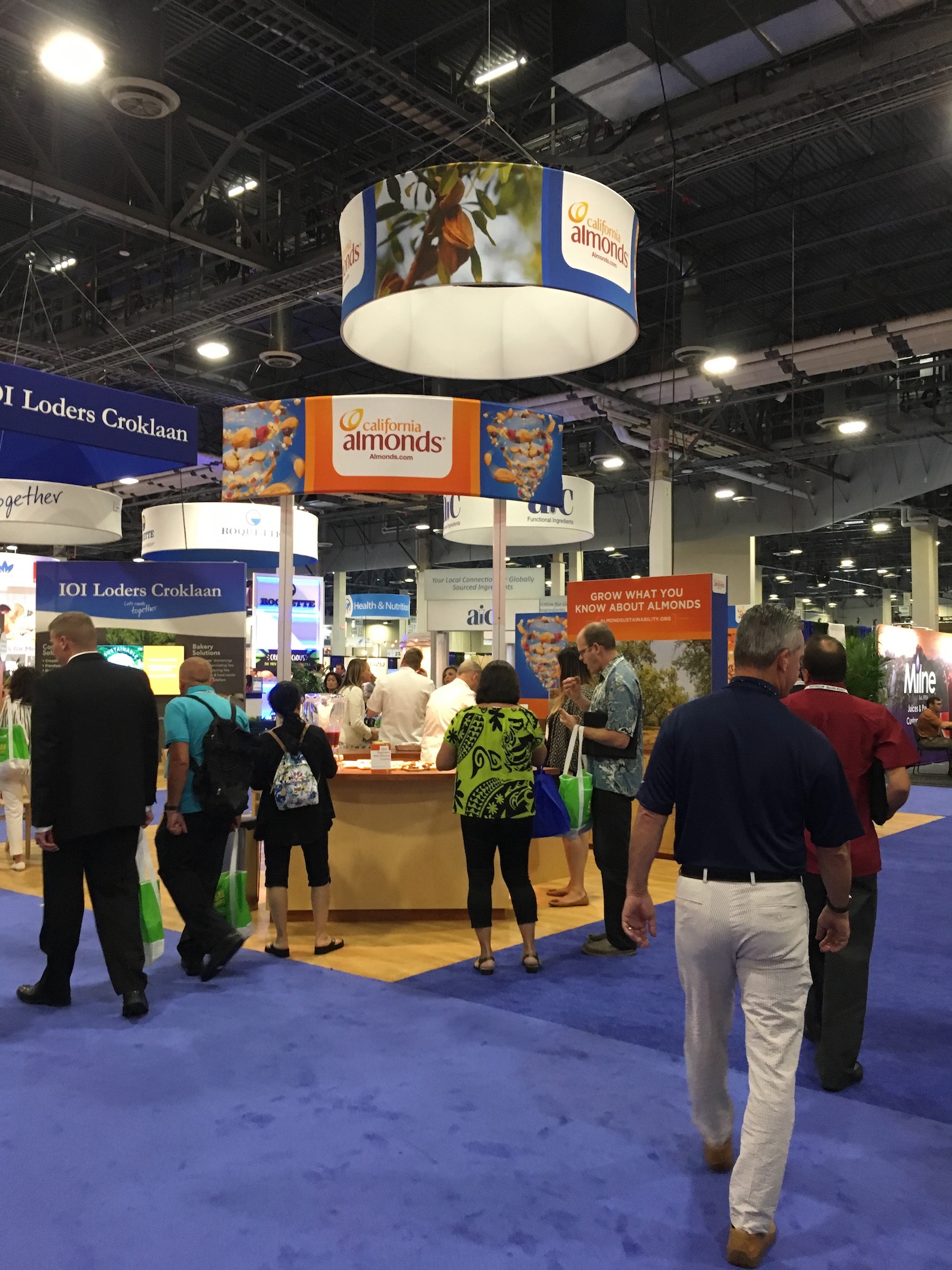
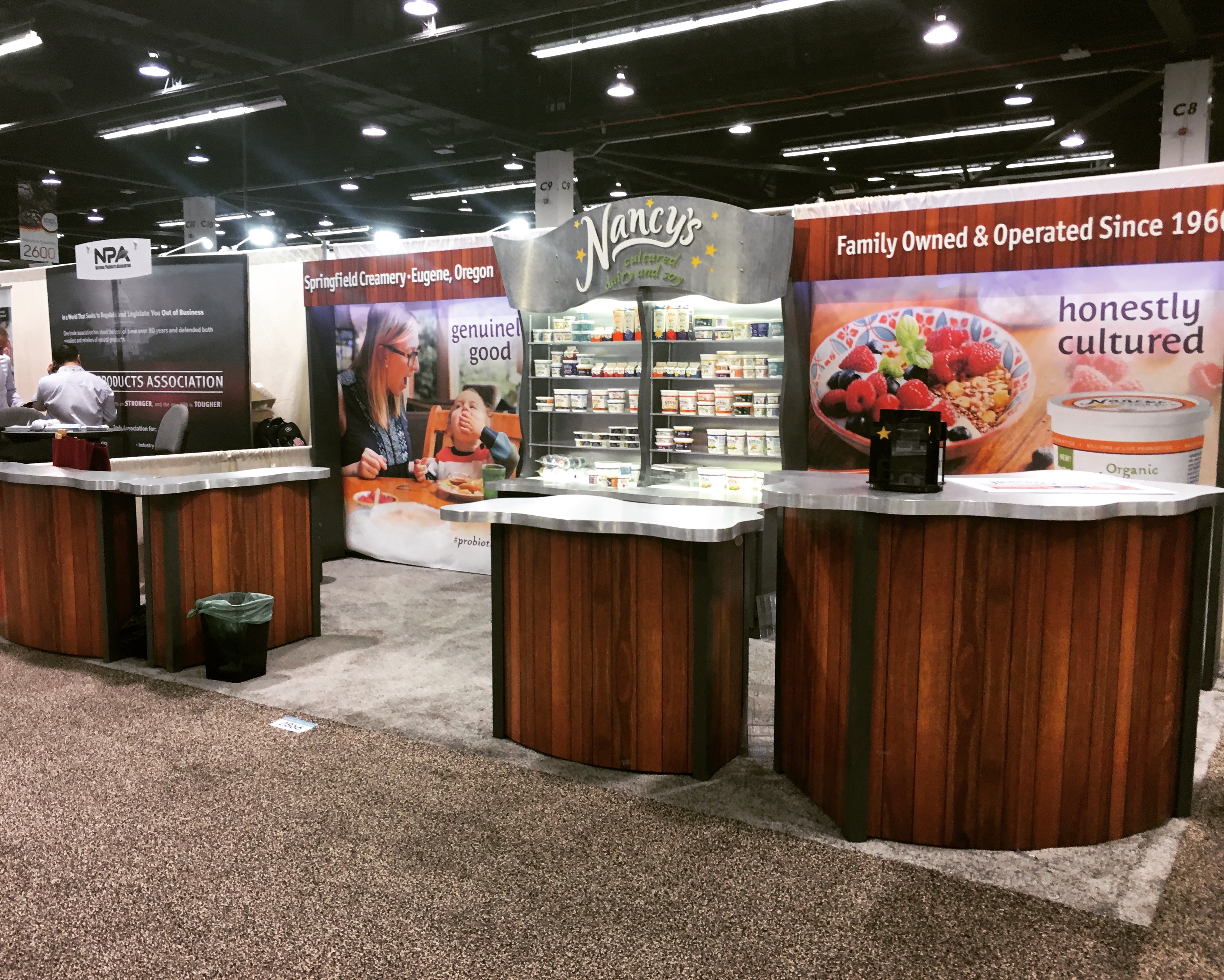
Exhibiting at a tradeshow is a great way to show off your wares, but it’s also an excellent way to uncover things about your tradeshow competitors. Let’s take a look at a half-dozen things you can find out.
Exhibit presence. Of course, the most obvious thing. You can tell at a glance what they want people to see and feel when they set up a booth. But look closer: is it bigger than last year? Is it newer? Have they made changes, or are they using the same old exhibit? Are they growing in their exhibit presence or are they downsizing?
Products/Services: Naturally, this would be the second-most-obvious thing. Are they hawking something new, or does it all look like familiar products with nothing new?
Attitude. Do the booth staffers smile and engage rapidly with passersby? Or do they sit in the back with their eyes on their phone or are they eating? Booth staffers often violate many rules of engagement at tradeshows without thinking, and it may mean that dozens of people keep walking instead of stopping to talk. Other companies exude a great spirit at all times – their staffers are wearing branded shirts, are doing activities designed to engage attendees and more. What’s the attitude of your competitors?
Management. Does the company send managers to assist in the booth? Or are they offsite taking meetings. You may not find this out without an inquiry or two, but you should be able to find out how involved management is in the show.
Job openings. Some companies will openly advertise job openings. Others will let you know if you make a discreet inquiry. Lots of openings usually mean the company is doing well. But it might also mean they have a lot of turnover.
No doubt you can uncover other things about your competitors if you keep your eyes and ears open. There’s probably a little gossip to be had if that’s your thing, along with changes in various departments that you might be interested in. Whatever the case, don’t let the opportunity to check out your tradeshow competitors pass you by!
One of our go-to vendors in the tradeshow world is Classic Exhibits. They’re an ambitious and creative bunch, replete with designers and fabricators that have been able to do anything we and our clients have asked. This week I sat down with VP of Business Development Mel White to discuss a couple of things: the exhibit rental market and the additions they’ve made to their online Exhibit Design Search. Take a look / listen:
Mel’s ONE GOOD THING was attending the Salem-Keizer Volcanoes at 9 am and witnessing the eclipse!
My ONE GOOD THING: Steely Dan. Walter Becker of the band passed away this month, so it’s been good to go back and listen to some of the great songs that Becker and his writing partner Donald Fagen have given us over the years. In fact, it wasn’t long ago I ran across a great video on how Steely Dan composes a song: Take a look:
Have you checked out Quora? I think I heard about it a couple of years ago and may have even answered a question or two along the way. If you’re not sure what Quora , check out the Wikipedia description:
“Quora is a question-and-answer site where questions are asked, answered, edited and organized by its community of users. Its publisher, Quora, Inc., is based in Mountain View, California. The company was founded in June 2009, and the website was made available to the public on June 21, 2010. Users can collaborate by editing questions and suggesting edits to other users’ answers.”
And yes, there are questions and answers about almost anything. Including tradeshows. Let’s have a little fun and share some of the best Q’s and A’s about tradeshows and tradeshow marketing:
What should I know before attending my first tradeshow? An author in the industry, David Spark, jumps in with one of the deepest answers I’ve seen on Quora. It includes videos and deep explanations. Yeah, it’s kind of a self-serving pitch for his services and his book, but it hits the mark in all ways.
Here’s an odd question: If people do not want to be marketed to at atradeshow, how do you un-market to the attendees? Well, shucks, if people don’t want to be marketed to they probably wouldn’t attend a tradeshow in the first place. But whatever. The person answering the question, Rita Carroll, has a short answer, but it distills the important points: have something for attendees to DO or SEE that’s engaging, for heaven’s sake.
Should you put out a tradeshow exhibit RFP or not? What’s the upside? What’s the downside? It might be worth a few moments to go over the pros and cons of putting out a tradeshow exhibit RFP. Okay, this may not be the Ultimate Cheat Sheet on Tradeshow Exhibit RFPS but it’s a start.
If you’re seriously considering putting out a tradeshow exhibit RFP, it must mean that you need a new tradeshow exhibit. Really need one. Not just wish you had one, or think it might be time soon. No, you really need one. Otherwise, don’t waste people’s time. Exhibit houses are busy places, and responding to an RFP takes an investment of more time and money. In fact, according to a recent Exhibitor Magazine article, exhibit houses say they respond to only 6.5 out of 10 RFPs they receive, on average. And over 10% of RFPs are put out only because company protocols dictate it.
So where to start?
Determine the following items: budget, exhibit size, flexibility (can smaller pieces be set up as a smaller version, for example?), target date, functional needs. You should already have branding issues down along with any color schemes or brand protocols you want your designer to use in a mockup. Speaking of mockups, do you want your RFP competition to include a mockup design? Some do, some don’t. No wrong answer, but be clear about your expectations. I’ve responded to RFPs in the past which invited respondents to submit a sample design, but it was not required. Frankly, having a design makes the exhibit house look better, but it is an investment of labor to make it happen.
Detail any other items you would like for your booth: easy ability to change signage, product display areas, sizes of products that you want to display, lighting requirements, meeting space requirements, storage requirements and any other specifics.
This week you are about to hear and see an interview with a professional 3D exhibit designer, who will walk you through the various challenges that come up when assembling an exhibit design. Katina Rigall-Zipay of Classic Exhibits sits down and shares a look at some of her designs on this video blog/podcast:
Our ONE GOOD THING (S!):
Katina said having her third-grader start school was a good thing: first day of school!
I also was in a seasonal mood and decided that the coming of FALL was my ONE GOOD THING!
We are awash in data, no matter what business we’re in. TradeshowGuy Tim Patterson talks with Oz du Soleil of ExcelOnFire (YouTube channel) about how to handle all of that data: how to make sure it’s clean, how to analyze it and much more.
ONE GOOD THING: For Oz, it’s cigars. For me, it’s the beginning of football season – college and pro!
Tradeshow graphics should be easy. But they’re not always as easy as you think. So let’s take a look at 7 simple steps that will totally rock your tradeshow graphics.
Bigger is better. Yeah, even with a 10’ inline booth, the bigger the better. Face it, you’re competing for eyeballs. Make them jump out at visitors.
Bright colors are eye-catching. It doesn’t mean that all of your graphics have to have reds and bright blues or greens. If it fits, use it. If bright colors don’t match your brand, not to worry. There’s more to look at.
Simple is best: bold images and limited text. Think of a tradeshow graphic as a billboard that people can spend about three seconds on. If you can’t communicate a message in three seconds, you probably put too much on it.
Back lit graphics are the rage these days, for a reason. LED-powered light boxes grab attention. Have you noticed? Even if most others are doing it is no reason to try and be different. These items do grab eyeballs.
People notice quality. Or rather, they notice when its lacking. You may not think so, but if you notice that the printing is second-rate, others will. Graphics aren’t cheap any way you look at it, so spending an extra few bucks to use the printer that has the latest and greatest isn’t going to cost that much more. And people will notice.
Professionally designed graphics are worth it. Yeah, Jimmy in accounting may be a good guy and is looking for a job as a graphic designer, and may have some chops. But designing graphics for large-size printing is more than just a good layout. It’s the highest resolution possible, and understanding how people perceive message at that scale and trying to absorb the message in just a few seconds.
Change the graphics when necessary. A lot of the same people go to the same shows and see the same exhibitors. And they’ll notice when you haven’t refreshed your graphics in the past half-decade. So keep ‘em fresh.
Follow these seven steps and your tradeshow graphics will be rockin’!
Sure, millions of people head off to tradeshows worldwide every year, but are they really tradeshow prep experts? Are they ready, I mean really ready for the tradeshow? Let’s take a look at what the average tradeshow manager should be doing to show they’re truly a tradeshow prep expert.
You plan a whole year in advance. Yes, the show is over, but did you already book next year’s space and check to see if you could upgrade to a better space?
You reach out to your exhibit house at least 3 – 4 months ahead of the show if you have minor graphic upgrades on your schedule. Reach out 6 months in advance if you’re planning to create a new exhibit or are anticipating major upgrades to your current booth. Sure, the exhibit house can turn around graphic upgrades in just a short time, but the further in advance you are of the delivery date, the better for all parties concerned.
You know what messaging you’re going to send to your potential booth visitors at least a few months prior to the show. Some folks will get emails, some may get a nice snail mail package, others will get a personal phone call. This means prioritizing your prospects and doing your best to set appointments with the hot prospects and getting warm and cool leads to at least come by the booth for a chat.
You’ve downloaded or otherwise saved the show manual or information at least a couple of months prior to the show, and know what it takes to coordinate shipping, I&D and other logistics.
You have your housing booked the day it opens or shortly thereafter. Depending on the show, the housing can go quickly.
You book your flights and rental car about 6 weeks out. I’m told that this is the optimum time for best pricing for book flights. If you book a car, this is also a good time to do that.
You’ve coordinated with other parts of the company to make sure you have products and/or services ready for launch prior to the show.
You have shift schedules prepped and distributed at least a week ahead of time.
If your booth staff is wearing special colored and branded clothing, it’s been ordered at least a couple of months prior to the show.
You know exactly what you’re going to wear at least a week before the show – and it’s packed a day or two ahead of time.
You especially know what shoes you’re going to wear!
Okay, you may have more – but if you’re doing all of this and more, you’re definitely a tradeshow prep expert!