What day is it? Are you counting how many days since you’ve been on shelter-at-home protocols? Or are you in a state that has abandoned all attempts to limit the spread of COVID-19 and things are getting back to normal? Which begs the question: what is normal?
This week on TradeshowGuy Monday Morning Coffee, I caught up with Dale Obrochta of PutATwistOnIt.com, who’s been a previous guest on this show. We talked about the challenges his profession is facing in the new normal.
We’re all in a quandary: what to do to work our way through the Coronavirus COVID-19 Pandemic and still work with clients in a meaningful way. For this week’s TradeshowGuy Monday Morning Coffee, I caught up with two busy marketers, one in the tradeshow world, and one not.
Ken Newman of Magnet Productions and Robert Middleton of Action Plan Marketing agreed to sit down with me one-on-one in Zoom meetings. I was curious to get their take on what to do and how to approach the current unprecedented situation.
The tradeshow, event and conference industries are not dead. It’s just sleeping. It’ll awaken at some point again and roar to life.
In the meantime, time on your hands. Maybe, maybe not. I certainly have time on my hands. And I have to bring in a little income.
So, I’m driving for Uber Eats and delivering food three to four hours a day. Not bad money, actually, for the time involved. My older son, who’s in his late 20s, had been working as a cook in an upscale restaurant which had to close when the coronavirus restrictions here in Oregon went into place. When we went skiing together a month ago, he told me that he’d been driving for Uber Eats a few hours before he went to work, and then a few hours after he got off in the evening. Now that the restaurant closed, he’s doing it eight hours a day, six or seven days a week. Likes being in his car (it’s new), listening to music, and bringing food to people.
I thought, I can do this. And making a few extra bucks (it’s actually pretty good pay) was enticing. It took a short while to get signed up and approved, and now I’m delivering food from restaurants to people a few hours a day. Sometimes lunch, sometimes dinner.
It gives me a lot of time to think. And listen to rock, or podcasts. But definitely time to think.
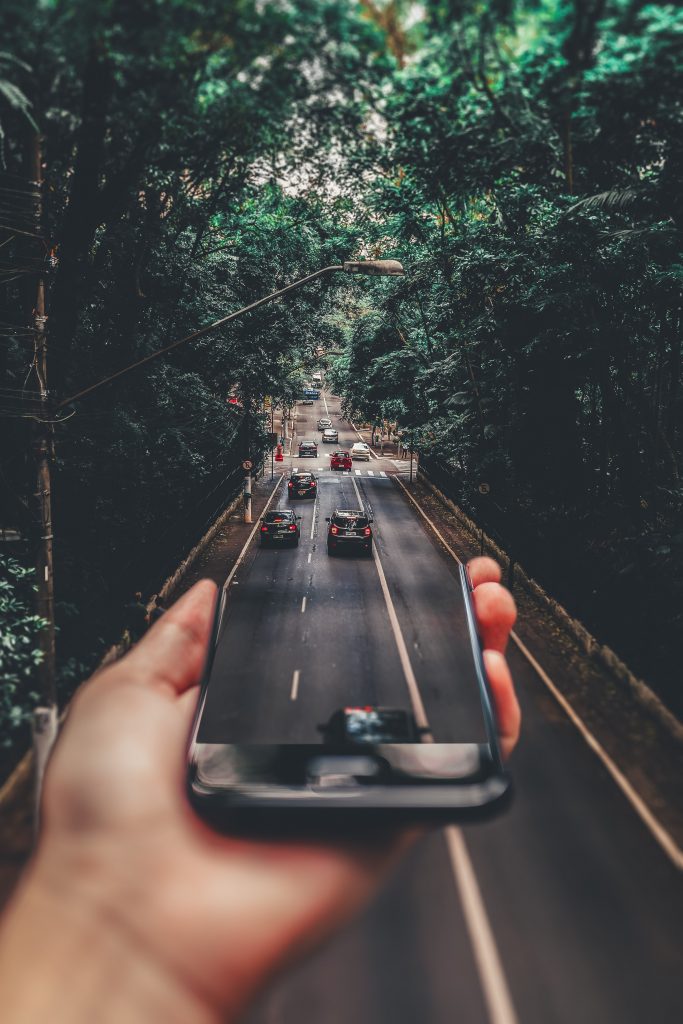
And I got to thinking about systems. What kind of systems does it take for an Uber driver (or Door Dash or Grub Hub or any of those companies) to get an offer to drive, accept it, pick up the food and deliver it in a timely manner while it’s still hot?
The driver needs:
A car
Smartphone with app
Address to pickup
Address to deliver
The smartphone has all of those items, other than the car, built in. GPS. Mapping. Internet connectivity.
The customer needs:
An app to order food from
An address for the driver to deliver it to
A way to pay (credit or debit card) they can use through the app
The restaurant needs:
A system that receives incoming orders and gets them to the kitchen in a timely manner
Ability to prepare food quickly and have it ready for pickup within a few moments
As I drive from a restaurant to a drop off point, it’s common to get another offer to pick up another order before the current one is delivered.
During my drives, I keep thinking what an intricate system this is. What an elaborate dance it is to transmit an offer to a driver that’s in the area, about to drop off one order, to deliver another order. As an Uber Eats driver, it’s all optional. Don’t want that one? Don’t take it.
Then I get to thinking about the systems built around tradeshows and events. About what the show organizer needs. What the exhibitor needs. What the visitor needs.
Think about the systems that must be in place for all of that to work to a positive effect on a regular basis. Design and fabrication of tradeshow exhibits. Shipping, setup/dismantle logistics. Travel and lodging. Product development and production.
As a participant, you only can see and control what’s immediately in front of you. But as a tradeshow marketing manager, you can exert a lot of control over how your company exhibits. How your product is presented, how your company is represented by the exhibit and the booth staff. Who sets up the booth, who handles shipping and so on.
Now that the tradeshow and event industry is on hiatus, maybe it’s a good time to examine your systems that hold everything in place from your perspective and see what can be improved.
After all, while I don’t mind driving a few hours a day delivering food, I’d rather get back to the tradeshow world full time soon.
While many of us are working from home, trying to juggle work schedules with kid demands and more, we are looking forward to a time when things return to at least semi-normal. On this week’s TradeshowGuy Monday Morning Coffee, I chatted with Heather Haigler of Switch Four about their new tradeshow management software, WorkTrip – for the remainder of 2020 they are offering free access. Here’s the conversation we had about that and other things that were on our minds:
The social distancing guidelines put forth due to the COVID-19 pandemic has effectively shut off a majority of the economy, like turning off a spigot. It would be easier to line-item the businesses that are open than those that are closed: grocery stores, drive-through coffee shops and some business offices. Ten million in the US have filed for unemployment in the past two weeks.
Ten Million.
The impact of this on the nation, on the world, is unfathomable.
I know many people who are sitting at home most of the day, binging TV shows or reading books or even playing board games or sharing music online. Others are making use of the time to learn a new skill, to tackle that novel, to write music, to create.
Others don’t know what to do.
If you’re still working, whether from home or in the office, and you have to sell to keep things going in the company, what do you do? What approach do you take?
I subscribe to several sales newsletters and thought I’d share a few thoughts. Some came from the newsletters, others from just my own experience. But here we are in a time where it’s difficult to even find someone to talk to.
First, when you call, it makes sense to ask your contact what approach their company is making. Are they putting everything on hold for the time being, awaiting the end of the social distancing and figuring they’ll kick back into action when the pandemic is over? Or are they moving forward with business as usual, as much as they can?
If it’s the former, tell them, that, ‘yeah, it’s a crazy time, I get it,’ and ask if you can send a quick email with your contact information so that when we do get back to normal they can reach back out to you. If it’s the latter, move into your typical sales questions to uncover any needs they may currently have for what you’re offering.
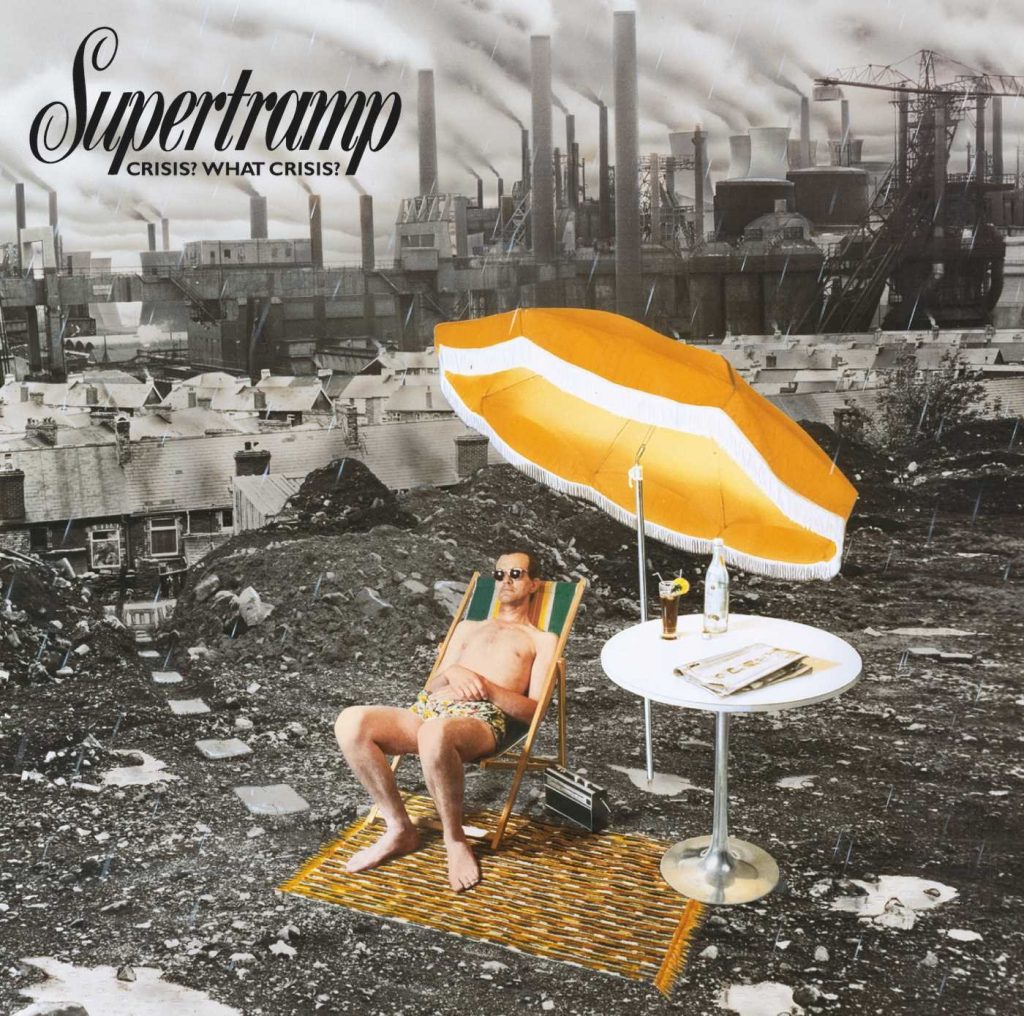
Seems appropriate somehow… (click to play the album!)
Another part of the equation is what you’re selling. If you’re in the restaurant supply business, chances are that your potential buyers are not even open, unless they’re doing take-out or drive-thru only. If you’re selling Personal Protective Equipment for health workers, you probably can’t keep up with the demand. It all depends on the specific products or services you’re selling.
Most people probably fall somewhere in between those two extremes. Which means you’re going to have to find a strategy that keeps at least some business coming in.
With millions stuck at home, that means people are going online to shop, they’re connecting via video meetings (Zoom is being mentioned dozens of times a day in the mainstream press!), telephone and email.
Questions to ask yourself:
What shape is the company website it? Does it need upgrading? Can you add new products, new services and new ways for people to connect?
Are your social media platforms being updated frequently? With so much time on their hands, everybody is on social media.
Can you offer a digital version of your services? Lots of people are taking this time to create online learning classes or other ways of sharing their information.
Can you connect with others regularly? Sure! Some people are starting up regular Zoom meetings just to have a face-to-face connection with others outside of their home.
Bottom line: be there for clients and prospects. Don’t stop doing outreach, however that looks for you. Don’t be pushy but if you continue to think you can offer something of value, something that your clients and prospects can really use, keep doing it.
I’ve been fortunate enough to work from home for almost nine
years. It’s not always easy. Retaining focus and momentum through the day is
one of the hardest things. Here are a few things I’ve learned over the years.
You can’t do it all on your own. Even though you work
from home, presumably alone (although you may have family and kids and dogs and
cats with you for the time being), there are still workers and colleagues you
need. Not only to stay connected, but to communicate with regularly so you know
what everyone is doing.
Having a schedule is critical. I block out various times of the day to get things done. Or make sure that on certain days, certain things get done. For instance, in normal times, I block out an hour of prospecting calls four times a week. Client calls are usually around the same time, although knowing that clients might not be as flexible, I often schedule calls early or later in the day. I write, record and produce a podcast late in the week, usually Friday although sometimes it happens on Saturday, and post it first thing on Monday. I try (and usually succeed) to write and post a new blog article on Tuesdays and Thursdays.
Take a break. Snack, water, quick walk, get outside.
Hey, you’re at home! You can take a few moments.
Have a start and stop time and do your best to stick to
it. I realize that work-at-home schedules are fraught with influences that
mean you have to be flexible. But if you have guidelines on when to start and
stop, you’ll have a better time keeping on track.
Focus is also critical. If you can’t focus and find
yourself getting on Twitter or Facebook, spend a moment there, then get up and
leave the room. Get away from the computer. Talk with your spouse if they’re
there, or a kid, or just take a break. Think about the most important thing you
should do when you get back in front of the computer. Maybe even the most important
two or three things, write them down, and when you sit down to work after a few
moments, do those things. Put the blinders on, for at least a few moments. Some
people work well with timers, shutting everything out for 20 or 30 minutes.
Others don’t. Find what works best for you to keep focus, which is when you’ll
likely do your best work.
Work when you’re most effective. I tend to like
working best in the morning. After one or two in the afternoon, focus wanes and
effectiveness drops significantly. With my wife not working now because her employer
is closed due to the Coronavirus, I’m getting up a six, doing my morning Yoga routine
while the coffee brews, and then work on my novel for an hour. Then I crank
through the email and any immediate business items. Then it’s a shower and we
walk the dog. Lately the walks have been an hour or more, getting in three or
four miles. Finally, it’s back in the office for more business-related work for
a couple of hours. Some people are not morning people and work better at night.
Whatever works best for you is what you should try to make happen.
With the family home, communication is important. Your spouse may need to work as well, you may have kids that need hands-on attention. Or not. No matter your situation, make sure all parties are clear on your needs, and make sure you’re clear on their needs. It’s not fun to keep butting heads on schedules when a simple discussion and prioritizing of each person’s needs and desires can usually straighten things out.
With the Coronavirus COVID-19 Pandemic, you may be working from home. But it won’t last forever. You’ll get back to the office at some point. Hopefully sooner than later. But in the meantime, get some work done. And have a little fun at the same time.
You built an event calendar out for the year. You planned,
you upgraded, you designed and produced new graphics, maybe you even invested
in a new exhibit. But if the show doesn’t take place, how can you make the best
use of your upgrades or your new graphics?
A couple of suggestions:
Put together a short video, maybe a minute or less,
that you can share on social media. Explain that while you were planning to
launch a new product or debut a new booth, but the show cancellation prevented
you from doing so. Instead, show it off in the video. If it’s just a graphic upgrade,
show those off in the video. If it’s a new exhibit, your exhibit house should
have provided 3D renderings – show those off as well, and make sure to tell
your clients and prospects and social media followers that you’ll be using it
as soon as you’re able at the next show – whenever that is.
Use social media to launch the new products. If it’s
feasible, have a little contest and give away some samples. Pick a few winners
and mail them the samples.
Convene people for a Zoom virtual meeting. Maybe even make it a virtual tradeshow to where you can show off your new booth renderings – and hey, if you want to go all out and it makes sense for you and you have the room, set up the booth and use that as a backdrop for your Zoom call. Show it off!
Do one-on-one outreach to clients. Make calls, send
emails. If convenient (or wise), schedule coffee or lunch. Keep in touch! Heck,
schedule a Zoom call and send a coffee gift card ahead of time so they can have
a fresh cup on hand! Talk to them about what you were going to do with the
show.
Other promotions: create a small brochure and mail it to your clients and prospects showing off your new products that you were going to debut at the tradeshow. Have a sale. Offer free shipping. Do a BOGO sale.
Bottom Line: It looks like the frequency and functionality of tradeshows and events are going to be drastically cut for the foreseeable future. Don’t wait to figure out what you can do in place of tradeshow and events. There’s always something.
Thanks to Andy Saks of Spark Presentations for the inspiration for this blog post.
Natural Products Expo West was postponed and/or cancelled a couple of days before floor doors were to open. I happened to be sitting on the airplane headed to LA for the show when I got the news.
This week’s TradeshowGuy Monday Morning Coffee podcast/vlog is more or less a travelogue of the 6 days I spent in LA and surrounding area, along with a few comments about Natural Products Expo West. I worked with clients to make sure they had return shipping handled and connected with several old friends and relatives.
Take a look/listen:
Show Notes: I mentioned a handful of folks that I encountered during the week.
Share Experience is a new company formed late last year by Marcus Vahle and John Pugh, both with long experience in the event and tradeshow world. Given what looks to be a unique approach to carving out their niche in the event world, I thought it might be fun to catch up with them for a conversation on this week’s TradeshowGuy Monday Morning Coffee:
Face it, we’re all swimming in data. Every time we walk out the door, drive to the store, buy a cup of coffee, order something online or even just sit at home watching TV, that information is getting logged. If you have a doorbell camera, there’s a good chance that you also chose to connect with local law enforcement agencies, who now can use the images to theoretically catch the bad guys. Stories abound, good and bad, about how all of that data can be used.
So yes, the data at times can be overwhelming. But what
about your tradeshow booth? Are there any ways to track data during a show that
can be helpful?
Let’s say you set up a time lapse camera in your booth. Put it somewhere that allows you to track the number of visitors, that can show you how long people stayed, or what they interacted with in the booth. That would be one way. Certainly, it would take some time to go through the video after the show, but my guess is that you would get some good intel as a result.
Other data you could consider tracking isn’t so high tech:
leads generated, sales made (and dollars brought in as a result of those
sales), new customers. You might also look at web traffic you got during or
right after the show. And be sure to look at social media impact: number of likes,
retweets, engagements and so forth.
Back to tech, here’s a great article from the Event Manager Blog on ways to track visitors using smart mats, wi-fi monitors and heat maps, badge scanners, wearables, beacons and more. Loads of stuff to digest, and some of it may actually be useful in certain situations.
Gathering data to examine from a single show is certainly
valuable. But it’s just one piece of the data-gathering path. When you gather the
same type of data at show after show, year after year, you can see trends
develop.
All of this information can help you make more informed decisions on how to approach and shape your marketing messaging by uncovering what makes things tick.