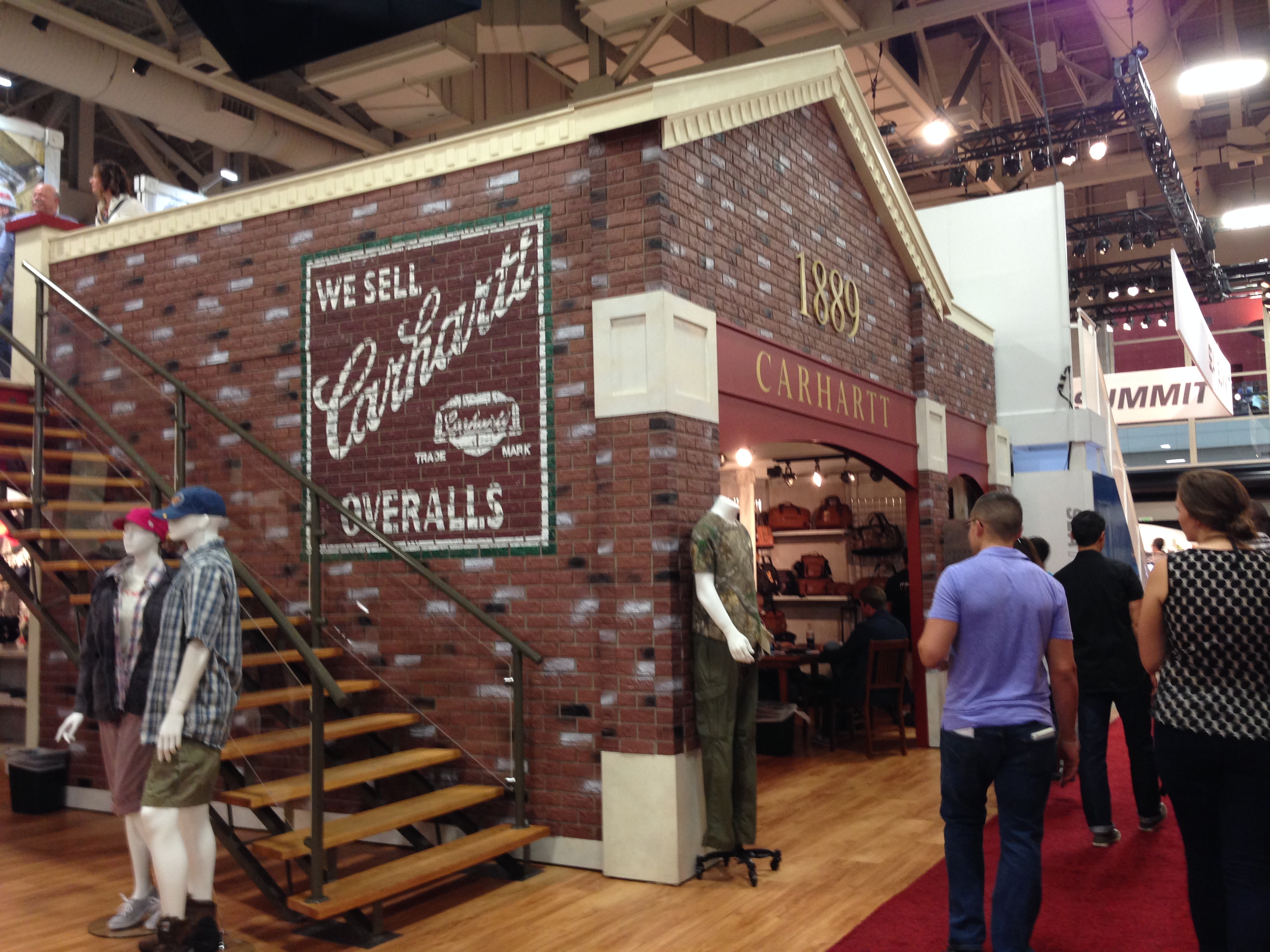
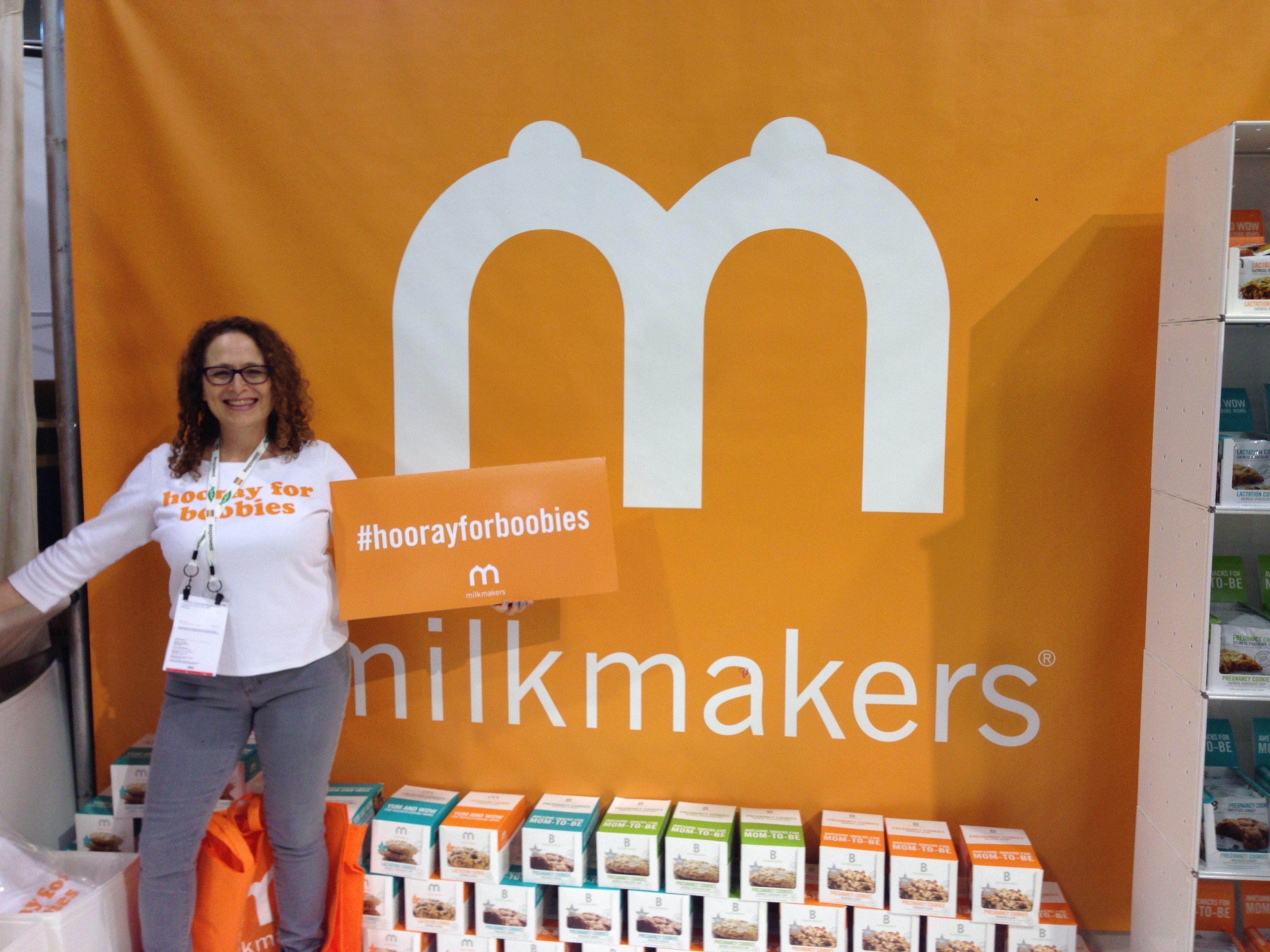
Your tradeshow booth is, hopefully, a thing of beauty. You spent days, weeks, and maybe months working with a designer, then a graphic designer, then a marketing team, then a fabricator to create the perfect big booth.
Then you set it up at a tradeshow where you paid tens of thousands of dollars for the privilege of bringing your crew and the booth to show it (along with your products or services, of course) to thousands of people.
And Joe the Attendee and Jill the Attendee walk by at a brisk clip, take a 4 or 5 second glance, or don’t even look up, and keep walking.
What happened? You think the booth is beautiful!
They didn’t give it a second glance.
There are many reasons why this might be.
The real challenge for you is this: how do people outside of your world see your exhibit?
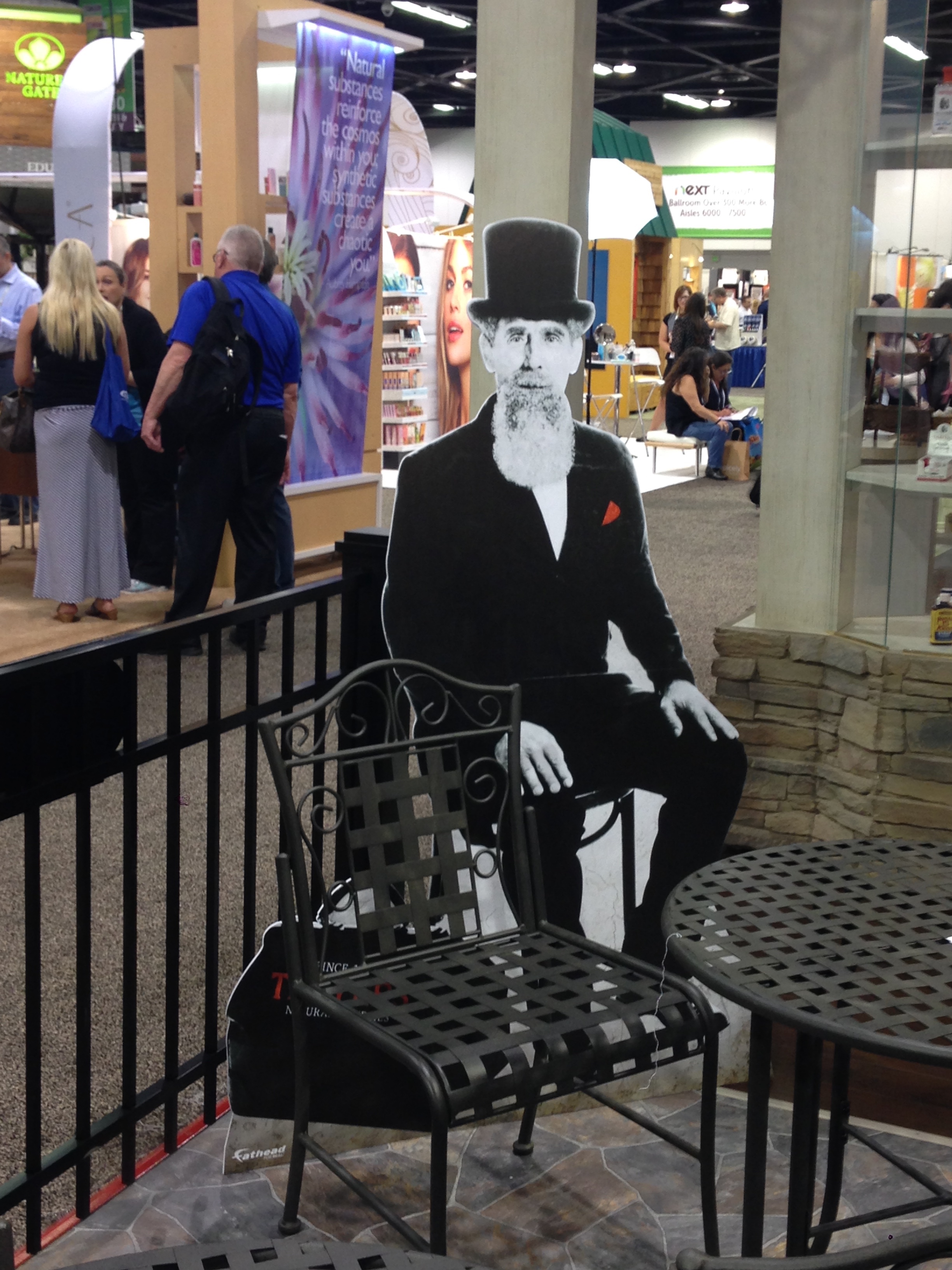
When you’re considering what your booth is saying about you, consider as well what the attendee sees when they walk by. What does it mean to them? How do they react to what they see?
Look at it from their perspective. Is the messaging clear to people who have never heard of you? Does your brand ring clear and deliver itself without misunderstanding?
If your brand is strongly communicated and your messaging is clear enough for those who have never heard of you to easily understand it, your designers and fabricators have done their jobs.
What’s the single most important thing you can do prior to your next show to save money? You might be surprised.
Tradeshow exhibiting can be expensive. So as an exhibitor, you’re always looking for ways to cut costs!
Just in time for 2016 planning, Mel White of Classic Exhibits recently teamed up with Handshake.com and gave a webinar aimed directly at you if you’re trying to cut costs in your tradeshow marketing.
From rental exhibits, to non-hanging-hanging signs (yes!), to cost-cutting in your graphic production, Mel gives you two dozen-plus items to consider.
Doesn’t every Tom, Joe and Susie have a newsletter these days? After all, they can be very useful in getting your message in front of eyeballs on a consistent basis.
The fact is, my inbox is filled daily with dozens of newsletters of all sorts: news, marketing, comic strips, social media engagement, big biz, small biz, and so on.
I tend to open about one in ten if I’m in a generous mood. More like one in twenty or one in fifty. In other words, it’s hard to get my attention (or anybody’s) these days with just a newsletter. There’s got to be something in there that makes it worthwhile to click and open. And read.
But there are several newsletters that I read frequently. Some I open every single time right when I see it and stop what I’m doing. Others get put on the ‘later’ list and I usually make it back to them.
These are the tradeshow industry-related email newsletters that I read almost every time they arrive. I say almost because, hey, even I have to take a day off now and then! There are others out there – some are closed to the public and others don’t arrive frequently enough to warrant attention, and some I just don’t know about – but here are the tops in my book.
Exhibitor Magazine: a companion to their monthly print magazine, the newsletter is a useful and professional addition to your inbox.
TSNN: The Tradeshow News Network: between this and Exhibitor Magazine, you will have your pulse on the beat of the tradeshow industry news and happenings. Bonus: they have several editions available.
Classic Exhibits Tradeshow Tales: Mel and Kevin at Classic Exhibits in Portland, Oregon, offer great insight, humor and passion on a regular basis.
Andy Saks, Spark Presentations:Andy is a tradeshow presenter, Emcee, Staff Trainer and Auctioneer. In other words, he gets up in front of people. A lot. And his now-and-then newsletter is always a good read.
Anders Boulanger, the Infotainers: I enjoy this newsletter as much as any. Anders is a solid writer and communicator and always has thoughtful, meaty – and useful – pieces.
Marlys Arnold, Tradeshow Insights: Marly has been a show organizer and an exhibitor and comes at the topic from a unique perspective. A worthwhile read anytime.
Susan Friedmann, Tradeshow Tips: Susan is a CSP (Certified Speaking Professional) who has written many tradeshow related books and publishes a weekly tip sheet for exhibitors.
Skyline Tradeshow Tips: Friendly and useful, this newsletter doesn’t seem to show up a lot but when it does it’s good.
BONUS
Here are some non-related business/marketing/sales newsletters that I read all the time. I think you’ll love ’em:
Monday Morning Memo: Roy H. Williams of Austin, Texas, author of the Wizard of Ads and a former radio ad salesman, rings my Monday morning with a loud and clear bell every week. I look forward to this.
Tim Ferris, author of the 4-Hour Work Week and the 4 Hour Body, publishes a newsletter every Friday (and at other random times) of stuff that has caught his eye. Good stuff.
Dave Pell’s Next Draft, billed as ‘The Day’s Most Fascinating News,’ is all of that and more.
Lots of things are green today, but what does it really take to make a green exhibit?
First, let’s agree on what ‘green’ means.
Most agree that it means moving away from standard business-as-usual fabrication methods by replacing traditional materials and/or ensuring that the chain of incoming products and outgoing materials is as eco-friendly as possible. Ultimately it means as many methods as possible are used to design and fabrication environmentally sustainable exhibits.
How to be Green
In a recent chat with Matt Wish, the Marketing Director of Eco-Sustainable Exhibits (HQ in Grand Rapids, MI; Manufacturing in Portland, OR), we went over what it takes to design and produce a green exhibit.
“Compare it to what people are used to in the construction world: LEED Certification. It’s a great buzzword. What we’ve done is take what we think the LEED Certification would be for a tradeshow exhibit and applied it,” said Matt.
Everything from materials that are being used to the substrates that graphics are printed on, down to the inks used are all combined to assemble what could be called a green exhibit. This includes recycled aluminum extrusions, LED lighting, Paradise Fabric Graphics made from 100% recycled soda bottles, eco-glass, bamboo plywood, FSC certified wood, eco-board and even stains and finishes using water-based low VOC (Volatile Organic Compound) and VOC Free.
“We do all we can to hold our company accountable to keep things eco-friendly and green,” said Matt.
Eco-Sustainable Exhibits works closely with Classic Exhibits, their manufacturer, and that has been fruitful for both, as Classic Exhibits adheres to a very sustainable model, using recycled materials and recycling as many leftovers as possible. Another partner, Optima Graphics, also works diligently to recycle materials and use sustainable materials, which means that exhibits nowadays from these companies are about as green as can be.
Classic Exhibits is also in a unique position of being right next to a set of railroad tracks where recycled aluminum can be loaded easily and transported just a few miles to an aluminum recycler that has the capability of extruding many of the Classic Modul aluminum shapes. Being able to transport materials only a short distance instead of hundreds or thousands of miles is yet another way to keep the carbon footprint down on a green exhibit.
What about cost?
“Virtually identical,” says Matt. Which means that a few years ago what used to be more expensive than materials from the mainstream now costs virtually the same.
What about the quality?
“Most people can’t tell the difference,” says Matt. Some of the materials are better than typical building materials, some others may not be quite as good, but in any case, it’s a tossup. When it comes to the recycled plastic that goes into shipping cases, you’re actually getting a case that is more durable than those made from traditional cases in the industry.
Rentals are Eco-Friendly
A company can buy an exhibit and use it 5, 6, 7 years or more and get a lot of mileage out of that new purchase. This contributes to the greening of the exhibit because you’re not buying very often. And when you finally outgrow the exhibit, as you transition to something new, those old materials can likely be recycled or repurposed.
But what about renting? By renting you’re continuing to use the same materials over and over, which also contributes to the greening and the sustainability of the industry.
Final words?
As Matt put it, “so many people have a negative approach, saying that you shouldn’t drive so much, or waste so much, and so on, but we like to take the positive approach and say that even a little bit of green is a great step in the right direction.” Whether renting or buying, asking your exhibit house what kinds of sustainable materials they have, or what kind of sustainability practices they incorporate, lets them know that you, as an exhibit purchaser, are interested in the greening of tradeshow exhibits.
By making small changes where they make sense, that small change can add to the overall effect that we, as planet inhabitants, need to consider when we get out our checkbook to put a new exhibit into place.
Want to browse green exhibits? Many of Eco-Systems Sustainable Exhibits are found here on the Exhibit Design Search.
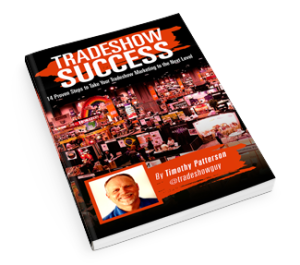
Upon the release of my new book Tradeshow Success, as you may know (or not!), I offered free downloads of the digital version of the book (click here to get yours).
An interesting thing then happened. As exhibitors got their hands on it, one question has come up a number of times:
“I need help with pre-show marketing, so I was glad to see it addressed in the book.”
I’ve had conversations with a few of these people, and their position is clear: they’re not doing any pre-show marketing, or doing so little they know that they can do better.
In the book, I address pre-show marketing, promotion and preparation a number of times. For example in Step 3, “Getting Ready for the Big Dance,” Wally, one of the fictional characters in the book, discusses his pre-show preparations:
“There’s pre-show marketing and promotion, staff training, booth preparation, product and service preparation, show research, generating public relations, engaging social media, sales and lead-generation prep and so much more.”
So yes…there’s a lot to cover.
When I chatted with these exhibitors, I suggested that if they were starting from zero (and many were), they don’t try to do it all at once simply because it can be overwhelming. Find two or three things that they know they can get done either in-house, or by hiring someone to help out.
That may mean doing outreach via email and direct mail to remind customers and potential customers that you’re going to be at the show and giving them the details.
It might mean focusing on media and PR for this particular show and working to create reasons for reporters and media outlets to be interested in your business, as well as beginning to develop relationships with those that cover the industry.
It might mean ramping up your social media team to be ‘all hands on deck’ as the chatter around the show starts a few weeks prior, and to be onsite during the show taking videos and photographs and tweeting and sharing that information online.
Pre-show marketing is art as much as it is science. And as in all art and science, there’s no one answer that fits all situations. What works this year may not work next year. What works at one show may show poor results at next month’s show in a different location.
I believe the key to success in pre-show marketing is to pick a tactic or two or three, work it to the best you can, measure the results, make some adjustments and work to improve it at the next show.
Before you launch your pre-show marketing effort, make sure you have measurable and trackable goals in place. For example, if you came home with 45 strong leads at the last show, you might want to shoot for 60 this show. If you gave out 550 samples of your product, you might want to try and give away 650 this year. Or you want to get two article written about your business or products in industry press.
Whatever the goal, make it achievable and measurable. And have the personnel and methods in place to track those goals.
You want a successful tradeshow exhibit design and fabrication process, naturally. A number of factors come into play in the process, including (but not limited to) the timeline. When do you start the process?
It depends upon your current status: do you already have a booth and simply want to upgrade, or are you starting from scratch? Do you want to move up from a small 10×10 or 10×20 inline booth to a larger island? While you intuitively know where you are, the first step of the process is to take a few moments and write it all down. Share it with all team members. You may want to do a full Request for Proposal from potential new exhibit houses, or you may be comfortable with your current vendor and simply want to communicate the desire to upgrade to them.
In any event, make and share the assessment with those that will be involved.
One Year Prior to the Show
If you’re essential starting from scratch, you should probably look at the entire project from the 30,000 foot level about 9 months to a year out from the show date when you’ll want the new exhibit. This gives you a chance to determine a comprehensive and detailed budget. Having this budget document that includes all related costs such as storage, potential shipping, set-up costs and so forth will reduce the element of surprise for you and management once the project is officially under way.
This early discussion should also look at the main shows that you’ll be using the new booth at. Some companies have large booths that are used only once or twice a year, while they use smaller inline or popup booths at smaller shows. Look at things such as show goals and objectives, audience, traffic flow, etc.
Provide your exhibit house with a design brief detailing all of the elements of your new exhibit: size of booth, show goals, meeting spaces, storage, demo areas, branding elements, etc.
Six Months Out
Bu now you should be starting regular conversations with your exhibit house in earnest and their designer should be working from your design brief.
Your booth builder will want to have as much information as you can provide about the show such as dates, location, and other details. You may even want to provide them with your show marketing strategy and details so that they are aware of how you will promote your show appearance.
Four Months Out
You should have reviewed at least one or two designs and walked through any revisions with your 3D booth designer. You’re in the stage of finalizing all of the details prior to fabrication.
Graphic designers will have received graphic placement details and graphic dimensions from the booth designer and should be developing graphics in conjunction with the marketing team.
Reach out to I&D companies for early estimates and availabilities for set-up of the new booth, if it’s a larger booth that requires a set-up team.
Sometime in the next few weeks, depending on your exhibit house’s capabilities, the booth will go through fabrication.
One Month Prior to the Show
A walk-through with a booth set-up will be arranged and all graphics will be completed and placed. Any final items that need to be changed will result in a punch list that will need to complete by the exhibit house prior to crating and shipping.
This is when you’ll make final arrangements for shipping, I&D and storage if they haven’t been made yet.
Small Booths
Smaller booths, such as modular, kit or pop-ups don’t follow the longer timeline that custom island booths demand. Many can be chosen from a catalog and ordered quickly once graphic files are completed and are often capable of being shipped in less than a month, and depending on the complexity of the booth, in just a week or two.
At the Show
You have a great booth! Set-up was flawless because your exhibit house furnished thorough and easy-to-follow instructions for the I&D team. Your job is to work the show, talk with visitors and generate new business!
Our good buddies over at Bartizan Connectshave released a neat little e-book that is designed to help you leverage your Facebook page in conjunction with your appearance at a tradeshow.
As part of the promotion of my new book Tradeshow Success: 14 Proven Steps to Take Your Tradeshow Marketing to the Next Level, I assembled 14 videos. Each short video focused on a specific step as detailed in the book. If you hang out on Twitter or LinkedIn and follow me, you may have seen them. They’re quick and descriptive, and are good introduction to the book. Here’s the playlist of all of the videos:
This week is the launch of my new book “Tradeshow Success: 14 Proven Steps to Take Your Tradeshow Marketing to the Next Level.” I’m doing a lot of the normal launch things an author would do: sending copies to industry media and bloggers, along with industry colleagues. Creating a list of clients and potential clients that I’d like to get the book into. And much more!
Beyond that, I’ve created a series of 14 videos, with each one relating to one of the chapters in the book. Those videos are appearing, about one a day, at my YouTube Tradeshow Marketingchannel. Check ’em out!
So what can you do? If you want to purchase the paperback, here’s the Amazon.com page. You can also buy the Kindle version for about half the list price of the paperback.
You can also read the book for free here at TradeshowSuccessBook.com. You’ll be asked to opt-in to a mailing list (which, if you gotta, you can always unsubscribe from).
What do you get in the book? As mentioned in the subtitle, I’ve detailed 14 steps that are critical to tradeshow success. Not every successful tradeshow marketer uses all of these steps with utmost efficiency, but most of them make very good use of many of the steps.
So what are the steps?
Let’s take a look at the 14 Steps:
Step One: Going with or without a Map? Are you doing enough planning and organizing around your tradeshows?
Step Two: Dollars, Pounds, Euros: How Much Do You Really Need to Make This Work? A breakdown of the budgeting process for tradeshows and what it takes to budget for a new exhibit.
Step Three: Getting Ready for the Big Dance: Pre-show planning and marketing.
Step Four: Did You Come to the Right Dance? Just make sure that your target market is at the show you’re going to dump all of that money into.
Step Five: Home is Where the Booth Is: Booth design essentials, including function, traffic flow, graphics and more.
Step Six: Is Your Frontline Team Up to Snuff? Booth staff training!
Step Seven: What Do I Do With All of These People in the Booth? Now that you’ve drawn a crowd, what do you do with them?
Step Eight: Tweeting, Posting and Instagramming Like a King or Queen: Putting social media to work for you in a creative way.
Step Nine: Who’s Keeping Track of Those Damn Tweets? Someone needs to create videos, blog posts, tweets, etc. Here’s a great look at some online content ideas.
Step Ten: Got a Stack of Leads: Now What? Lead generation and follow up.
Step Eleven: Becoming the Zen Master of Stats and Records: Record-keeping is the secret sauce to tracking your success.
Step Twelve: Stirring the Public Relations and Media Pot: Working with industry media.
Step Thirteen: Do QR Codes Still Kill Kittens? And Other Tech Questions: A quick examination of technology in tradeshows.
Step Fourteen: Out Of Your Nest: Time to Fly! Your call to action!
Want to grab your own copy? Use the links above to own your own. Or if you want the digital version (PDF download), try this:
Questions are powerful. Asking the right questions in the right situation can open doors to more business, to gathering critical information and to getting someone interested in your product or service.
At a tradeshow, questions are your superpower. It’s a busy, chaotic environment and there are hundreds, if not thousands, of other exhibitors and booths competing for your visitor’s attention. What are you doing to differentiate yourself from the competition?
You’re asking powerful questions.
Given the situation that time is of the essence, unfortunately you can’t necessarily spend a lot of time with rapport-building questions. A typical sales call may allow you time to ask about how their business is going, what they’re doing this weekend, and to get into details of their company’s short and long-term goals.
But you can ask impactful questions that get people thinking.
Ask about Goals and Objectives: What are you hoping to accomplish in the next 6 to 12 months? The next 2 – 5 years? Or ask about a specific project: what does this particular project mean to the company?
Ask about Problems and Challenges: What’s missing in your challenge to reach Goal A? Is there anything in particular that’s holding you back? What solutions are you considering?
Ask questions that position your company: If you were to work with us, what are you hoping will be different from what you’re currently doing? What does success look like for you in this project, or in how we work together?
A few simple questions will make it clear that you should pursue the situation further, or not. Depending on the circumstances, it may be appropriate to sit down at a private table and hash out all of the details, or it may mean setting up an appointment to follow up.
Asking open-ended questions lets the visitor respond with as much information as they like. Asking too many questions, though, makes you sound like an automaton. In other words, don’t’ overdo it. Sometimes the right response is simply to say “Tell me more” or “How so?”
Just keep in mind that on the tradeshow floor your goal is to qualify and disqualify visitors quickly. Don’t waste time with a non-prospect and don’t spend an inordinate amount of time with a prospect. Make sure you have a proper and agreed-upon follow up sequence in place before he or she leaves the booth.