Best tradeshow marketing tips and case studies. Call 800-654-6946.

Image

Ask Me Anything: Answers to My Most-Asked Tradeshow Marketing Questions

As a company owner, salesman and project manager for TradeshowGuy Exhibits, I get tradeshow marketing questions. Hoobooy, I get a lot of questions. I thought it might be fun to answer a handful of the most common questions I get.

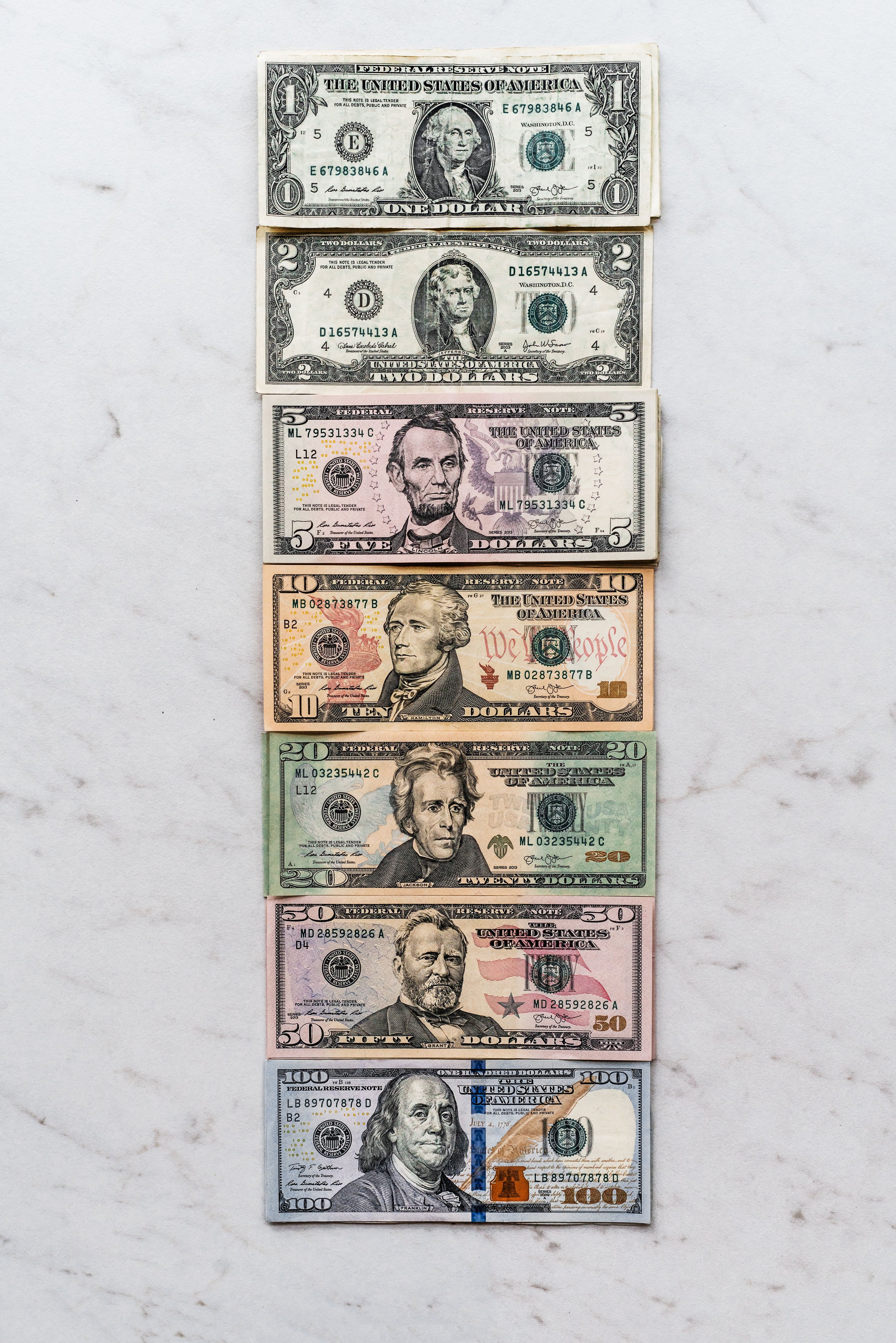
Our shipping costs are sky-high. How can we bring these costs down? Many questions are about costs, so it’s a good place to start. Certainly, if something is heavy it’s going to cost a lot to ship. Wood panels are heavy, and many older exhibits have a lot of wood pieces. It also adds up in drayage costs at the show. Some clients like the image that wood gives them, so they bite the bullet and build the cost of shipping into their exhibiting program. Others that want to bring the shipping costs down look at lighter materials, such as silicon-edge fabric graphic panels (SEG) that give a great look but don’t have the weight and heft of wooden or other types of panels.

How can we increase our ROI? It seems that tradeshow marketing is hit and miss. Yes, investing in tradeshow marketing can be expensive, but done right, it can be a boon and open doors to markets that you wouldn’t be able to otherwise reach. Sometimes it comes down to exhibiting at the right shows. It often means putting more time, energy and resources into pre-show marketing, booth staff training and a booth that accurately represents your brand (among others). There are a lot of moving parts and if you let a few of those parts go unattended to, it can contribute to your failure. I spoke with a former exhibitor recently who said the last time they exhibited was years ago and it was a bust. When we spent a few minute dissecting it, we come to the conclusion that as a small local business, one of their biggest challenges was finding a local show that could provide a large enough audience of potential customers. Without deeper digging, it was impossible to know in that brief call, but we both felt that we identified one of their most important challenges: getting in from of the right audience.

How do we work with a designer? We’ve never done that before. Often I end up working with exhibitors who are in a sense moving out of their comfort zone. Before now, they have purchased exhibits from a source that just shows them a catalog of pre-made items. Nothing wrong with that, there are hundreds and hundreds of modular exhibits and accessories that are more or less ‘off-the-shelf’ that will do a great job for you. But exhibitors will often reach the point where they have the budget and desire to move into something custom. Working with a designer is straightforward – but you have to choose a designer that knows how to design in 3D. Graphic designers typically won’t have the skill to do so. However, trained 3D exhibit designers know how to design exhibits that take into account all of your functional needs: storage space, display space, foot traffic flow, graphic layout and so much more. A typically-trained graphic designer won’t have the skill that a 3D designer does. As for working with a designer, it’s typical to have a long conversation, either in person, or on a conference call, with the company stakeholders so that all needs are discussed. At that point the designer will create a mockup or two for review and once comments are in, changes are made until the final design is agreed upon.
tradeshow marketing questions

I need a new exhibit. Should I prepare and issue an RFP (Request for Proposal)? It depends. There’s no definitive answer on this one. An RFP does a couple of things: it helps clarify your exhibit needs by forcing you to articulate all of your needs, budget, timeline and so on. Putting it all in black and white is a great exercise whether you’re putting out an RFP or not. If you don’t have an exhibit house in mind, issuing an RFP allows you to vet a handful (probably 4 – 6) companies, and make them jump through some hoops to make their case, and perhaps even do mock designs for you. On the other hand, if you have been working with an exhibit house that has done you well – has created great exhibits for you in the past, has been an effective partner for years – then no doubt you’re in good shape staying with them.

How much does it cost? It’s a question people don’t really like to ask, but usually end up blurting it out. Some items come with a set price, like the off-the-shelf catalog items, but if they’re shopping for a custom exhibit, there is no obvious answer. In my younger salesperson days, I’d answer the question with “well, what’s your budget?” but that’s not really a good answer. The better response I believe, is to ask them how they come up with a budget from their end. What is their process for determining how much they are willing to invest? There are industry standards – which are pretty accurate, and a good starting place – but the client has to work through a number of internal issues unique to come up with a realistic budget for their project. A final thought on this: if their internal discussion gives them a number that isn’t realistic for their expectations, a reputable exhibit house will tell them so.

How quick can you get it done? Or: how long will this take? This question often comes from an exhibitor who hasn’t paid close enough attention to the calendar and are now scrambling to get something in place. A recent exhibitor asked me – months (almost a year) ahead of their need  and asked “how long does the process usually take?” The question was about designing and fabricating an island booth from scratch. I silently gave him kudos for asking the question up front (and not waiting until a month or two before the show), then told him my answer: for an island exhibit, we’d love to have 3-4 months at minimum. Six months is better. But we’ve turned around island exhibits in 5 or 6 weeks IF the client has a really strong idea of what they want and all that’s need for design is for the designer to create the rendering and confirm that the look and feel and dimensions are accurate – and then we’re off to the races.

Certainly there are other questions I hear, but in reflecting the past year or two, these seem to be what come up the most-asked tradeshow marketing questions. What questions do YOU have about exhibit creation or tradeshow marketing?

 

2017 Tradeshow Exhibiting Trends

I’m the last guy to claim to be a trend-setter, but I do try to keep at least one half-open eye on tradeshow exhibiting trends. So I took a look at some of the things that are showing up on various 2017 tradeshow exhibit trends lists and added in a couple of things I’ve seen at shows this year. Yes, we’re into the second half of the year – so how did these trend article from earlier in the year predict what’s happening on the ground?

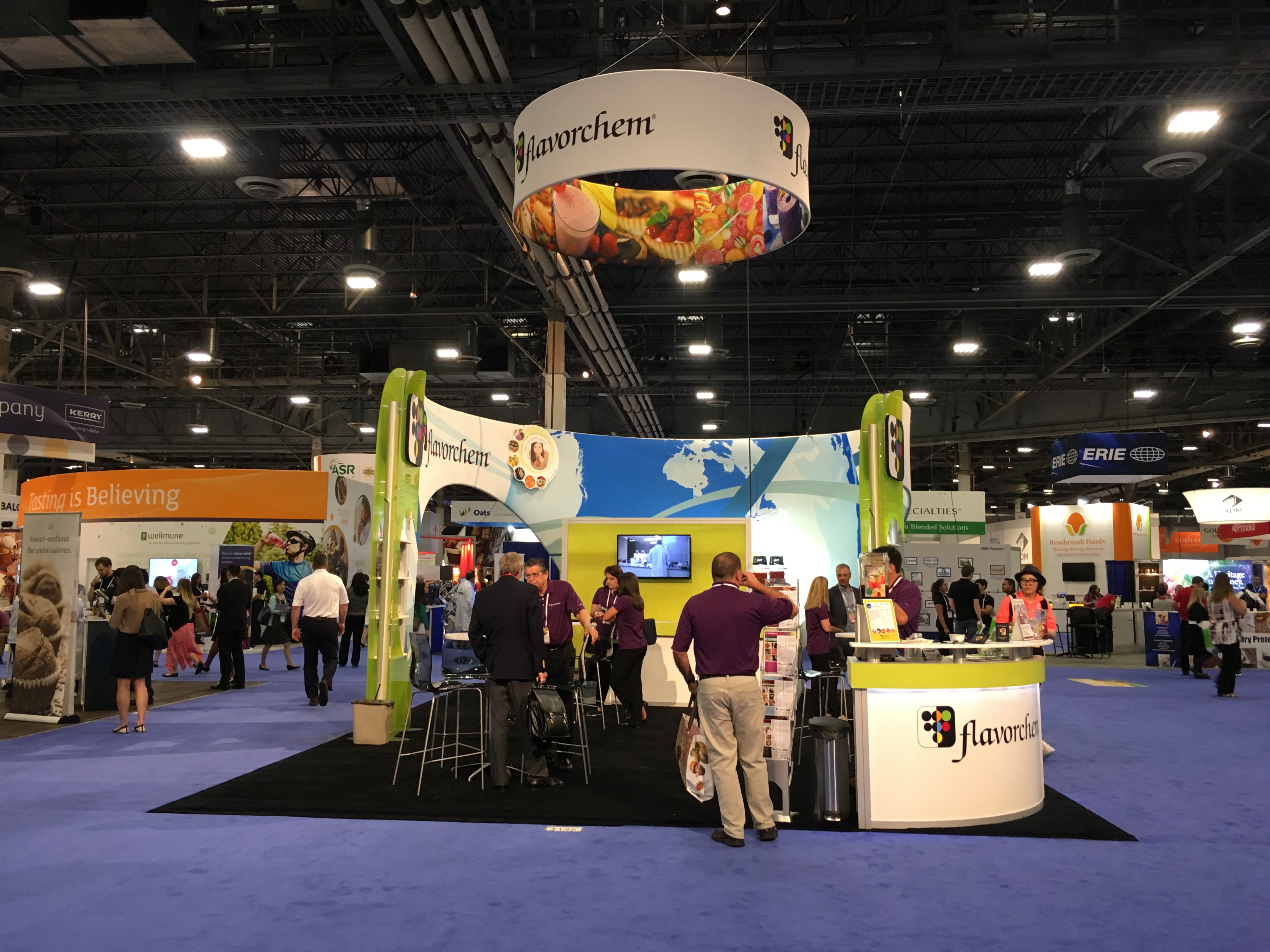
Virtual Reality: I’m still unconvinced this will really take off in the tradeshow world. The challenges are many: crowded floors, busy visitors, cost of creating custom content that not only engages but impresses and leaves people glad they spent the time. But it looks like the technology is there and will do nothing but improve. The few times I’ve seen it at shows, people did not seem all that interested, and several VR headsets sat unused for long periods of time. When they were used, visitors commented that it was nice, but no one I spoke with raved about the experience. Again, it comes down to getting the best and most engaging content possible.

tradeshow exhibit trends

According to this great article from Exhibitor Magazine, some other trends for the year include Artificial Intelligence (think Siri and Alexa), new ways of visitor engagement (digital games, for example), and Tradeshow Campaign Themes.

From Freeman comes an article that brings up sustainable materials as still trending (look for LED backlit smart fabric walls), immersive hubs from show organizers (activities, video content and more), and education that is customized to the level of expertise in the audience groups. There’s also a mention of one way that might be a good workaround on the prohibitive cost of shipping large engines and equipment around the world: 3D-printing that can replicate the machinery or equipment to a T.

Absolute Exhibits from Tustin, CA, offers a handful of tech trends for tradeshow exhibits this year, including digital lounges for recharging (figuratively and literally), brighter and more attractive signage, push notifications through the show’s mobile app, games and contests, and interactive video walls and touch screens.

Exhibit Concepts offers up trends including finding new ways to engage face-to-face, the wide incorporation of technology into every corner of a tradeshow exhibit (Bluetooth beacons that integrate with a client’s products), and the increasing use of custom exhibit rentals to keep costs down.

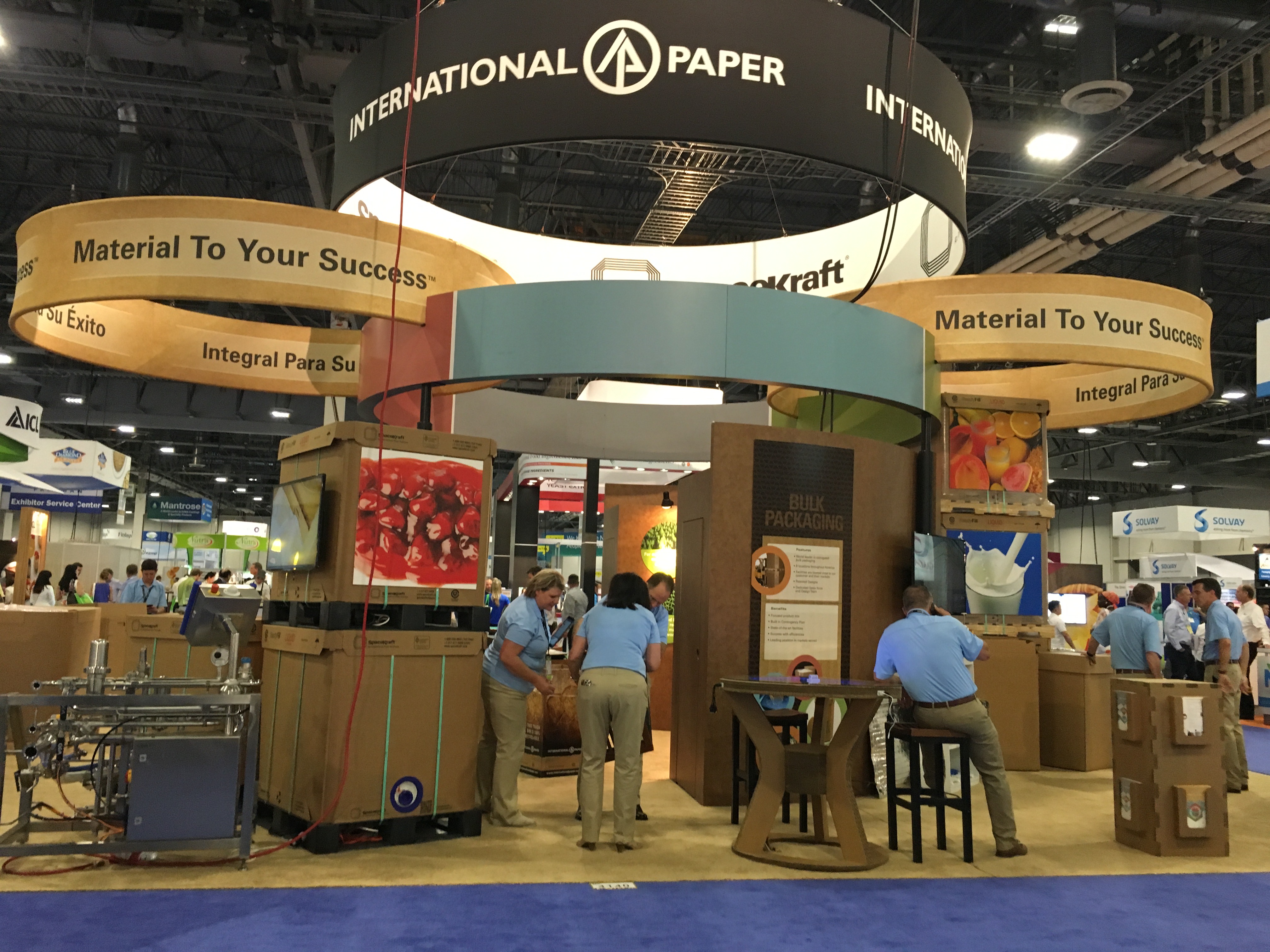
From my perspective, I see the growing use of backlit fabric graphics taking over much of the tradeshow floor. The cost is coming down (still), and the quality of the fabric printing is nearly indistinguishable from high-quality paper printing, as long as you’re using the latest generation of printers (be sure to ask!)

Another item I see frequently is large-format, simple graphics that do a terrific job of grabbing eyeballs, either through the bold simple easy-to-read text, or bold images combined with sparse text.

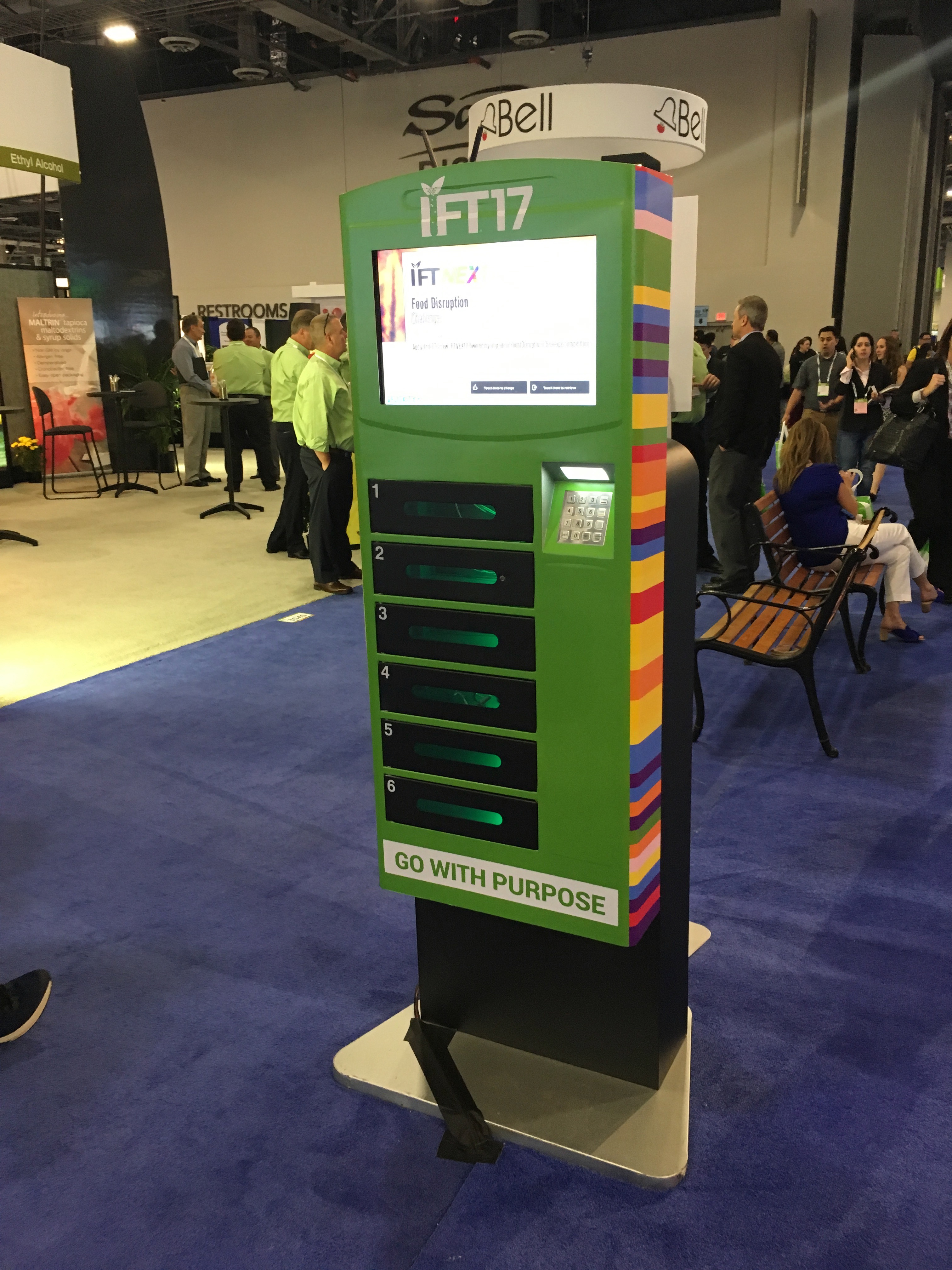
When it comes to charging stations, I recently saw something a little different: lockable stations where you can plug in and leave your device. When you return just enter your code (that you came up with earlier), and retrieve the device. This charging unit was NOT in an exhibitor booth, but was instead provided by the show.

The last couple of shows I attended (Expo West in March and IFT in June) both had great, easy-to-use show apps. Quick to download, easy to navigate, and when you set up push notifications you really don’t miss a thing. Kudos to the various app designers that make them so friendly and good-looking.

These topics are echoed in many other posts throughout the tradeshow world, and now that we’re on the downward slide into 2018, it’ll be interesting to see what comes to the fore next year that everyone wants to be a part of.

Why It’s Easier to Succeed with Pre-Show Marketing Than You Might Think

pre-show marketing

When it comes to achieving tradeshow success, actual time spent at the tradeshow gets all the attention – so where does that leave pre-show marketing? Out in the cold, of course.

So bring pre-show marketing out of the cold and into the daylight.

The two questions to address are simple: what is my pre-show outreach, and who do I reach out to?

The ideal scenario of pre-show outreach is built on multiple touches: email, snail mail (postcards are good and cost-effective), and social media. Each of these could be broken down a bit more. Mailings could include more than just a postcard: if you have some high-value prospects in mind, send something a little more special and high-end that whets their appetite and gets them to your booth. Social media can include tweets and Facebook posts about your new products and services, or industry-famous guests at your booth. You can also create videos to promote your appearance at the show and share those as well.

So who gets the communication? The first channel to address would be your in-house list of clients, prospects and those that have inquired over the years. They know who you are and even if they’re not planning on going to the tradeshow, your invitation may help them change their mind. At the very least, they’ll know you’re exhibiting, which shows them you care enough about your company and brand to put it out there for all to see.

The second channel is to use a list provided by show organizers. But don’t just assume you can import the information into a spreadsheet and do a mail-merge and click send or print. No, you should go over the list to weed out competitors and non-prospects so they aren’t on the receiving end of your pitch.

It sounds easy – and in theory, it is. But pre-show marketing takes time and attention to detail. Create a plan that includes a timeline for each item, and then create the content and promotional material that will go out. Once execution of the plan is underway, track results as best as possible, and of course do your best to track the names and companies that actually responded and showed up to your exhibit.

TradeshowGuy Exhibits Launches New Tradeshow Display Products Website

For years, here at TradeshowGuy Exhibits, we’ve teamed up with great partners for various tradeshow display products: exhibit designers and producers, display products manufacturers, I&D labor teams and more. For example, our Exhibit Design Search website provided by Classic Exhibits is the standard-bearer of the branded exhibit search tool. We also work with the good folks at Orbus, a company that provides a wider range selection of exhibit graphics and accessories that tend to fall into a lower price category. They have an unbranded site of exhibits and accessories here.

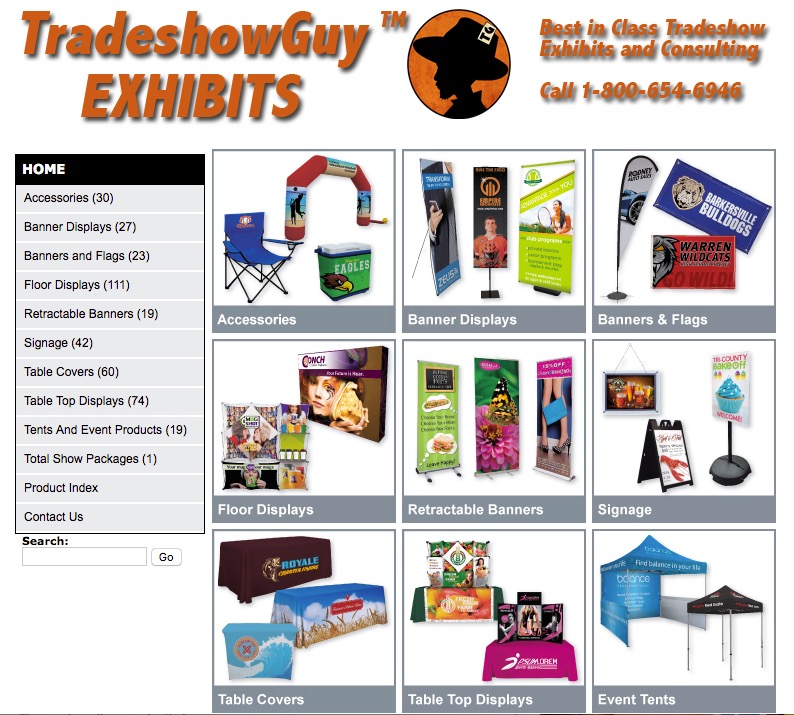
Now we have another partner to show off. Creative Banner offers hundreds of products through our branded website here.

You’ll find banner stands and displays, accessories, banners and flags for indoors and outdoors, floor displays, retractable banners, signage, table covers, table top displays, event tents and total show packages. After working with them quietly for a couple of years and being impressed with their product quality and quick turnaround time, as well as flexibility on customizing some items, we decided it was time to have them fire up a branded site for us. So click on through to the other side: TradeshowGuy Exhibits – Tradeshow City USA and take a look! Let us know what you think!

tradeshowguy exhibits tradeshows city USA

14 Best Tradeshow Infographics on Pinterest

Infographics do a great job of quickly communicating information in a fun and effective way, especially if you’re like me (and 65% of the rest of the population) and are a visual learner. So let’s sift through some of the great tradeshow infographics floating around on Pinterest these days.Click through to the Pinterest posts, or browse the infographics below.

  1. Pipeliner Sales: 7 Keys to Getting Leads from Tradeshows
  2. Xibit Solutions: Anatomy of a Tradeshow Booth
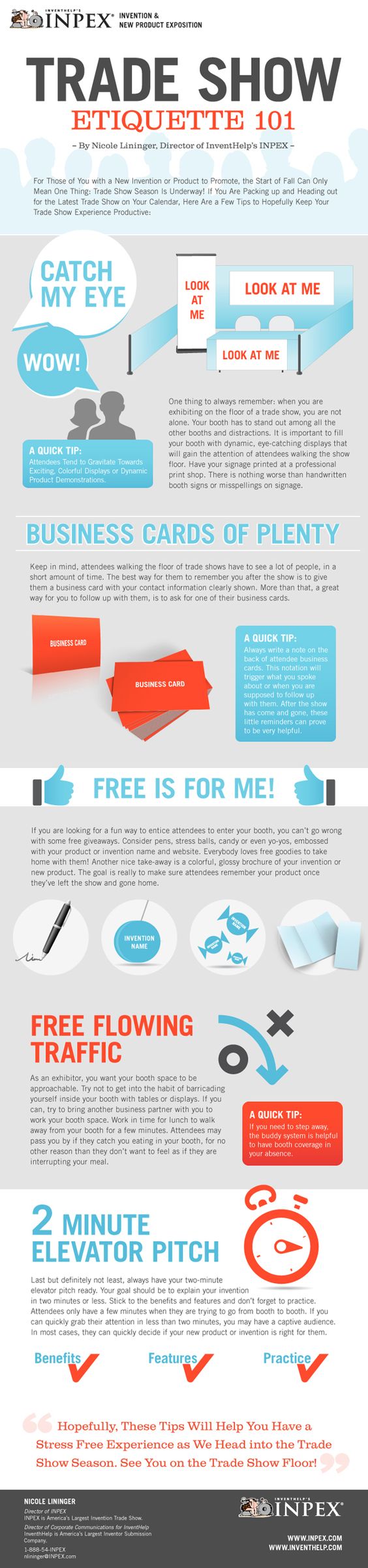
  3. Inpex: Tradeshow Etiquette 101
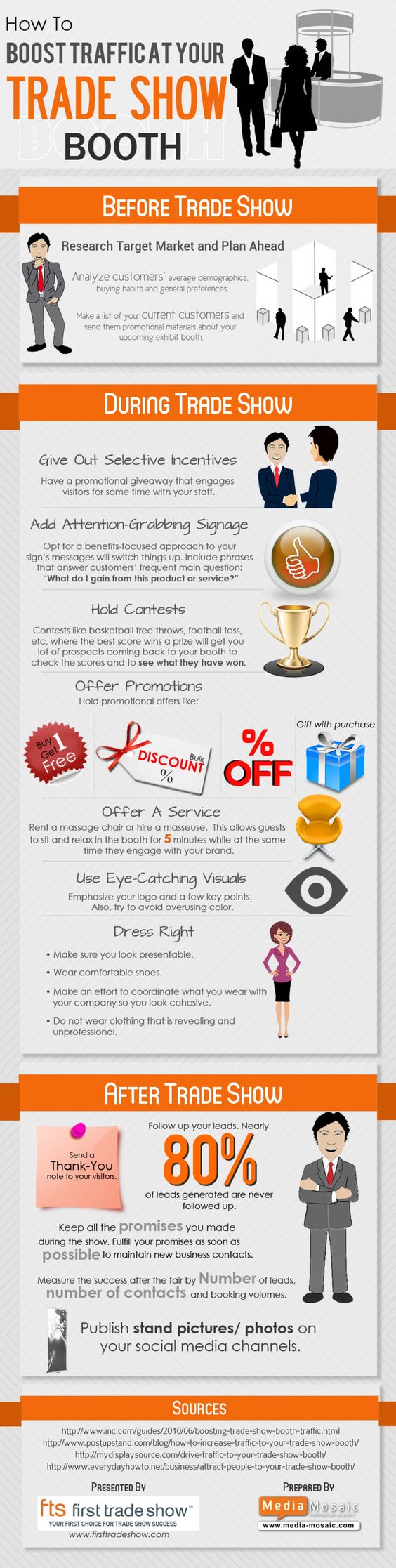
  4. Media Mosaic: How to Boost Traffic at Your Tradeshow Booth
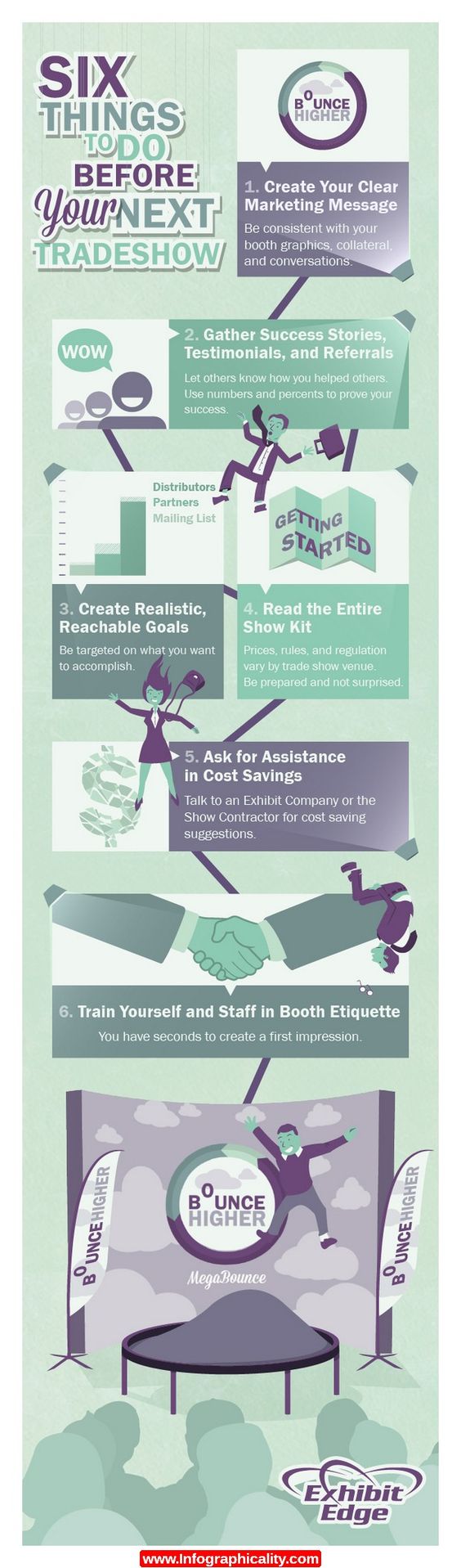
  5. Infographicality: Six Things to do Before Your Next Tradeshow
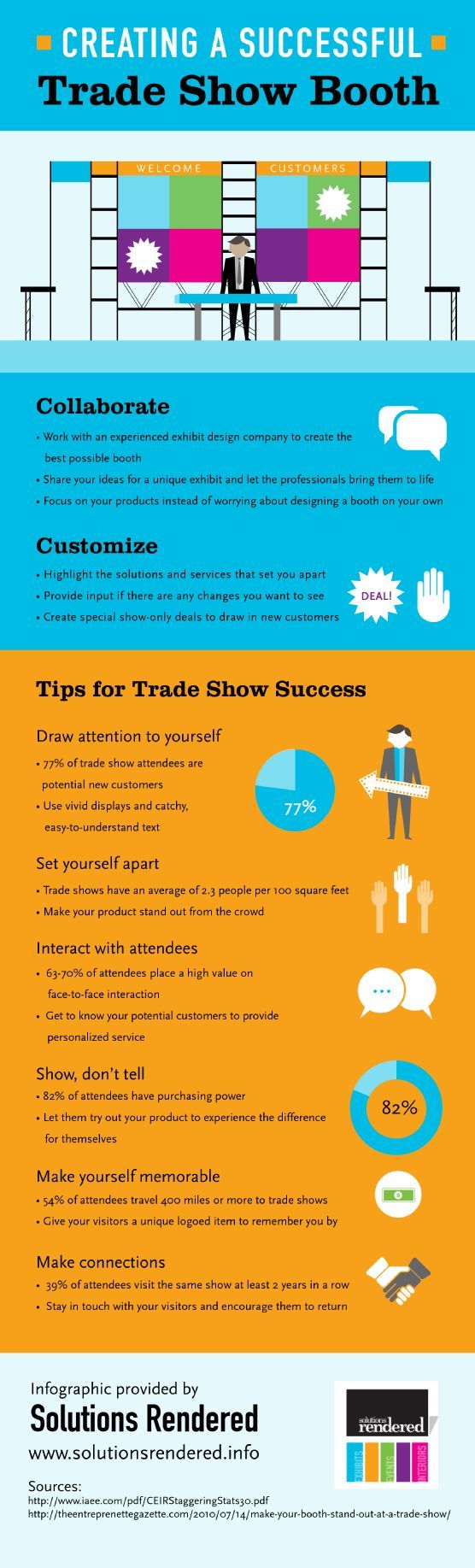
  6. Solutions Rendered: Creating a Successful Tradeshow Booth
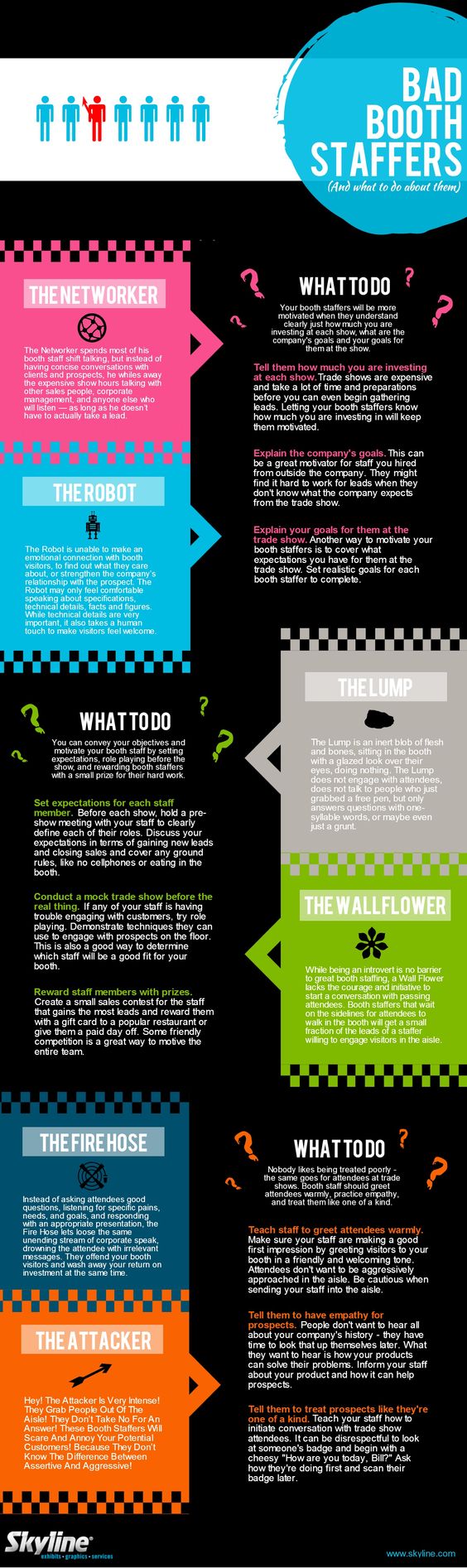
  7. Skyline: Bad Booth Staffers
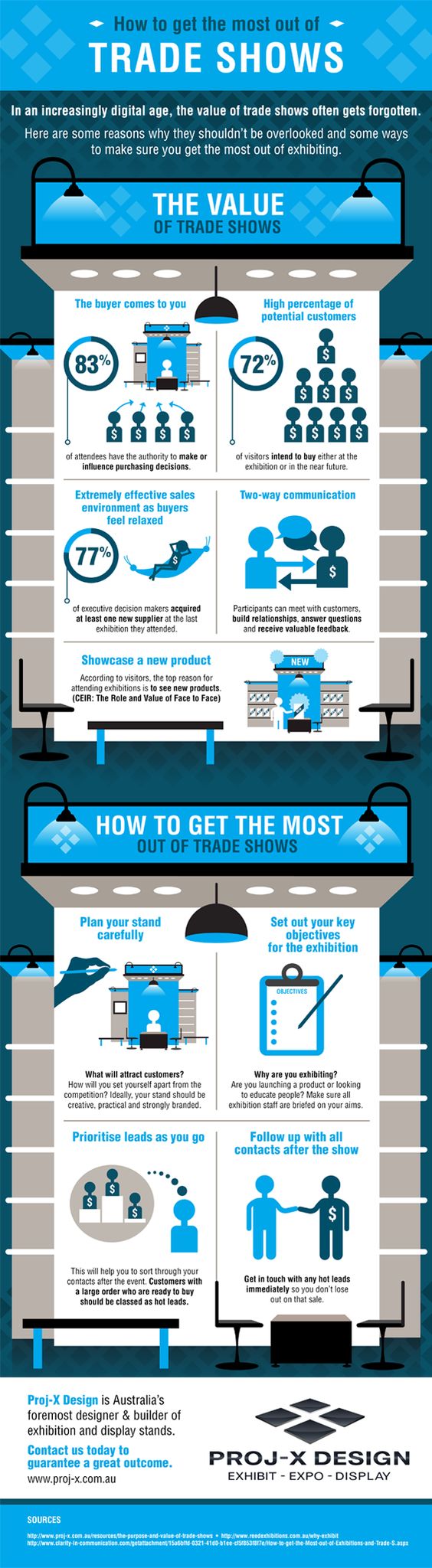
  8. Proj-X Design: How to Get the Most out of Tradeshows
  9. NWCI Displays: Tradeshow Booth Regulations
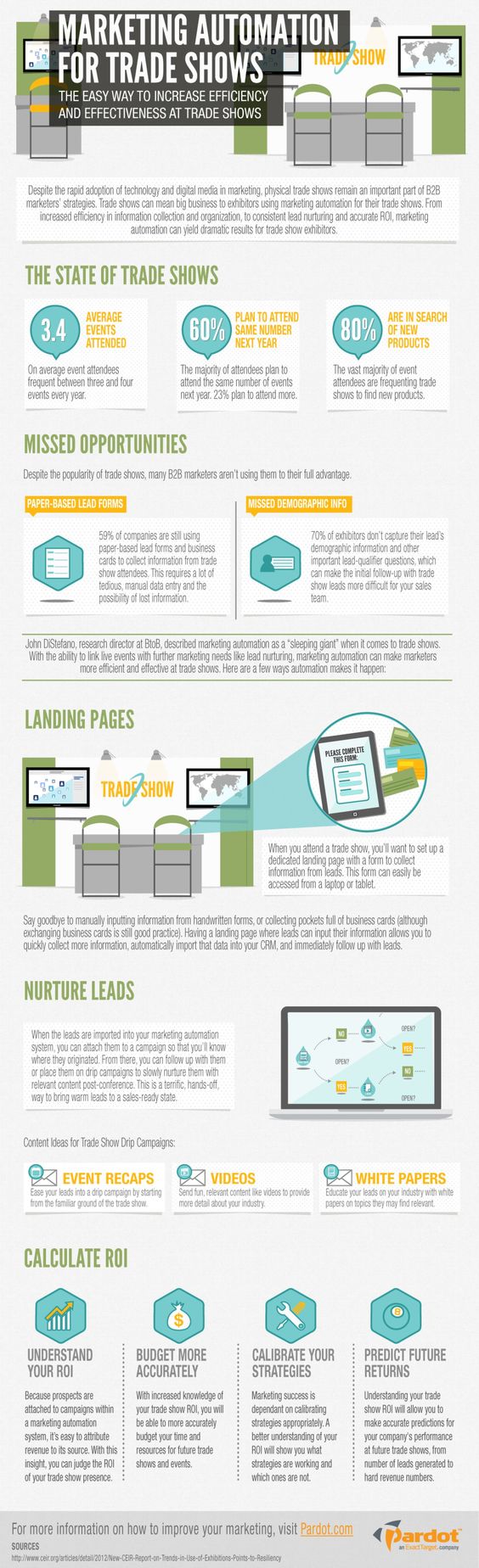
  10. Pardot: Marketing Automation for Tradeshows
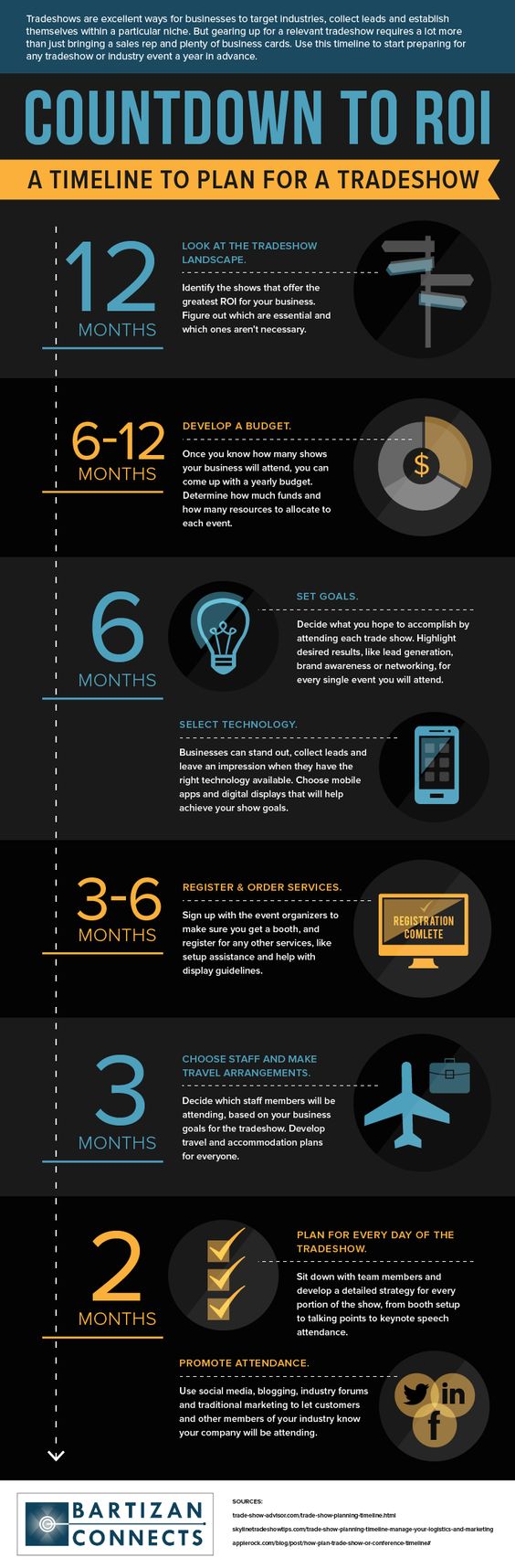
  11. Bartizan Connects: Countdown to ROI: A Timeline to Plan for a Tradeshow
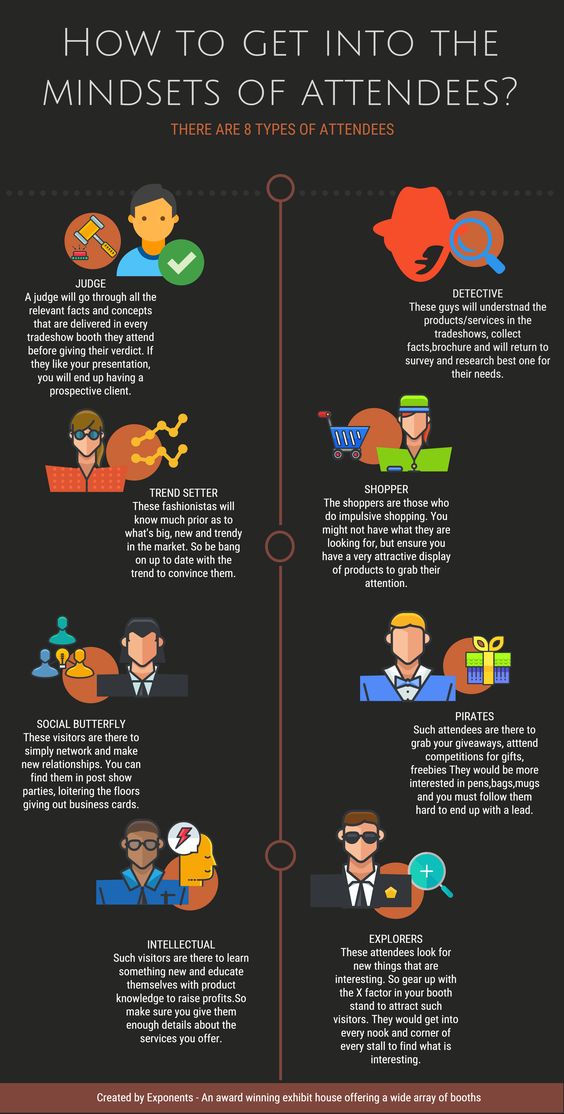
  12. Exponents: How to Get in to the Mindset of Attendees
  13. Skyline: 25 of the Most Common Tradeshow Mistakes
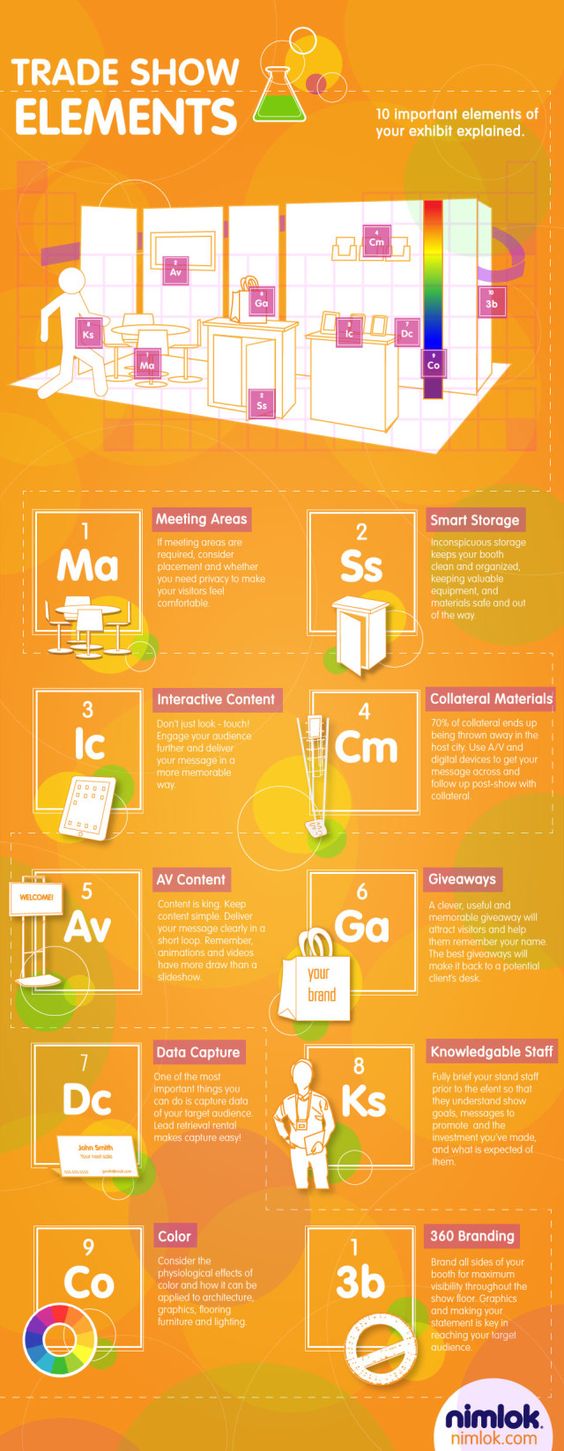
  14. Nimlok: Tradeshow Elements


Tradeshow Blog Listings: A Short List

No doubt there are over a million tradeshow blogs dedicated to just the single topic of tradeshow marketing, wouldn’t you say? More? Less? No matter how you add them up, it seems like a lot. And now and then I peruse the Google machine to see what new listings show up. Not to brag, but what’s interesting to me is that this blog – the TradeshowGuyBlog – shows up on a few of these lists. Nice! Let’s review:

And a couple blogs that I land on frequently include:

So…go blog wild!

7 Signs You Should Invest in Tradeshow Marketing

Never done tradeshow marketing before, but wonder if it’s something to finally seriously consider? Let’s take a look at seven signs you might recognize in your business that could steer you towards opting for tradeshow marketing as one of your marketing tools.

  1. tradeshow marketing

    When your business has nearly maxed out its current marketing reach. One of the best and most cost-effective ways to reach new markets is through tradeshow marketing. You have access to buyers and decision makers far outside your local or regional markets if you set up an exhibit at a national tradeshow.

  2. When you’re selling enough product so that you’re banking a decent amount of change, giving you the option to spread your wings a little more in the marketing arena.
  3. When your product or service creates a buzz all on its own. Putting it on display at the right show can open even more doors.
  4. When you have a great partner that’s already exhibiting and is willing to bring you along for the ride. Let’s say they have a larger island booth but for a fraction of the price of exhibiting in that big of a space, they’ll bring you on as a complementary product or service.
  5. Your sales have plateaued, and you’re looking for a new source of prospects. Making the jump into tradeshow marketing is a great way to kick-start new sales and lead generation.
  6. You’re ready for a laser-focused marketing event. Putting all your skills and talents on display at a tradeshow means you’re ready to show off to a ton of potential customers. You’ll benefit in new leads and increased brand awareness.
  7. You’re ready to move from a small/local company to a regional or national company. If your product is ready for prime time (production and distribution), putting those wares on display at a tradeshow can open doors to new retailers and distributors that can help you achieve those higher goals.

No doubt there are other signs, but these 7 signals should alert you to the possibility that tradeshow marketing – if you haven’t done it yet – might be a good bet for your marketing dollars.


Download a free digital copy of my “Tradeshow Success” book – click here!

The Anatomy of Great Tradeshow Lead Generation

What does it take for great tradeshow lead generation? Success comes mainly from paying attention to details. For instance, you probably made the effort at your last tradeshow to either scan someone’s badge, or got a business card and made a few notes on the back. But to really go the distance for a great lead, know that the success comes in executing the follow-up.

tradeshow lead generation

Naturally, you’ve gotten the lead’s name, company and contact info. But to be thorough, make sure that you’ve also got:

What product or service they’re interested in: be specific

How best they prefer to get a sample, if desired. Is it email, snail mail, telephone call, in-person visit?

When do they prefer to be contacted for follow-up? Date and time of day that works best for their schedule.

Where? If you are meeting offsite, such as a coffee shop, confirm the address. If it’s at their place of business, make sure you have the right address and not a satellite office or production facility.

Who are you meeting with? Is it just the main contact, or will there be other people involved?

Why are you meeting? Is the meeting a preliminary discussion, or is it to close a sale, or something in between?

When I was in journalism class in high school, we were instructed to get the 5 W’s and the 1 H: who, what where, when, why and how. It’s the same with sales follow-up.

Finally, make sure that your prospect understands the method of follow-up, along with the other pieces so that there is no mutual mystification – make sure all parties understand what is going to happen and when.

Once you’ve done that, you’ve nailed down a good lead. You’ve done your job on tradeshow lead generation. Now go close the sale!

What Does a Tradeshow Manager Do?

It’s a good question: what does a tradeshow manager do? And frankly, you can come at this question from a few angles.

For instance, is the tradeshow manager (or coordinator, or project manager) employed by the company internally, to make sure the tradeshow appearance is as flawless and successful as possible? Does the tradeshow coordinator work for an exhibit house, tasked with making sure the new (or stored) exhibit is shipped to arrive on time, and get set up, dismantled and shipped back? Or does the company find a third party to coordinate the logistics from show to show on an as-needed basis?

TRADESHOW MANAGER

There are several things to determine, such as: what is the scope of work? What tasks are expected of the tradeshow coordinator? Is there a marketing department that makes decisions on which shows to attend? Who determines the budget and where does that money come from? And so on.

Wearing several hats is not uncommon for someone with the larger and somewhat vague title of tradeshow coordinator. Mainly, she is responsible for:

  • Determining what shows to go to (usually in coordination with a larger team that vets the various options)
  • Scheduling or securing the booth space and coordinating logistics such as electricity, internet, cleaning, badge scanner and more
  • Work with vendors such as exhibit houses or printers for any updates to the exhibit
  • Scheduling exhibit shipping, I&D (installation and dismantle), return shipping, storage
  • Booth staffer hiring, training, scheduling and coordination of any special clothing such as branded t-shirts; develop and/or coordinate any pre-conference training for staffers
  • Coordinate with sales and marketing for any special product demos, etc.
  • Hire in-booth presenters if needed
  • Track expenses as required
  • Coordinate lead generation activities, system and delivery of leads to sales post-show
  • Pre-show marketing: mailers, emails, any specific phone invitations
  • Post-show follow-up communication
  • Record keeping: maintain show schedules, project checklists, exhibit management, photos from each show, logistic and travel expenses show to show and year over year

Each individual position may include more or less from this list, but these are the main tasks on a tradeshow manager’s job description list.

And, just for fun, I looked at tradeshow manager job listings across the USA recently. There are a ton of openings. Just sayin.’


Let Freedom Ring

Here on the USA’s Fourth of July Independence Day, let’s let freedom ring and celebrate in the tradeshow world.

No matter your political, economic or social stripes, I have no doubt you could make the case that our freedoms are under fire from many directions. But in the USA we still have the freedom to make the best case we can for our products and services: things we have put our careers on the line for and our talents to the test.

Let Freedom Ring

So let’s celebrate.

Celebrate your ability to go anywhere for any reason in this country to promote your business, products and services.

Let freedom ring and celebrate the willingness of buyers to show up at your tradeshow booth and palaver about your products, perhaps placing an order or making arrangements for a future discussion.

Celebrate the freedom to pitch your products in retail stores, online and through industry-focused tradeshows.

Celebrate your ability to hire the best people you can find to create those products and help market them at the tradeshow of your choice.

With freedom comes responsibility: you have the freedom to exhibit as modestly or extravagantly as you can. You also have the responsibility to present the best image that you and your team can assemble based on your ability and resources. You have the responsibility to squeeze the most out of those talents and resources as you can muster.

As an American, I have the freedom (and responsibility) to quibble about the way our country is run, and no doubt if you and got together over a beer we’d find we disagreed on a lot. But I would be that we’d probably agree on more than we disagree on.

So let’s let freedom ring and celebrate our diversity – and what we have in common – today.

© Copyright 2016 | Oregon Blue Rock, LLC
Tradeshow Guy Blog by Tim Patterson

Call 800-654-6946 for Prompt Service
Copyrighted.com Registered & Protected <br />
QA4E-AZFW-VWIR-5NYJ