I got an email the other day from someone whose newsletter I had just subscribed to, and in the introduction email there was a link to the top 5 most read blog posts on her blog. That’s when an idea light lit up over my head and gave me an idea for a blog post (as a blogger, you’re always looking for ideas, right?).
Next thing you know I was pawing through my Google Analytics account to find out what were the most-viewed posts on this blog. These are the ones that floated to the top, for whatever reason. It’s all organic. I don’t advertise, but I do share links now and then on Twitter, Facebook and LinkedIn. On occasion there might be a link here from Pinterest. Or another blog.
This blog is aging. It’s over ten years old, having been launched in November, 2008. There are almost 1000 posts.
One more note: the analytics breakdown shows the front page as “most-viewed” and a couple of pages (not posts) showed up in the top ten as well, including the Contact Me page and the We Accept Blog Submissions page. But beyond that, here are the top ten blog posts since the beginning of the blog (in traditional countdown order):
Number Ten: The Ultimate Cheat Sheet for Exhibit RFPs. I created a one-page sheet on what should go into an Exhibit RFP (Request for Proposal), and posted it on Cheatography.com, a site for thousands of cheat sheets. Kind of fun. They regularly sent me emails telling me how many times it was downloaded (500! 1000! 1500!). Not sure how accurate that is, but obviously it’s been seen by a lot of people. From September 2017.
Number Seven: How to Build a Tradeshow-Specific Landing Page.Inspired by Portland’s Digimarc, it’s a look at the steps you can use to put together an online site specifically to interact with potential tradeshow booth visitors. From December 2017.
Number Five: Tradeshow Debriefing Questions. Another oldie but goodie, this post from September 2009 guides you through the after-show info-gathering process.
Number Four: Virtual Reality for Tradeshows. You’ve seen them at shows: people wearing VR goggles. Is it worth it? A brief exploration, from June 2016.
Number Three: Exhibit vs. Booth vs. Stand. They’re called different things in different parts of the world, so I took a whack at trying to explain it. Just last summer in July 2018.
Aaaaand, at Number ONE: SWOT Analysis for Tradeshows. It still surprises me that this post gets a whopping 3.95% of all of the traffic on the site. At the time I wrote it I had been spending a fair amount of time with a friend who was going through school to get his degree in marketing, and one thing that we discussed in depth was the SWOT Analysis. S=Strengths; W=Weaknesses; O=Opportunities; T=Threats. It’s a great exercise to work through in regards to your tradeshow marketing appearances. Check it out. It’s from February 2015.
This is a guest post by Vaibhab Kakkar of Digital Web Solutions.
Getting to rub shoulders with the leaders in digital marketing. Hearing their experiences and learning from them. Building useful contacts and partnership opportunities like never before.
Digital marketing conferences bring it
all down under one roof.
And that’s why it’s always great for
aspiring marketers to be a part of these conferences. But, can you or your
fraternity attend all the big conferences? (Like
all of them?)
Certainly not! You’ll need to make a
choice.
To help you do that, here’s a list of the
top 9 digital marketing conferences. To make sure these are worth your while
and buck, we have shortlisted these on the basis of content.
So, let’s get going!
1. Digital Summit: Austin
Key Topics: Customer’s
journey throughout the funnel, SEO, email marketing, content, UX.
Location: Austin
Date: June 04-05, 2019
With a total of 40 digital marketing
experts assembling under one roof to make the Digital Summit: Austin happen,
the event will certainly be rich with priceless insights.
To start off, the pre-event talks on 3rd
June will include words and wisdom about influencer marketing and popular CRO
techniques.
Moving beyond that, the conference will majorly
focus on every important factor affecting digital marketing strategies.
So, be it SEO. Content. Email marketing.
UX. Or growing your network along with your net worth, within the two days,
speakers will open up and elaborate about all of these.
Also, failures and success stories don’t
even need a mention.
The tickets are running out shortly and
are priced between $200 to $995. A basic $200 ticket will simply allow you
access to the masterclass, while a $995 platinum pass will include everything from
lunch to exclusive keynote meetup & platinum swag.
As the call to actions on websites and in
ad sets are crucial for converting prospects into leads, the CTA conference
will shower useful knowledge about how you can optimize your CTAs to the max.
Talking about techniques for writing
brilliant CTA copies, choosing the right CTA colors, links and much more, this
conference will guide you with everything you need for CTA optimization.
Super early bird passes are priced at CA$426.93
for existing Unbounce customers and CA$747.93 for everyone else.
Grab your passes here before the super-early bird period goes off and the prices go high.
Also, to get a rough idea of how the CTA conference events usually are and how the last one was, you can have a look at the speaker videos from last year’s event.
3. Nottingham Digital Summit
Key topics: SEO, PPC,
experience sharing
Location: Nottingham, UK
Date: July 03, 2019
Take your digital marketing skills to
another level with over 700 delegates and 26 expert marketing speakers and
trainers. The grand event in Nottingham is going to have some of the digital
industry’s leading thinkers, visionaries, and practitioners.
And another great thing about it?
Starting off at $50, the event is going
to be the cheapest on this list. In fact, the costliest pass itself is priced
at only a hundred dollars.
Which is why the event is supposed to be
attracting a large number of aspiring and amateur marketers looking forward to
honing their skills.
Grab your passes here, before the day is all sold.
4. MozCon
Key topic: Digital
marketing
Location: Seattle, WA
Date: July 15-17, 2019
An electrifying and highly energized
digital marketing conference, MozCon may just be bursting many digital
marketing bubbles this year.
And with all the speakers and attendees
from all walks of the marketing business, it may just be a perfect place to
network with like-minded marketers and marketing enthusiasts.
By being a part of this event, you’ll get
to learn about SEO, mobile, growth, analytics, content and a lot more.
The exact location of the event is The
Washington State Convention Center situated on Pike Street.
To get an idea about what follows in MozCon 2019, you can have a look at the speakers who were there at the 2018 MozCon.
The price that one has to pay for
attending the event varies for members and non-members of Moz. While members of
Moz can avail a pass for $799, non-members will be required to pay $1,299 for
the same pass.
To get your tickets before the early-bird deals expire, click here.
5. eTail Eadigitalst 2019
Key topics: Retail and
e-commerce
Location: MA, Boston
Date: August 19-22, 2019
If you are a retailer looking forward to
expanding your brand by exploring and bagging on new digital retailing
opportunities like e-commerce, this conference can change your stars.
eTail has been inviting and gathering top
retail executives from around the globe for 20 years now. The key USP of their
conferences is that they bring their “how-to’s” from leading retailers. This
motivates newbies and other experienced-yet-aspiring retailers to scale their
businesses on their will.
The tickets for the conference are reasonably priced between $1,299 to $3,899. For further details and booking your place, you can check out their official website.
Discount coupon for eTail passes: Retailers can use MKTERMS19 to avail 20% off on current prices.
6. Inbound
Key topic: Inbound
marketing tactics
Location: MA, Boston
Date: September 3-6, 2019
What makes INBOUND stand out of all the
other digital marketing conferences on this list? A stand-up comedy show.
But calm down, that’s not the highlight.
Apart from lighting up the mood with a spot-on stand-up show, the event is
going to discuss in detail some of the most effective inbound marketing
strategies and techniques.
Also, the event will include innovative
discussions and presentations relating to inbound. This is to make sure that
the attendees get the most of the killer inbound growth tactics.
Speaking of the strength, INBOUND is
going to be totally houseful with over 25,000 guests arriving at the venue from
more than 100 nations. The past INBOUND events became famous for getting
influential speakers like Michelle Obama, Deepak Chopra, and Brian Halligan and
Dharmesh Shah on-board.
Apart from that, the event is charmed up with an instagrammable ambiance, the INBOUND studio, and platforms for interviews, videos, and curated content (which can also be reinvented for IGTV).
Prices range between $299 and $1,399. For booking your seats, go check out their register page.
7. Social Media Strategies Summit: NYC
Key topic: Social media
marketing
Location: New York
Date: October 15-17, 2019
With over 63% of customers expecting companies to offer services via their social media channels, the need for investing rightly in social media marketing is real.
Helping you with the same, Social Media
Strategies Summit: NYC is going to talk in details about crafting, managing,
and optimizing all your social media marketing strategies.
That’s the first aim of the conference;
instructing the attendees about the nuts and bolts of a successful social media
strategy to position their brands for success.
The tickets start at a price of $1,399 and go up to $2,289. To see various pricing features and to book yourself before the prices go up, see their pricing page.
8. Internet Summit
Key topics: Digital
marketing using Facebook, Google, Pinterest, and several other platforms
Location: Raleigh, NC
Date: November 13-14, 2019
For all the digital marketing enthusiasts
who are always hunting for new marketing tactics and using new media platforms
for expanding their reach, Internet Summit can be a boon.
Speakers include Dave Isbitski from
Amazon, Diamond Ho from Facebook, Caroline Hubbard from LinkedIn, Seth
Weisfield from Pinterest, Ben Morss from Google and many more from other
platforms.
Also, the event will cover topics like
email marketing, storytelling content, mobile marketing, UX design and
optimization, analytics, etc.
And the best thing about the summit
provides is a continued learning experience with access to speaker slides and
recordings after the conference, so, you don’t have to worry about forgetting.
Standard ticket prices start at $445 and go up to $1,195. However, if you book before July 24, 2019, you can save $200 on each pass that you buy.
9. Digital Marketing Leaders Summit: Hong Kong, 2019
Key topic: Digital
marketing
Location: Hong Kong
Date: December 13-14, 2019
One of the greatest digital marketing
conferences taking place in the last month of 2019, Digital Marketing Leaders
Summit: Hong Kong will uncover the secrets of SEO, influencer, email, and
social media marketing.
The conference is going to have some of
the leading thought and internet marketing leaders from across the globe.
To get an idea about their previous events, have a look at the list of their previous speakers.
Early bird passes are priced at $799, $899, and $ 1,099. To know more about what the three passes offer and to book yourself before the early bird offers go void, visit their registration page.
Final words
For marketers and entrepreneurs trying to
step-up their marketing game, the concept of digital marketing conferences can
turn out to be a game changer.
But with hundreds of such conferences
taking place every year, choosing the best one can get you in sweat. To ease
things out for you, here we talked about 9 of the top digital marketing
conferences, hand-picked by us, so you know what you just can’t afford to miss.
Hopefully, this helped you.
Don’t forget to share this piece with your marketer friends to pick the right conference for you and to book tickets before the seats dry out.
Vaibhav Kakkar is the CEO of Digital Web Solutions, a globally trusted agency with a full suite of digital marketing & development solutions. Vaibhav believes in building system over services, and has invested in multiple tech startups including RankWatch, NotifyFox and a CRM software to help scale up client agencies from scratch to niche-leaders with million dollar turnovers.
Are you faced with authors call “writer’s block” when it comes to coming up with ideas for your next tradeshow promotion? Or need to come up with a unique exhibit design or presentation that perfectly fits your company brand?
I wish I had an answer. You know, like the Staples “EASY” button. But it ain’t that easy. Not if you want an idea that can be fully executed and give you remarkable results.
So where do ideas come from? Ideas that actually work?
There are several places to look for and generate ideas, so
let’s go over a few.
What have other people done?
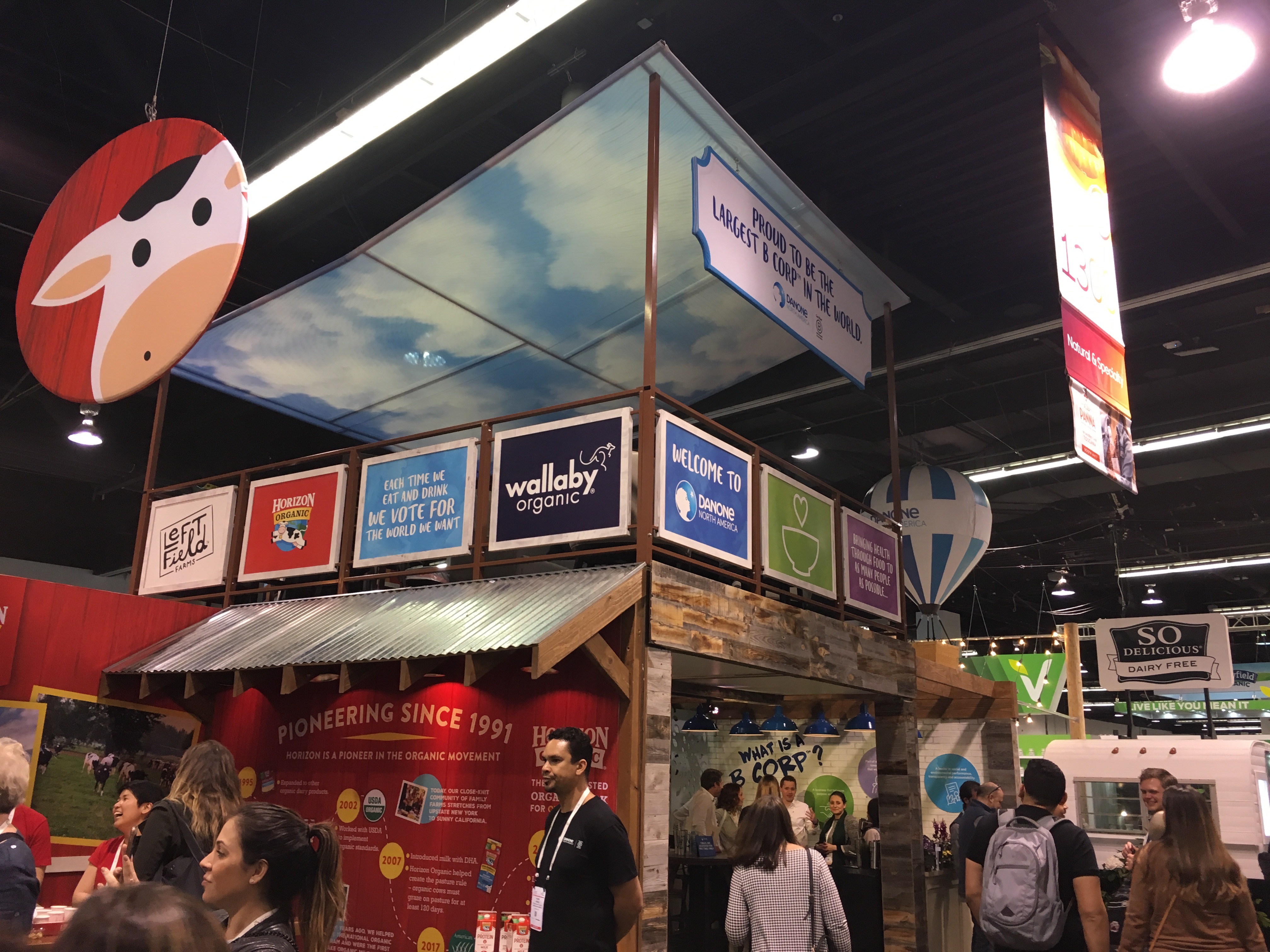
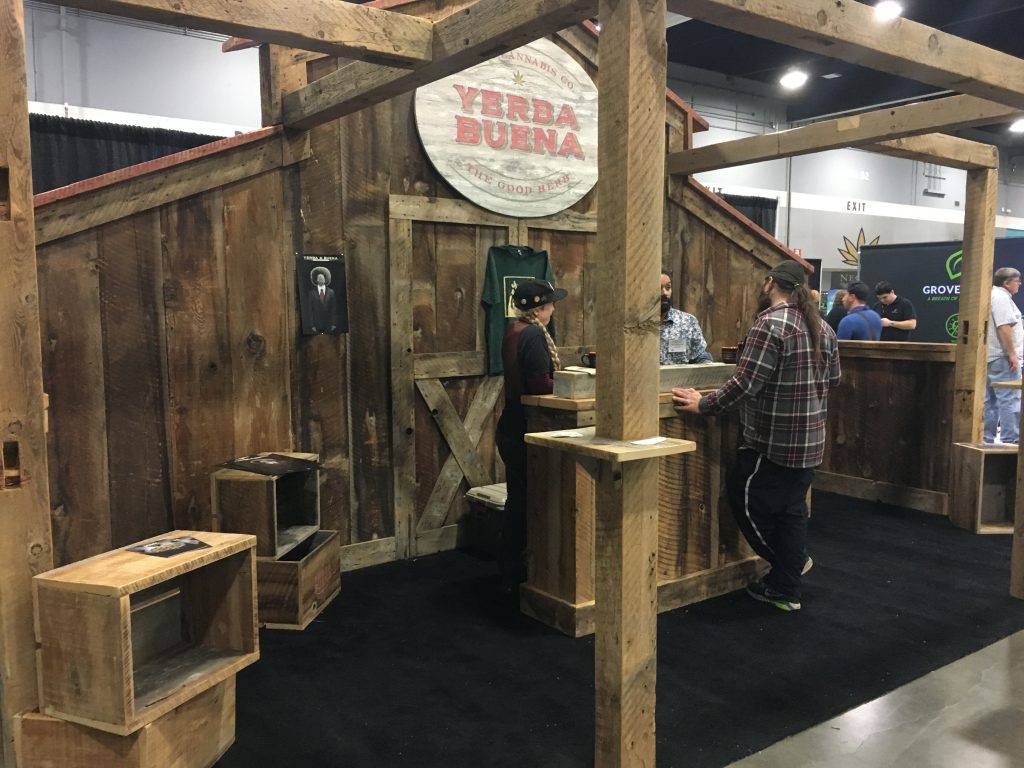
At your next tradeshow, whether you are an exhibitor or an
attendee, take some time to walk the floor and see what others have done. There
are going to be so many ideas that you won’t be able to capture them all. And to
take it one step further, if you see an idea you like, imagine how it would
work if you folded that presentation idea into your brand and products. And you
know that anything you see at a tradeshow had to go through a lot to make it to
the floor. It had to be created as a concept, then discussed at length to see
what would work and what wouldn’t. Then a 3D designer had to determine how to
put that concept into the real world. Then, once all parties had signed off on
the idea and concept, it had to go to fabrication, where the builders had to
figure out how to build it. Not always easy, especially if there are some unusual
or outlandish ideas that need to be brought to life.
What other exhibit ideas are good enough to borrow or get inspired by?
But remember, just because it was brought to life and used
at a tradeshow doesn’t mean it actually worked, that it actually achieved what
the creators thought it would achieve. Which means it’s also worth asking “how
well did that work?” Probably the only way to find out for sure is to ask the
exhibiting company after the show how it all went for them. But by doing that
you might be tipping your hand that you’d like to use their idea for
inspiration!
What gets written about?
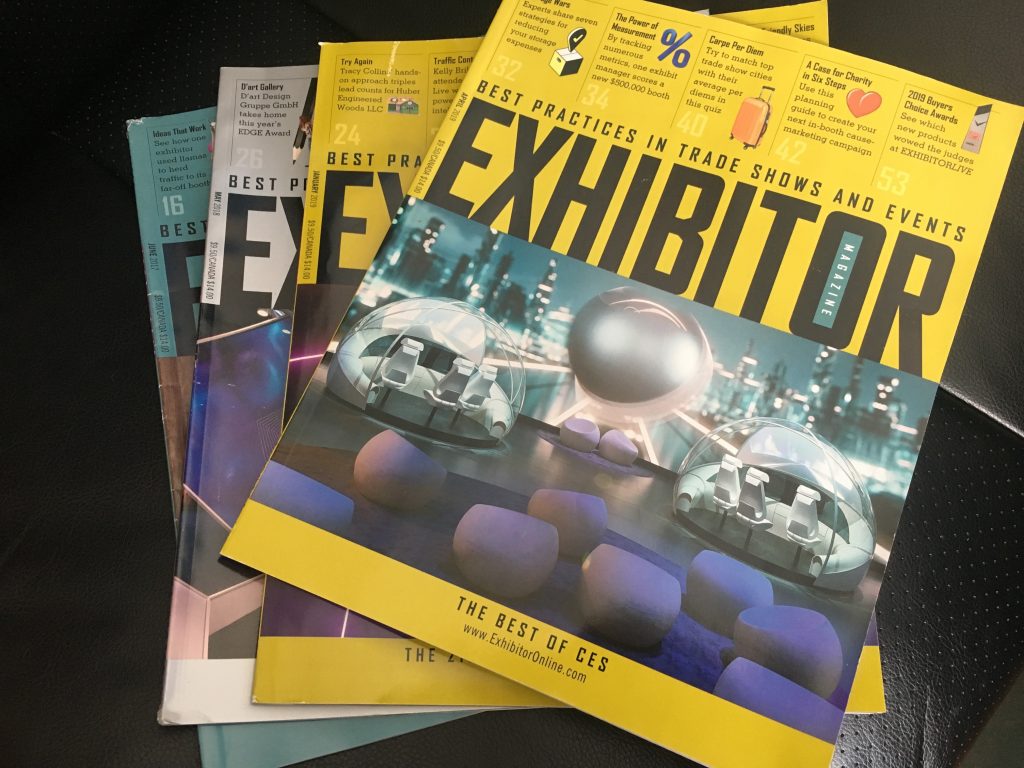
To see what is creative and actually works, pick up a copy of Exhibitor Magazine. To my way of thinking, all tradeshow marketing managers should get a subscription to this bible of the exhibit industry. Nearly every issue there is an in-depth look at tradeshow exhibits. Not only that, there is a breakdown of how the idea worked, how it fit with the company’s overall goals, what the results were, and often the cost. Even if the idea doesn’t exactly fit with your product or brand, use it to kickstart your own creative thinking.
Beyond Exhibitor Magazine, search online for creative
tradeshow exhibit ideas. There are a lot of them floating around, and any one
of them might be the inspiration you’re looking for.
Talk to others in the industry.
Networking can do a lot of things. One thing it does well is
spread good ideas. By talking to other exhibitors, designers, managers and
executives in the industry is that no doubt they’ve all seen some memorable
tradeshow exhibits along the way. Ask them what they recall, what they liked,
and how it worked. Make notes. And if you get a great idea that leads to
something, be sure to thank ‘em!
Brainstorm.
Creative thinking can often be generated in-house with a handful
of people. You may have even been in a brainstorming session or three in your
career. If done properly, they can be brief and productive.
Combining ideas from other sources.
Pick up a book on creative thinking and see where it takes
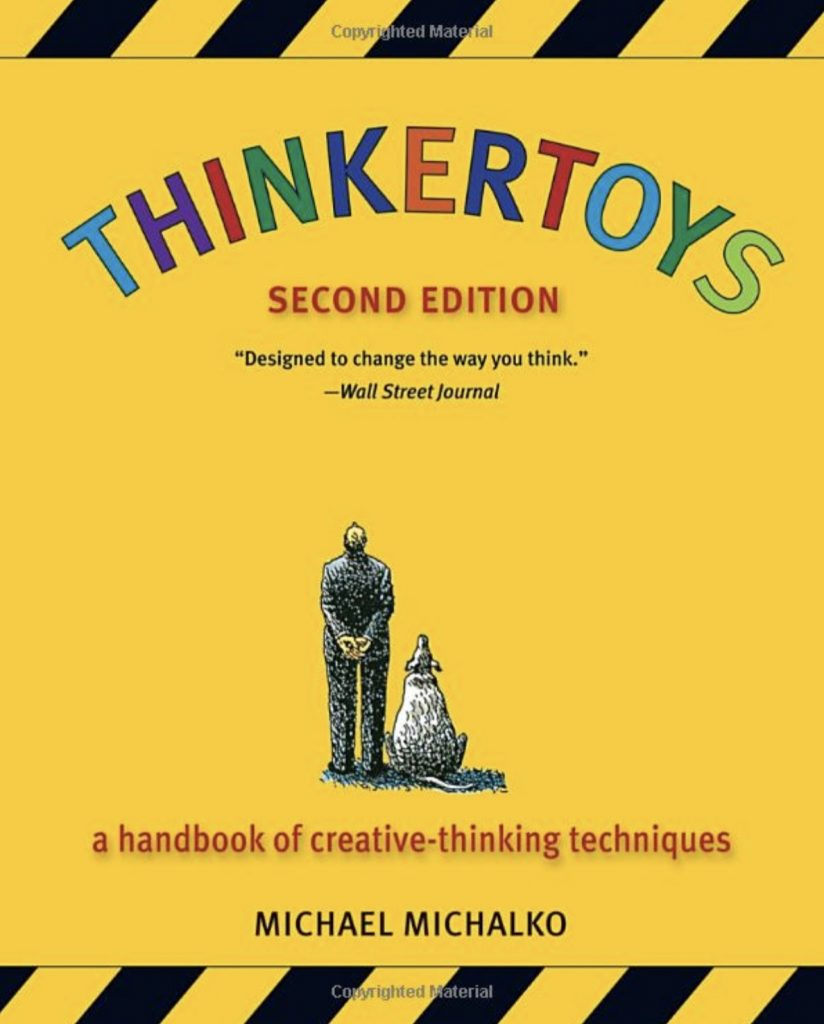
you. One of my favorites is Thinkertoys
by Michael Michalko. Worth the price no matter what you pay.
Any other books or ideas you like that help you creatively?
Make a note and share!
Tradeshow sales is a much different beast than any other
kind of sales.
Picture this: you’re standing in your tradeshow booth with dozens
of competitors lining the aisle, selling to the same market. They’re all trying
to convince visitors that they’re the best solution. The goal is to talk to as
many people as possible, because if you do that, you can gather more leads. And
the more leads, the better off your sales team is. That’s the common knowledge,
and generally it’s correct.
But step back a moment. Let’s examine that interchange a
little more closely.
“Less haste, more speed.”
Instead of doing your best to gather contact information,
such as scanning a badge, or writing down names and numbers and email
addresses, take the time to qualify. I’ve been to tradeshows recently where it
seemed like the only thing that was important to the booth staffer was to gather
as many scans as they could. Maybe it was a contest. But it was one in which
they ultimately lost, because they no doubt ended up scanning dozens or
hundreds of people that have no interest in buying, are not qualified, are not
the decision maker or don’t have the money.
Even though you’re trying to get as many leads in a limited
time, let’s remember a few things.
Are you qualifying visitors properly?
One, most of the people at the show are qualified to a
certain degree. They may not specifically be in the market to purchase your
product, but they are in the market, otherwise they would not be there. If they’re
not a potential buyer, there’s a good chance they know someone who is.
Two, a majority of them are decision-makers or can influence
a buying decision.
Three, given the volume of people walking from booth to
booth, you will not talk to everyone. It’s not possible.
Four, knowing that you can’t talk to everyone, take enough
time with the ones you do talk to to qualify or disqualify as soon as reasonable.
Now that you have the right perspective, understand what you
are really trying to do: qualify the leads, and gather as much information
as necessary for a productive follow-up on an agreed-upon date.
What you want to know
Here are the items you’ll want to uncover:
Are they interested in your product or service?
If so, when? If not, do they know anyone that is?
At this point, you will make an A/B decision: if they’re
interested, uncover more information. If not, and if they don’t have any one
they can refer you to, politely thank them and move on to someone else.
If they are interested, ask further questions, as if you’re
peeling back the layers of an onion:
When do you plan to make a decision? Next week, next month, next year? This tells you the urgency of the situation.
How is that decision made? Is it one person, or is it a collaborative decision?
Does the company have the funds committed to the purchase?
The follow-up questions
Once you have qualified them by getting the right answers to
these questions, quickly move on to the follow up questions:
When would you like us to follow up with you? Find a date, and if appropriate, get the time and date scheduled in both yours and their calendars.
How do you want us to follow up? Phone, email, in-person visit (if feasible), sending something in the mail?
That’s the simple, straightforward way to qualify and get
enough information for your sales team to follow up.
Yes, there is a good chance that your visitor will have a
lot of questions about your product or service, especially if it’s a complex
product, such as software or some technical hardware. In that event, answer
their questions on the show floor – take as much time as you need to determine
if they’re a real prospect or not – and then move on to the confirmation and
follow up phase.
Once you’ve confirmed the follow up, thank them and move on to the next.
If you do a Google search for “showing up,” you get all sorts of links and suggestions as to what it means. Showing up for a performance, showing up for important events in your life for your friends and family, showing up at work by giving it your attention and energy.
Showing up is important. As Seth Godin put it, though, we’ve moved way beyond simply showing up, sitting in your seat and taking notes. Your job is to surprise and delight and change the agenda. Escalate, reset expectations and make your teammates delighted.
Show up to delight your visitors
Sure, showing up is important. On a personal and business level to me, showing up means controlling my behaviors and emotions. Knowing that when I set out to do a day’s work, I have a pretty good idea of what I need to do (calls, projects, communications with clients, writing, etc.), and doing my best to do it, every day. For example, I made a commitment in January of 2017 that I would show up every Monday to do a video blog/podcast for at least a year. Once the year was up, I would assess it from a number of angles. Was is working? Was it fun? Was it good? Did it get any attention? Did my guests get anything worthwhile out of it? Did the listeners give good feedback, even if there were very few? Based on my assessment of those questions (not all were completely positive, but enough were) I committed to another year. Then another.
So here we are.
Showing up at a tradeshow is more than just being there. If
you are to take Seth Godin’s perspective, you want to have more than just a
nice exhibit. You want to show up with more than just average enthusiasm and
average pitches to your visitors. You should set high expectations for your
company and your team.
How can you do that? By starting months before the show and
having ongoing conversations about how to get visitors to interact. How to get
them to respond. How to tell your company or product’s story. How to make it
exciting to just visit your booth, exciting enough so that your visitors feel
compelled to tell others to come.
There are no wrong answers, and plenty of right answers.
The marketing funnel. It’s something I learned about years ago, but it’s interesting to reexamine now and then. Recently I attended the NAB Show in Las Vegas as a blogger and was asked by a few dozen companies if they could scan my badge. Once they scanned, I was put in the top of their tradeshow marketing funnel, even though they did exactly zero qualifying. See where this is leading?
When it comes to tradeshow marketing, the funnel does indeed
get interesting. As in any type of marketing, there are things you can control
and things you cannot. Scanning the badge of every person that comes through
your booth does indeed capture name and contact information and will likely
mean they’ll soon be getting emails from your company.
Let’s look at the tradeshow marketing funnel starting at the
very top.
The first step – the top of the funnel where its widest – is
the number of people attending a particular tradeshow that you’re setting up an
exhibit. For the sake of argument and easy math, let’s say it’s 100,000 people.
Do the Math
If you are one of 2000 exhibitors, that means you’re vying
for the attention of those 100,000 people along with 1,999 other exhibitors.
If the show is three days, 10 am – 5 pm, that means the show
floor is open for 21 hours. If each attendee walks the floor an average of four
hours a day and manages to visit one booth every five minutes, that means they
are visiting (again this is hypothetical and on average) 12 an hour, or 48 a
day, or 144 over the course of the show. If every attendee visited each
exhibitor at the same rate, you’d get about 13.9% of the 100,000 attendees to
stop by your booth, or 13,900 people. That’s 660 per hour, or about 11 per
minute. If a visitor stops by a booth every 2 ½ minutes, these numbers double.
But since people are unpredictable, let’s stay with the five-minute visit on
average.
Now – if those numbers are even close to real, what are you
doing to get their attention?
Are you giving out samples to visitors, doing product demos,
having one-on-one conversations? Or are you just randomly scanning badges of
every visitor even though they haven’t expressed any interest in your products
other than standing within scanning distance of the booth.
Every one of those interactions will mean that each person
will go into the top of the funnel, although admittedly they can’t be treated
equally because some will be more interested than others, some will be more
prepared to buy than others, and some are just kicking tires.
But they’re all in the marketing funnel. At this point we
can treat them equally.
For argument’s sake, let’s say that for every ten that visit
your booth, one expresses interest, enough interest to let them capture their
contact information.
That means some 66 people per hour have made at least an
initial commitment to let you invite them to the next step of the funnel. They
may have opted into an email list, agreed to have their badge scanned, or had a
conversation with someone in the booth. Again, assuming the show is open for 21
hours, you have approximately 1386 at the second level of your funnel.
Move People Through the Funnel
What do you do to move them along?
Here’s where the marketing funnel gets more interesting. Do
you simply email them? Or do you call them one-on-one to assess their real need
(or lack) to find out if they are a “hot” lead, “warm” lead or just a “cool”
lead that will be put on the back burner and perhaps inserted into a drip
campaign? Do you send them a sample? A PDF report of some sort?
An ideal tradeshow marketing campaign will have a number of
options available at the show, and each interaction should assess the visitor’s
desires and situation.
And let’s add one more step to the math.
Let’s say the average profit of your product is $10,000.
By adding up all the costs of your tradeshow appearance, you’re
spending $100,000 for this particulate show. That means you need to sell 10
customers to break even. If your average profit is $1,000, you’ll need 100
customers.
Anything more than those numbers, and the Return on
Investment on your tradeshow marketing plan is out of the red and into the
black.
But let’s take it one more step.
Improving Funnel Results
Let’s say that for every customer that purchases your premium product continues to purchase other products from you for an average of 7 years. The lifetime value of that customer acquisition just increased substantially, which means the money you spent at the tradeshow to come into contact with her means a lot more.
And if they’re a really happy customer, they may end up referring
a handful of new clients to you. Which makes that initial cost look better and
better with each passing year.
The more tradeshows you exhibit at, the more people you put
your products and services in front of. If you’re doing things right, or at
least learning from any mistakes you’ve made over the years and made adjustments,
your tradeshow marketing funnel will become less leaky. You’ll retain more of
the people that enter at the top.
We all have leaky marketing funnels. But by being aware of what works, what doesn’t and doing your best to maximize your returns, your results will keep improving. But it means paying close attention at every step. Keep asking your prospects what they need to learn, do they want to hear more, do they want a free sample or another product demo, or how they may want to interact with you and your company.
Once the tradeshow is over, it’s only natural to want to skedaddle
the premises and hightail it home as fast as possible.
But WAIT. Before you go, if you’re in charge of the exhibit
properties, or at least delegating the jobs to various entities, go over your
checklist.
That checklist may look something like this:
Dismantle: Whether you’re hiring a professional I&D crew or taking down the booth with a few fellow employees, make sure to check that all parts and pieces make it into the shipping containers. I can tell you from personal experience that things go missing: carpet pieces, crate endcaps, products and much more. If you are there, take photos as things are put in the crates. If you’re not there, have your hired crew take photos. Most will do so without being asking just for their own records, but by asking you’re making sure that it happens (usually). It also doesn’t hurt to make a shortlist of what is in each crate. I have lost track of the number of times a client has asked if we can track down some particular item a few months after the show. Know what crate to look in makes it that much easier.
Shipping: If you’re using a shipping company, be in good contact with your contact about the details, such as the BOL (Bill of Lading), shipping address, number of crates and pallets, etc. At big shows, sometimes trucks will check in at 9 am but it’ll be hours until they are actually able to pick up your crates. You’ll be billed for the waiting time, of course. Communicate all pertinent information to your trucker: pickup address, check-in time, move-out times – anything that is available from the show organizers. It’s usually (but not always) on the website.
Leads collected: the most important thing, at least as far as management and the sales team are concerned. No matter what form you have them in, digital or analog, triple-check to make sure they are getting safely back to the office.
Reserve your booth space for next year. This may or may not be on your list. But if it’s something your team typically does ahead of time, make sure it’s done.
Congratulate yourself on a job well done. Plan a little thank you gathering (dinner, coffee and goodies?) back at the office for your team to show them how much you appreciate them.
Look ahead to next year. It’ll come quicker than you might think!
Good infographics communicate information in a way that no article alone can and these 100+ digital marketing stats are no exception. This new post from VisualCapitalist.com draws research from Hubspot, BrightEdge, Statista, FoundationInc, OptinMonster and many others to illustrate results that marketers get from email, social media, mobile, paid advertising, lead generation, content marketing and others. Yes, this is digital only, but so many tradeshow marketers are combining digital marketing with their face-to-face marketing, that it made sense to not only show a bit of the infographic, but link to it. Here’s a link to the blog post; here’s a link to the infographic itself. Or click the graphic below and go direct to the graphic which we’ve put on this blog.
Less than three weeks after a just-completed tradeshow, I
heard from an exhibitor I’d met at the show. He was interested in looking at
doing something new for next year’s show, which was still more than eleven
months away.
I commended him for being on top of it! His response was
that they waited too long last time around and they didn’t want to let it
happen again next year.
So what can you do now that this year’s big expo show is
over to prepare for next year’s show, even though it’s almost a year away? Let’s
count a few:
Plan ahead. Seems simple. But so many companies I talk to end up waiting until the last moment. There is no urgency to act until the dates in the calendar are nearer than you thought possible! Reach out to the various entities you may end up working with, whether it’s a current exhibit house, design house, graphic designer or whomever, and discuss your plans. You’ll get a sense of how much time things take which will give you much-needed information to put together a workable plan.
Find out what things will cost. In the case of a new exhibit, not just updating graphics on a current exhibit, you’ll need to determine how much the investment might be. There are industry averages, there’s your budget, and there’s your wish list. At some point these will all have to meet in the middle. If you’re unsure of how much your budget is, and how much things might cost, the sooner you gather that information the better prepared you’ll be as you move forward. Learning the cost of a potential new booth helps craft and shape the budget. Knowing your budget helps craft the final design.
Determine to the best of your ability what products and services you’ll be promoting. In most cases, clients we work with put this off until much closer to the show mainly because they want to have a handle on what will be available for sampling, when products or services launch and so on. At this point in your design discussions, you will likely leave placeholder graphics in place. But knowing if you have eight new products, or three, or fifteen, will help the direction of the design.
If you are not sure if you’ll continue to work with your current exhibit house, talk to several vendors. Each one will offer strengths and advantages; some will have obvious weaknesses for your specific goals. Learn as much as possible about them, speak to their current clients, learn about how the process went. Some companies will be a good fit and others won’t – there’s no real right and wrong. Often, it’s just a feeling, but feelings are important. All things being equal, people like doing business with people they like and get along with.
Take your time. If you’re more than half a year out, you have lots of time to ponder things. Run ideas by other people. Brainstorm some in-booth activities. Research what’s worked for others. The more time you are able to take, the more comfortable you’ll be with the decisions you finally reach. That doesn’t necessarily mean you’ll take a lot of time making decisions. Some people make snap decisions that are absolutely right. Maybe that’s you.
Finalize the plan. Get the various entities (vendors, designers, booth staff) lined up and make sure they’re all on board with the plan. Confirm the timeline, and add in a little buffer time for unexpected circumstances.
Once the show is underway next year with few to no glitches, congratulate yourself for getting so far ahead of the project!
Big video is, well, BIG. It seems like ‘the bigger, the better.’ Admittedly, the quality of big video walls has improved noticeably the past few years. I can’t speak to the price – if the increased competition and quality has driven costs down, like it has for other products such as LED lighting. But it’s impressive. Let’s take a look: